WE ARE READY TO BRING YOU TOGETHER WITH ART %60 Discount
Ramen Imagery: The Graphic Art of Culinary Comfort
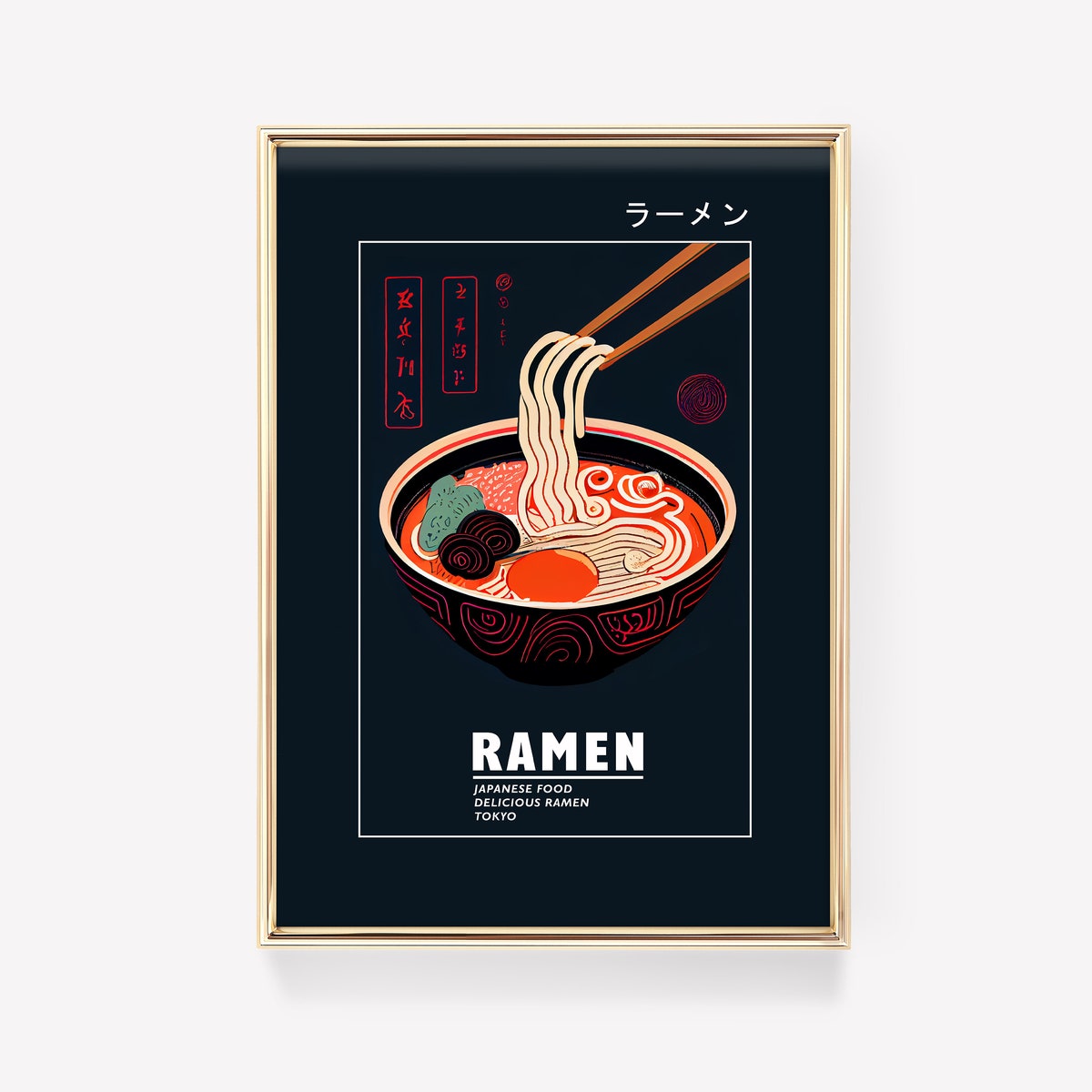
Framing Ramen in Design History
Food and art have long shared a stage in the world of posters and prints where everyday meals are elevated to cultural landmarks. Ramen imagery carries this legacy by transforming a simple bowl into a visual narrative that spans continents. Designers draw upon the comforting steam, the saturated hues of broth, and the artful arrangement of toppings to conjure familiarity and aspiration simultaneously. These posters act as both culinary memento and decorative artifact, inviting viewers to appreciate how food can become an emblem of style and place.
In the arc of ramen’s journey from humble street-food stall to global phenomenon, poster art has played a subtle yet significant role. Early posters embraced utility—legible forms and bold colors ensuring the message reached hungry patrons. Over time, however, graphic treatments have grown more nuanced, blending minimal linework with textured surfaces that hint at gleaming ceramic bowls and the sheen of hot liquid. Through these designs, the poster becomes a canvas where traditional foodways meet modern sensibilities.
The lineage of food-wall-art traditions finds expression in ramen posters that balance minimalism with tactile detail. Clean silhouettes of bowls and chopsticks often sit alongside ink separations that echo the layered depth of a steaming broth. Glossy papers reproduce the liquid’s shimmer, while matte finishes suggest a handcrafted, vintage touch. By weaving these elements together, designers create a visual lexicon that feels both fresh and rooted in the history of printmaking.
In this vibrant niche of graphic design, one encounters both mass-produced advertising prints and intimate, limited-edition artist projects. The lack of a single canonical work shifts focus from individual names to shared aesthetic conventions. Collectors and designers note printing techniques, edition sizes, and release contexts—be it gallery shows or restaurant décor. Such diversity in authorship highlights how ramen imagery thrives as a communal visual tradition.
The Language of Form and Material
At the core of ramen poster design lies a deliberate use of color, shape, and scale that demands attention from across a room. Whether rendered in bold, flat planes of color or through retro-inspired typography and distressed textures, these images prioritize immediate legibility. Minimalist versions strip every detail to its essence—steam lines, noodle spirals, broth contours—while photorealistic prints harness high-contrast photography to celebrate texture and depth. Pop-infused approaches punctuate interiors with playful block colors and dynamic outlines, reminding us that ramen can inhabit the realm of contemporary pop culture just as easily as it can evoke tradition.
Material choices further define the viewer’s tactile and visual experience of these posters. Silkscreen and offset lithography impart a nuanced range of tones and paper texture that speak to craftsmanship, while giclée and digital inkjet prints offer vibrant hues and precise detail. Glossy stocks heighten the illusion of a steaming, glistening broth, whereas matte or vellum surfaces lend a sophisticated, gallery-ready presence. Each printing method and finish shifts the poster’s aura from casual décor to collectible art object, inviting a closer look at the intersection of technique and design.
Scale and composition round out the formal conversation. Larger formats claim wall space as bold focal points, establishing a room’s mood with the weight of their visual statement. Smaller prints, grouped in curated arrangements, act as accent pieces that complement culinary-themed interiors or gallery installations. Framing decisions—choices around matting, glazing, and frame materials—affect durability and viewer perception, especially in brightly lit kitchens or high-traffic spaces. Such practical considerations reveal how functional demands shape aesthetic impact.
A café print might adopt retro typography and muted hues, while a gallery edition favors crisp digital detail and dramatic contrast. Home kitchens often call for medium-scale pieces that provide impact without overwhelming the space. Framing decisions—from matte finishes to UV-glazed frames—embed practical concerns into visual language. Altogether, these context-driven choices direct our encounter with each image.
Symbols, Spaces, and the Social Table
Beyond their decorative allure, ramen posters carry symbolic currents that touch on comfort and nostalgia. A simple image of a bowl can conjure memories of family gatherings or late-night meals, infusing living spaces with emotional resonance. As ramen culture extends across borders, these prints also serve as signifiers of cultural curiosity and appreciation, signaling an embrace of Japanese culinary heritage in homes and cafes around the world. Through this symbolic framing, a graphic bowl of noodles becomes a universal emblem of warmth.
At the same time, the renderings of broth clarity, noodle texture, and precisely arranged garnishes communicate a commitment to craft and authenticity. This visual rhetoric suggests that what is on the wall parallels what might appear on the plate—carefully composed, rooted in tradition, and elevated through design. In contemporary interiors, such posters can double as lifestyle statements, conveying values of speed, fusion, and the democratisation of global flavours. The act of displaying these prints thus becomes a form of storytelling about taste and identity.
In both domestic and public settings, ramen imagery contributes to the curation of atmospheres that celebrate food as a social experience. In home kitchens, these prints ground a room in culinary focus and thematic coherence. In exhibition spaces, they become artifacts around which conversations about advertising aesthetics, cultural diffusion, and the evolution of print techniques can unfold. As decorative objects, they invite us to reflect on how simple motifs can carry complex narratives, turning walls into sites of cultural dialogue.
Beyond their walls, these images gain significance through edition scarcity and artist signatures. Limited runs lend each poster artisanal cachet, elevating it from simple décor to collectible design object. Spikes in interest for Japanese cuisine often coincide with renewed demand, highlighting how cultural trends drive market value. Thus, ramen imagery transcends decoration to become a marker of taste and cultural capital.