WE ARE READY TO BRING YOU TOGETHER WITH ART %60 Discount
When Innocent Love Meets Unyielding Fate
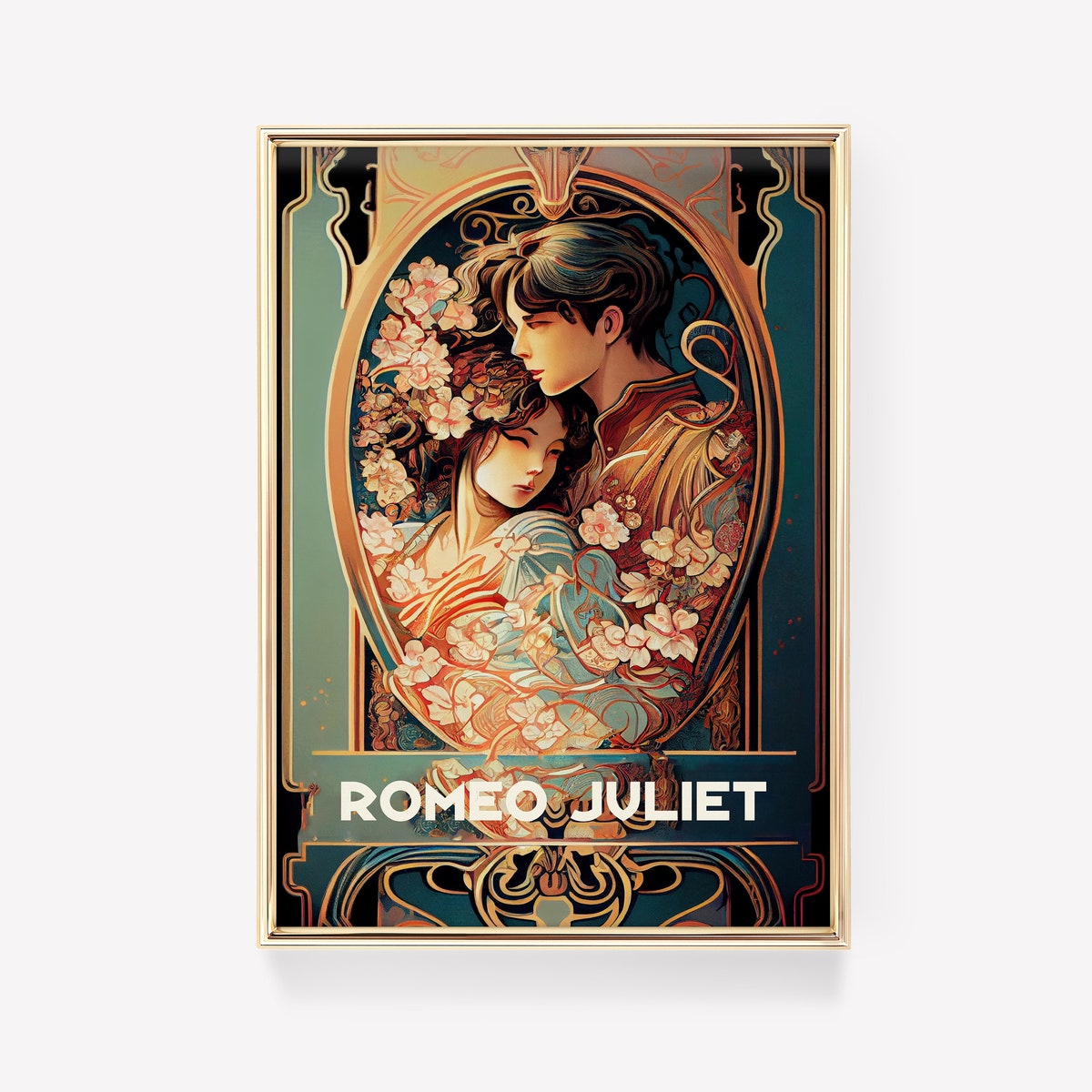
Forging a Tragic Canvas
At the end of the sixteenth century William Shakespeare unveiled one of his most enduring portraits of youthful passion against a backdrop of generational strife in Verona. The collision of the Capulet and Montague households sets the stage for two young lovers caught between personal desire and public enmity. Their secret marriage becomes a testament to the intensity of first love, framed by the violent traditions that mark everyday life in a feudal city. Shakespeare’s decision to base his play on narratives from Matteo Bandello and Arthur Brooke demonstrates his ability to draw upon existing tales and transform them into something distinctly resonant and fresh for the Elizabethan stage. The brisk pace of Verona’s public squares contrasts with the lovers’ private intensity.
In Shakespeare’s hands, the familiar story of star-crossed lovers is infused with a dramatic potency that extends beyond mere romance. The clandestine wedding of Romeo and Juliet is not only an act of defiance but also a nuanced commentary on the restrictive social orders of the period. Through this private commitment, Shakespeare highlights the contrast between the exuberance of unbridled affection and the crushing weight of political and familial loyalty. His portrayal of Verona’s streets as places where affection and violence intertwine creates an atmosphere of relentless tension that drives the narrative forward. By juxtaposing moments of tenderness with sudden outbursts of violence, Shakespeare invites audiences to consider the costs of defiance and the fragility of hope.
The play’s early performances, likely staged between the late 1590s and 1597, reflect Shakespeare’s evolving mastery of theatrical form. By reworking source material from Italian novellas and English translations, he crafted a concise yet richly textured text that would stand as one of his most frequently produced works. This blend of borrowed motifs and original invention demonstrates Shakespeare’s creative dynamism, allowing audiences to witness a story that feels both intimately personal and universally significant. Over centuries, this bold fusion of influences has secured Romeo and Juliet a central place in the Western canon. This alchemy of source material and dramatic innovation ensures that each theatrical revival reasserts the play’s compelling energy.
Structure, Language, and Stagecraft
Shakespeare’s formal choices in Romeo and Juliet reveal a meticulous attention to rhythm and dialogue that heightens emotional stakes at every turn. The use of an opening sonnet as a prologue establishes a tone of impending tragedy and draws the audience directly into the play’s thematic core. Iambic pentameter pulses through each exchange, lending a poetic lilt even to moments of profound sorrow or frantic action. Such rigorous structure does not constrict the text; rather, it amplifies the intimacy of private vows and the desperation of public confrontations. The result is a theatrical experience that feels both architecturally sound and emotionally boundless.
Character development unfolds through startlingly vivid speeches and terse exchanges, offering a portrait of individuals shaped by both temperament and circumstance. Romeo and Juliet emerge not as archetypal lovers but as fully realized figures whose impulsive courage and tender vulnerability invite deep audience empathy. Shakespeare’s willingness to revise conventional storylines—casting intimate banter alongside violent skirmishes—underscores his commitment to creating dramatic tension that feels immediate. The interplay of heartfelt soliloquy and brisk dialogue exemplifies his skill at balancing personal reflection with relentless forward momentum. At every turn, the characters surprise us with the urgency of their convictions, rendering each choice fraught with significance.
The play’s scene-by-scene composition transforms the stage into a shifting landscape of balconies, tombs, and bustling city squares. Each setting carries symbolic resonance: the threshold of Juliet’s balcony becomes a liminal space between public duty and private desire, while the Capulet tomb crystallizes the fatal consequences of unchecked enmity. This spatial choreography is inseparable from Shakespeare’s linguistic, tonal, and emotional palette, ensuring that every gesture and word contributes to the unfolding tragedy. Such integration of language and spectacle remains a benchmark for dramatic storytelling. Such scenic fluency contributes to the play’s status as a reference point for staging conventions even today.
From Verona to the Universal Stage
Although rooted in a specific time and place, Romeo and Juliet transcends its sixteenth-century origins to speak to the perennial struggles of young hearts in conflict with established orders. The tension between innocent love and rigid social constraints resonates across cultures, allowing each generation to find its own reflections in the narrative. Themes of familial loyalty, rivalry, and moral dilemma remain powerfully relevant, reminding us of the fragile boundary between devotion and destruction. Shakespeare’s portrayal of these universal dynamics elevates the play from a mere love story to a profound study of human nature. In highlighting this resonance, the tragedy affirms its capacity to foster empathy across disparate contexts.
The role of fate and the inexorable passage of time permeates Romeo and Juliet, underscoring the play’s tragic trajectory from secret joy to catastrophic loss. This preoccupation with destiny manifests through lyrical invocations of fortune’s cruel whim and the characters’ sense of being actors in a larger, unsympathetic design. Such fatalistic overtones invite viewers to reflect on the balance between personal agency and forces beyond control. It is this delicate dance with destiny that continues to captivate directors and scholars, fueling an array of theoretical and critical readings. The interplay of personal desire and inevitable catastrophe continues to spark reinvention in academic and theatrical circles alike.
Over centuries, the persistent appeal of Romeo and Juliet has inspired countless adaptations—from opera to musical theatre to film—demonstrating the play’s remarkable adaptability to varied artistic media. Each new reinterpretation underscores the core tensions of love, honor, and conflict while infusing them with fresh cultural perspectives. By continually engaging with modern sensibilities, the tragedy affirms its status as a still-living cultural artifact rather than a relic of the past. In every form, the transformative power of Romeo and Juliet’s story endures, reminding us of art’s ability to renew itself through changing eyes. Ultimately, each rendition attests to the enduring potency of Shakespeare’s vision, as new voices bring out subtleties that elude every previous reading.