WE ARE READY TO BRING YOU TOGETHER WITH ART %60 Discount
Gustave Doré: Confronting Mortality Through Engraved Fantasies
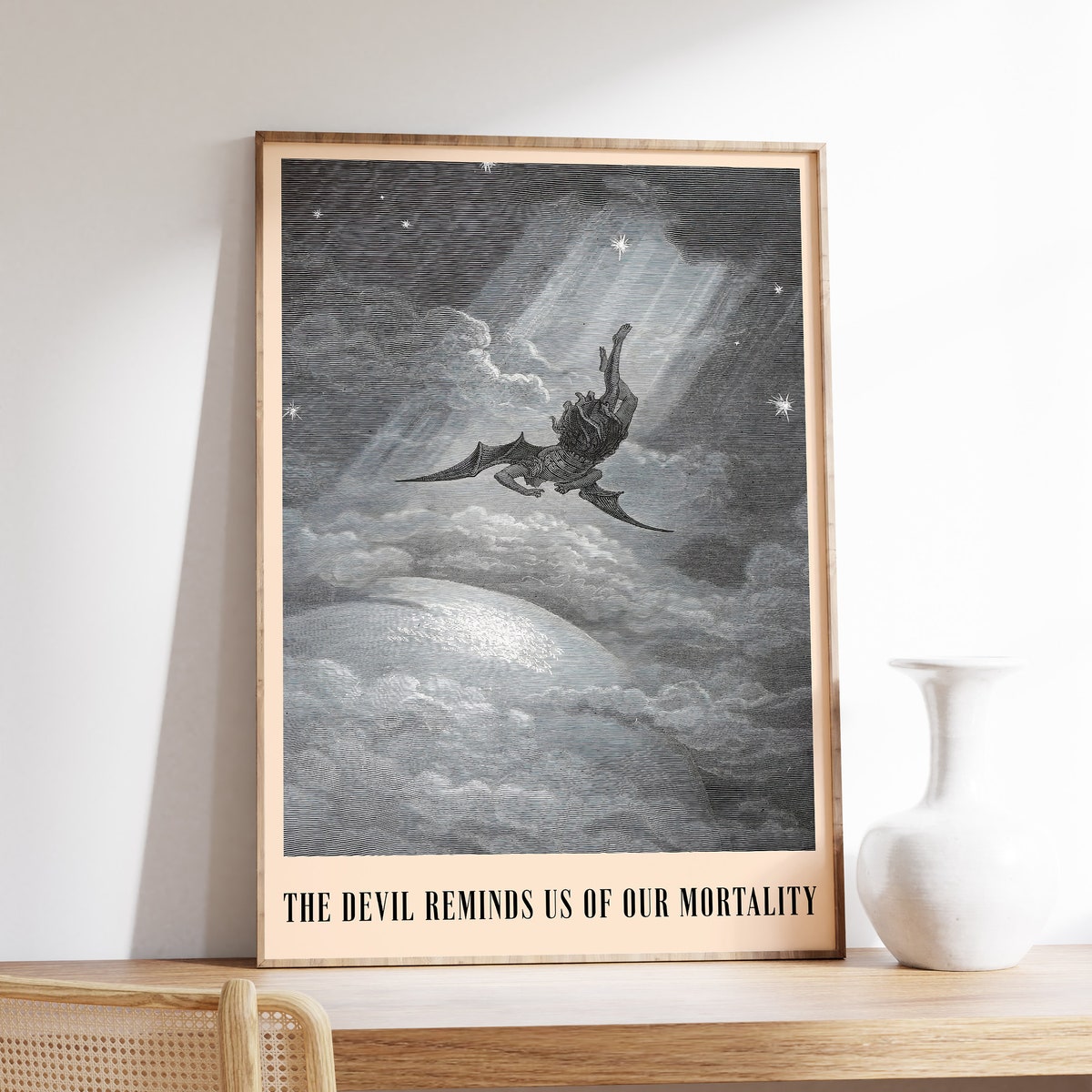
Contextualizing Doré’s Dark Fantasies
Gustave Doré, born in Strasbourg in 1832, established himself as one of the 19th century’s most prolific visual narrators. His reputation rests heavily on the sweeping wood-engraved illustrations that accompany canonical texts such as Dante, Balzac, and Cervantes, but his vision transcends simple textual reproduction. Across his oeuvre, romantic fantasy collides with a stark, unsettling undercurrent that many interpret as a meditation on mortality and fate. From the swirling depths of infernal citadels to the silent tragedy of ruined empires, his imagery probes the fragile boundary between life and oblivion.
The mapped title Mortality Artwork and the notion of a ‘Memento Mori Poster’ trace back to a deep European tradition that reflects on death and vanitas. In Doré’s haunting tableaux, solitary figures stand dwarfed by decaying architecture or engulfed within apocalyptic panoramas, their gestures tinged with dread and resignation. This confrontation with ruin and doom was no mere narrative device but a moralizing appeal to remember death as an ever-present force. Such scenes invite us to consider earthly striving against the vast sweep of time and the certainty of endings.
Britannica aptly characterizes Doré as a master whose exuberant and bizarre fantasy conjured dreamlike visions that resonate with late Romantic and emerging Symbolist themes. In viewing these prints, one perceives an almost ritual invocation of memento mori, where beauty and horror entwine to provoke existential reflection. His compositions often juxtapose delicate human forms with grotesque landscapes, echoing the Northern European printmakers who first channeled vanitas motifs into the popular imagination. By embracing both the sublime and the macabre, Doré forged a unique path within the longstanding artistic dialogue on mortality.
Doré’s ascent in the Parisian art world began with sharp caricatures and accelerated into a flood of editorial work by his mid-twenties. Collaborating closely with wood-engravers and publishers, he churned out thousands of plates that democratized high art by reaching wider audiences in illustrated editions. His career trajectory underscores the intersection of artisanal skill and mass communication, transforming dreamscapes steeped in doom into accessible cultural objects. It is this remarkable breadth of output that cements his place as a central figure in the history of visual storytelling.
The Material Poetics of Engraved Darkness
At the heart of Doré’s visual impact lies his command of the engraving medium, where every cut in the block heightened contrasts of light and shadow. The dense etching of each plate becomes a stage wherein figures emerge from deep darkness or dissolve into radiant voids. Dramatic chiaroscuro regulates the viewer’s gaze, guiding it toward moments of peril or revelation with cinematic precision. Through meticulous line work, Doré shaped a tactile sense of space that makes each print feel like a doorway to another realm.
Compositionally, Doré often dwarfs human figures against monumental settings, amplifying a sense of dread and insignificance. Whether perched on crumbling battlements or adrift on storm-tossed seas, his subjects confront hostility and ruin with resolute gestures. His visual idiom hinges on clear focal points: a lone supplicant, a doomed city, a banal execution scene rendered with eerie stillness. This clarity allows viewers to read the narrative instantly, registering the moral weight of mortality without textual accompaniment.
The technical collaboration between Doré and skilled engravers played a crucial role in the texture and scale of his output. Publishers translated his delicate, swirling strokes into hundreds of thousands of impressions, ensuring that even the most elaborate fantasy could circulate widely as printed art. This process not only broadened the audience for complex, morality-infused imagery but also laid groundwork for future dark aesthetic movements. In its mass reach, Doré’s work illustrates how print culture can cement themes of death and transcendence into the visual memory of society.
Doré’s editorial assignments for literary masterpieces demonstrate how his formal language communicates across genres. His Dantean visions articulate infernal torment with stark immediacy, while biblical illustrations fuse sacred gravitas with apocalyptic drama. Yet the same stylistic drive animates his historical and mythic scenes, stitching every commission into a cohesive exploration of humanity’s vulnerability in the face of cosmic forces. This adaptability underscores why modern artists and curators still turn to his engravings as templates for mortality-laden narratives.
Enduring Resonance in Modern Dark Aesthetics
Today, Gustave Doré’s mortality-themed prints continue to resonate in museum galleries, specialized exhibitions, and the realm of popular design. Curators point to his moral urgency and uncanny beauty as hallmarks of a sensibility that bridges Romanticism and Symbolism. In the language of contemporary aesthetics, his images are invoked under labels like Gothic Dark Style Art Print or Victorian Dark Academia. Each revival testifies to the enduring power of his vision to stir reflection on fate, doom, and the sublime.
The dark academia movement and modern ghost-grade art posters borrow freely from Doré’s compositional strategies, employing stark contrasts and emotive silhouettes to evoke a timeless sense of melancholy. Artists today adopt his practice of juxtaposing small human figures with vast, shadowy backdrops to suggest existential peril. This lineage reveals a moral thread that Doré first wove into mass-produced prints—a strand tracing back to Northern European vanitas but reimagined for new audiences. In this way, his craft informs contemporary graphic art and literary illustration with equal force.
Beyond aesthetic mimicry, Doré’s works persist as cultural touchstones for grappling with mortality itself. The tension between horror and wonder in his scenes prompts viewers to confront their own finitude through aesthetic engagement. His ability to render the sacred and the profane within a single composition invites ongoing debates about spiritual meaning and ethical responsibility. This interplay of dread and beauty exemplifies why critics continue to associate his legacy with the timeless appeal of memento mori imagery.
As designers and collectors seek prints that balance moral gravity with visual allure, Doré’s name endures as a guarantor of depth and dramatic impact. The same appetite for the sublime and haunting that propelled his illustrations of Dante and Scripture now animates posters marketed under the rubric of Mortality Artwork. His engravings remain compelling proof that art can both comfort and unsettle by reminding us of the precarious dance between life and the beyond.