WE ARE READY TO BRING YOU TOGETHER WITH ART %60 Discount
Jean-Honoré Fragonard’s Blind Man’s Buff: A Rococo Garden of Playful Intrigue
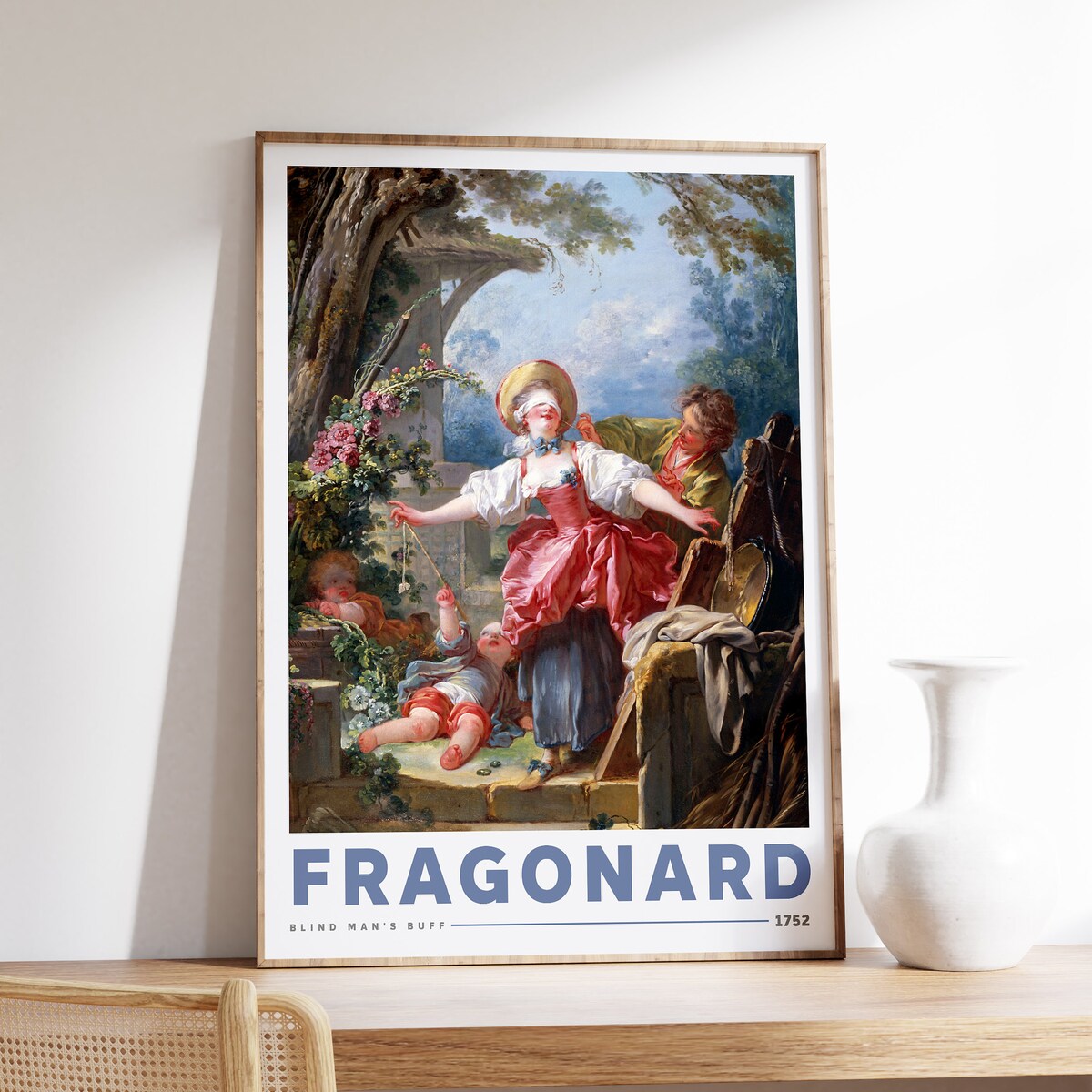
Setting the Scene: Aristocratic Idleness in Rococo
Jean-Honoré Fragonard’s Blind Man’s Buff emerges from the late 18th century as an intimate vision of aristocratic leisure rather than a grand affair of state and history. Commissioned by private patrons, this oil-on-canvas abandons the weighty narratives of public life for a secluded tableau of salon entertainments. Instead of heroic triumphs or religious scenes, Fragonard offers a window into the cloistered world of French nobility at play. The work’s modest scale and anecdotal focus underscore its role as a decorative delight for a drawing room wall. In this moment, a game of blindfolded tag becomes the centerpiece of a cultivated fantasy intended to charm a discerning patron.
It belongs firmly in Fragonard’s mature Rococo period, a phase that followed his influential journey through Italy and his absorption of François Boucher’s fluid studio methods. It is here that the artist developed his signature ease of touch and a sensibility attuned to the nuances of private amusement. The garden setting feels at once natural and artfully arranged, a cultivated wilderness that frames each gesture with equal attention. Luxury fabrics and delicate silhouettes place the figures squarely in the fashionable elite of late eighteenth-century France. Through this leisurely composition, the painting asserts its own style as an antidote to the grand narratives of traditional history painting.
Beyond a mere depiction of merriment, Blind Man’s Buff functions as a meditative vignette on the nuances of intimacy and social ritual. Fragonard allowed private clientele to escape the formality of court protocol by presenting scenes of flirtatious play. The absence of any monumental scale only heightens the sense of a secret performance among trusted guests. This conceit of exclusivity helped establish the painting in an intimate repertoire of decorative works rather than public commissions. Over time, such paintings became emblematic of Rococo’s subversive charm – an art form rooted in whispered confidences and discreet indulgence.
Visual Flourish: Composition and Palette
At first glance, one’s eye glides along a serpentine path through the gathering, tracing a choreography of limbs and smiles set against an opulent backdrop of trees and hedges. Fragonard orchestrates each figure with graceful ease, their postures hinting at both playful collision and poised withdrawal. The lush foliage serves as both frame and participant, its luxuriant leaves echoing the rhythmic curves of skirts and coats. Soft dappled light filters through branches, illuminating the pale flesh and pastel fabrics in a display of painterly virtuosity. Every brushstroke appears spontaneous, yet contributes to an orchestrated harmony that feels effortless and immediate.
The color palette of Blind Man’s Buff is emblematic of Fragonard’s refined sensibility: gentle rose pinks, luminous creams, and verdant greens. Each hue feels freshly applied, layering transparent glazes to capture the shimmer of silk and the dew-kissed sheen of leaves. Costumes reflect the aristocratic cutting-edge fashion of the court, from fitted bodices to embroidered breeches. Against the soft brown earth of the garden floor, these garments stand out like jewels. The painter’s treatment of texture extends beyond fabric to skin and foliage alike, offering a sensory feast that seduces viewers into the scene.
The physical presence of the canvas invites contemplation of material substance as much as narrative. While preparatory sketches exist, the final version embraces a naturalistic yet idealized idyll, a choice that heightens the painting’s decorative charm. Viewers can almost feel the cool breeze stirring a ribbon or the sun warming a cheek. Such attention to surface detail – from the highlight on a ring to the shadow beneath a leaf – underscores Fragonard’s mastery of light and color. Over the centuries, these qualities have made Blind Man’s Buff a standout in museum displays seeking both intimacy and spectacle.
Love Behind the Mask: The Allegory of Courtship
The simple act of a blindfolded chase transforms into a metaphor for the give-and-take of romance. Participants in the game navigate the tension between surrendering their gaze and seeking the object of their desire. Each hand reached out or skirt lifted becomes loaded with significance. In this sense, the garden is not a mere backdrop but a stage for emotional revelation. Fragonard harnesses this dynamic, allowing humor and sensuality to intermingle in a dance of uncertainty and anticipation.
Scholars have long interpreted Blind Man’s Buff as a lighthearted meditation on flirtation and pursuit, suggesting that the characters’ hidden eyes mirror the mysteries of courtship. The lush garden conceals as much as it reveals; its interplay of shadow and light echoes the ebb and flow of attraction. Elegant gestures – a tilt of the head or a clasped hand – speak volumes in the artist’s vocabulary of subtle expression. Within this private salon-like arena, conventions of propriety dissolve, giving way to a playful negotiation of power and affection.
This painting’s enduring resonance stems from its capacity to convey a universal game layered with aristocratic nuance. While the scene is deeply rooted in eighteenth-century French elite culture, its themes of desire, concealment, and communal joy transcend time. As specimens of decorative sophistication, such works continue to captivate collectors and museumgoers alike. Fragonard’s Blind Man’s Buff stands as a testament to the era’s fascination with amorous intrigue in hidden garden worlds. Through its sinuous forms and spirited narrative, it remains a timeless emblem of playful intimacy.