WE ARE READY TO BRING YOU TOGETHER WITH ART %60 Discount
A Quiet Read by William Kay Blacklock: Domestic Lyricism in Paint
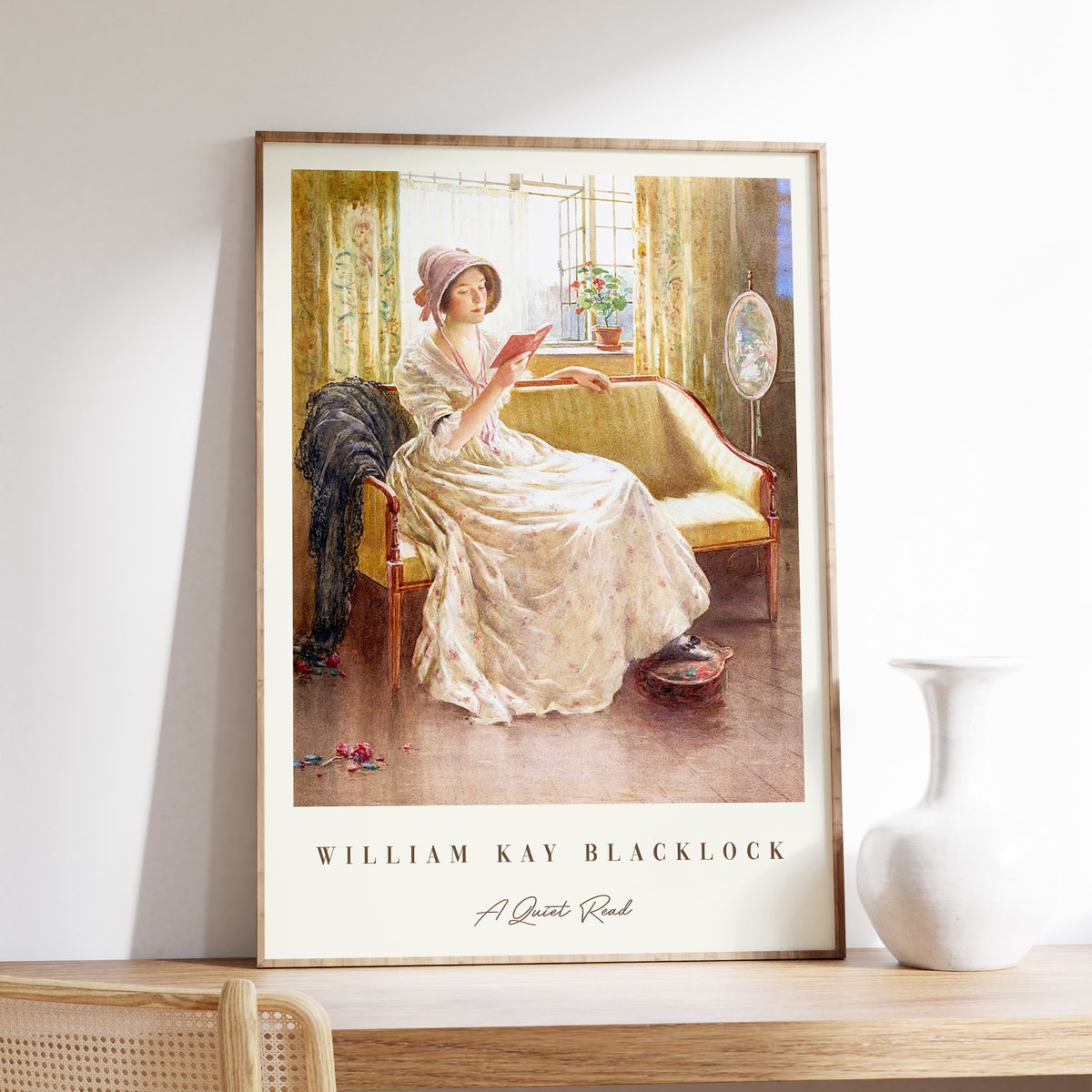
Framing a Quiet Moment in Victorian England
William Kay Blacklock worked in late Victorian and early Edwardian England and became known for his genre scenes. He combined realist traditions with a gentle lyricism that transformed everyday moments into quiet narratives. Trained in watercolors and oils he demonstrated a remarkable sensitivity to domestic life and humble interiors. Blacklock’s canvases do not celebrate grand events but rather reveal the poetry of routine tasks. His style bridges a robust realism and a tender romantic aura. In this way his work feels both familiar and softly evocative.
Among the mid and late period canvases that define his oeuvre the painting A Quiet Read stands as a particularly intimate testament to this approach. A single figure sits absorbed in the pages of a book within a modest interior setting. The title itself signals an invitation to share in the stillness of reading. Unlike dramatic narratives the scene unfolds through subtle gestures and calm composure. Blacklock’s choice of subject reflects his belief that ordinary life is worthy of careful attention. The painting feels intimate without requiring elaborate storytelling devices.
The painting emerges amid a broader body of work focused on rural life and family scenes. Contemporary catalog records highlight his fondness for cozy domestic spaces and warm color harmonies. In these interiors everyday objects—folding chairs, open books, hanging fabrics—become points of gentle fascination. Blacklock’s catalog entries consistently note his use of subdued light to unify elements. This practice sets the mood and invites close observation from his audience. Through such works he contributes a distinct blend of realism and emotional subtlety to English painting.
Light, Texture, and the Material Poem
Light plays a starring role in A Quiet Read settling softly on each surface. Whether diffused daylight or a gentle candle glow the illumination feels deliberate and tender. The gloss of a page, the weave of a fabric, and the contours of a book spine emerge with vivid clarity. Blacklock’s brushstrokes capture these tactile details without sacrificing their natural appearance. Textures become a language of their own, narrating the scene as much as the figure within it. This material focus transforms a mundane moment into a hushed tableau of sensory richness.
Blacklock’s mastery of color further amplifies the painting’s sense of harmony. Warm earth tones—soft browns, muted ochres, pale creams—coalesce into a comforting palette. Each hue is measured and balanced, reinforcing the painting’s tranquil mood. Controlled brushwork ensures that no single area dominates but that the whole breathes as one. The subtle shifts in tone allow the viewer to trace the contours of space and object with ease. In this way he achieves a realism that feels at once precise and quietly poetic.
The interplay between detail and atmosphere defines Blacklock’s formal signature. Tiny accents—the curl of a page corner or the shadow beneath a windowsill—assume emotional weight. These nuances attest to a painter attentive to the drama of the everyday. His technique invites a slow, meditative engagement rather than a fleeting glance. Viewers are encouraged to inhabit the scene, to sense the hush and the warmth surrounding the reader. This level of involvement speaks to the power of surface and light in conveying mood.
Private Reading and Cultural Resonance
The act of reading occupies a special place in late Victorian culture as a portal to knowledge and solace. By depicting a solitary reader Blacklock highlights the interior lives of individuals beyond public spheres. This focus resonates with contemporary interest in education, self-improvement, and imaginative escape. In A Quiet Read the simple gesture of holding a book takes on symbolic resonance. It suggests a private ritual where literature provides quiet companionship. Through this lens the painting becomes a subtle celebration of intellectual refuge.
Additionally the painting’s cottage-core sensibility reinforces its nostalgic appeal. Modest furnishings, hearth-lit warmth, and earthy color choices evoke a pastoral ideal. Such aesthetics gained traction as industrialization reshaped daily life and urban environments. Blacklock’s scene appears to answer this shift by embracing simplicity and homeliness. The viewer senses a longing for slower rhythms and uncomplicated comfort. This enduring motif connects his late nineteenth century vision to modern day notions of cozy retreat.
In choosing to illuminate a quiet domestic moment Blacklock affirms the poetic potential of the everyday. A Quiet Read underscores his trust in ordinary gestures as worthy subjects for fine art. There is no need for grand drama when stillness can speak volumes through light and texture. His synthesis of accessible themes, careful observation, and emotional restraint marks his unique place in English pictorial culture. By turning an act of solitary reading into a canvas of contemplative beauty he extends an invitation to viewers to find meaning in their own simple rituals. The painting stands as a testament to the power of quiet focus and subdued elegance.