WE ARE READY TO BRING YOU TOGETHER WITH ART %60 Discount
Egon Schiele and the Pulse of Early Expressionism
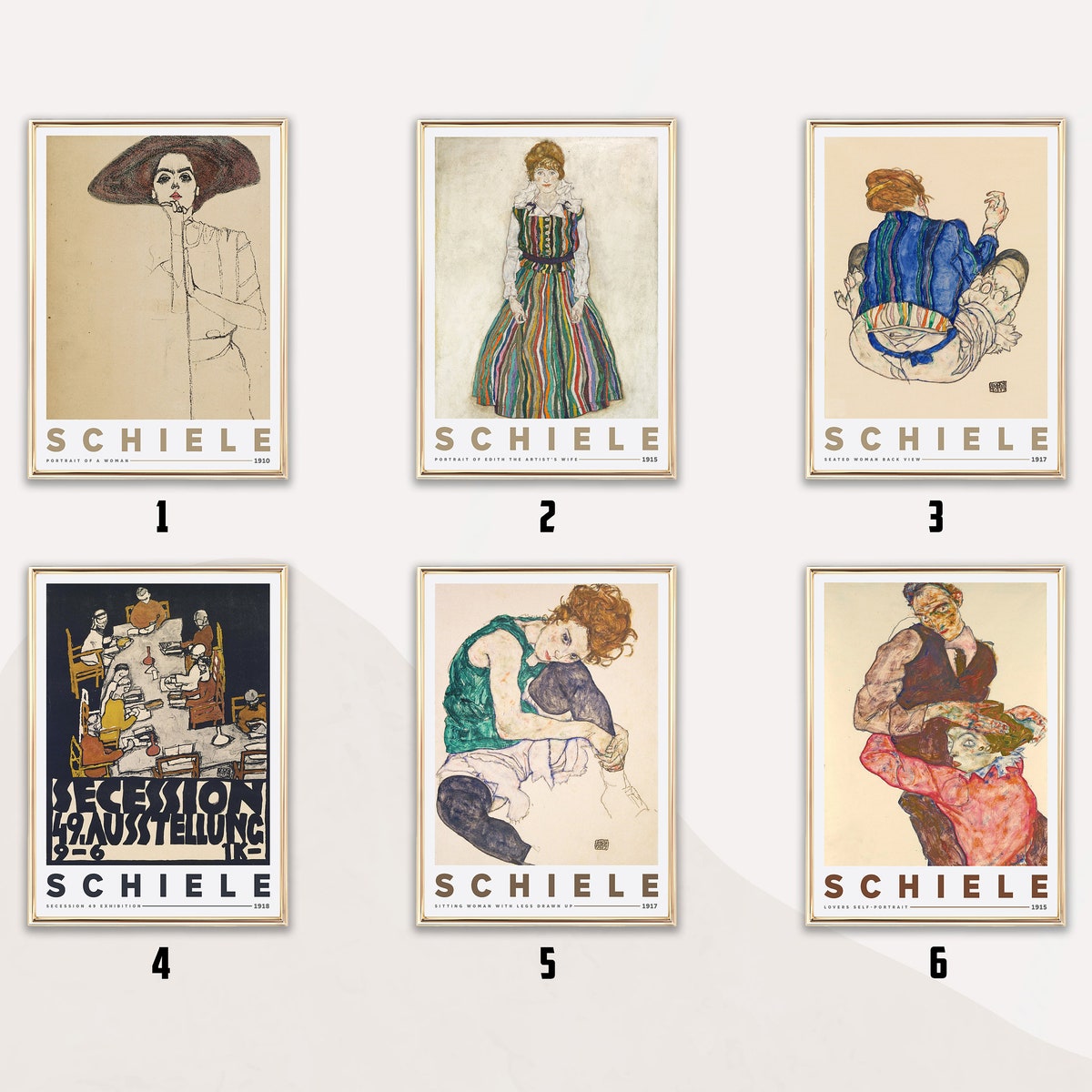
Vivid Beginnings in a Transforming City
Emerging from Tulln an der Donau in 1890, Egon Schiele carried into Vienna a provincial intensity that collided with the city’s bold modern currents. He arrived at a moment when the end of the century had stirred debate in salons and academies alike, challenging the conventions of art and society. Within this ferment, the young artist embraced Expressionist impulses that sought inner truths rather than superficial harmony, setting the stage for his radical trajectory. Schiele’s early engagement with these debates signaled a career defined by psychological confrontation and formal innovation. His arrival coincided with a generation of artists questioning the old guard’s grip on aesthetic values, and he quickly distinguished himself through a fearless examination of subjectivity.
As a figure within Austrian Expressionism, he rejected polished surfaces in favor of figures twisted by emotional tension and unguarded vulnerability. His portraits and nudes pulsed with a jagged energy that seemed to strip away external facades, laying bare the complexities of psyche and desire. This psychological realism drove each composition towards a raw immediacy, emphasizing the body as a map of inner conflict. By positioning the human form at the crossroads of perception and identity, Schiele confirmed modern art’s ability to probe subjective experience. Through each distortive contour, he asserted that beauty could be entangled with discomfort, prompting viewers to confront their own thresholds of empathy.
Schiele’s early association with Gustav Klimt provided both technical influence and access to the Secession’s avant-garde networks, but it proved only a waypoint in his artistic evolution. Under Klimt’s tutelage, he admired the decorative richness and symbolist motifs that characterized turn-of-the-century Viennese painting. Yet Schiele quickly shed this ornamental veneer in favor of a sparser visual language, trading luxuriant patterning for stark lines that framed expressive intensity. This tension between refined ornament and skeletal directness continues to define the texture of his most compelling works. The fragmented spaces he created spoke of a broader dismissal of linear perspective and academic norms, mirroring his quest for raw psychological resonance.
From his first self-portraits to pairs of reclining nudes, Schiele celebrated the autonomy of form as a conduit for personal authority. His work refused to conceal the imperfection and fragility of flesh, embracing instead a candid study of corporeal existence. He turned the act of looking into a charged encounter, where the viewer could sense the artist’s probing gaze within every contour. In doing so, Schiele elevated portraiture into a site of existential questioning and unveiled new possibilities for modernist expression. This emphasis on visceral honesty set a precedent for artists who followed, mapping out a terrain where form and feeling collided without apology.
Contours of Emotion and Technique
At the heart of Schiele’s method lies a devotion to the drawn line, taut and unrelenting in its purpose. He rendered limbs with sinuous flairs that bend reality into compressed dramas, favoring angular tension over volumetric illusion. In his hands, a single decisive stroke could convey the weight of psychological torment or the subtle vulnerability of a gentle tilt. This mastery of linear fluency set him apart as an artist capable of conveying deep feeling through economy of form. This unwavering focus on the corporeal line underscores his conviction that drawing could be as potent a medium as painting in conveying inner turmoil.
Backgrounds in his compositions often retreat into minimal suggestion, allowing the figure itself to command every viewer’s attention. He orchestrated space by stripping away extraneous detail, so that each posture feels suspended against a void of possibility. This formal economy served to amplify nuance in gesture, with the slightest shift of a hand or tilt of the head becoming profoundly expressive. Such compressed scenarios underscore his belief that the human body is the principal bearer of symbolic and affective energy. By controlling visual emptiness, he invited the viewer’s imagination to complete the scene, fostering an active dialogue with the work.
Anatomical distortion becomes an intentional strategy in his pursuit of emotive authenticity, as he exaggerates proportions to articulate inner conflict. Schiele’s figures often appear elongated or contorted, their flesh folding into planes that defy classical harmony. Yet these deliberate deformations never read as arbitrary; they resonate with the emotional logic at play in each subject. Through this approach, he expanded the vocabulary of representation toward new realms of psychological insight. These distortions assert the strength of individual perspective over canonical ideals of harmony and balance, shaping a new narrative for representation.
His drawings and paintings deploy abrupt shifts in line thickness, reflecting a dialogue between precision and impulsive spontaneity. Rather than smoothing transitions, he embraced abrupt bends that seize the composition’s momentum. This interplay between control and eruption mirrors the intensity of the inner states he sought to reveal. In every work, the viewer is invited to witness an encounter between formal rigor and raw emotional force. Such intentional contrasts of flux and restraint ultimately reveal the restless energy coursing through his compositions.
Bodies, Society, and Lasting Resonance
In his portraits and nude studies, Schiele confronts themes of sexuality and bodily vulnerability with unflinching resolve. Rather than hiding behind allegory, he focuses on the erotic presence of flesh and the individual’s exposure to desire. His self-portraits become experiments in both identity and gaze, as he peers into the mirror with equal parts defiance and introspection. These studies insist that the human body is a site of meaning, capable of revealing the psyche’s most intimate contours.
The cultural atmosphere of early 20th-century Vienna provided fertile ground for Schiele’s provocations, as intellectual circles buzzed with philosophical, literary, and artistic debate. In a city straddling tradition and innovation, the public appetite for new modes of representation grew alongside controversies over decency and the limits of art. Schiele’s bold subjects frequently provoked scandal, but they also captivated audiences with their raw honesty. Through this dynamic, his work became a central voice in the larger modernist conversations reshaping European culture.
While initial reactions ranged from admiration to legal scrutiny, Schiele’s reputation matured as scholars and collectors recognized the originality of his vision. In time, his pioneering blend of formal clarity and emotional immediacy was seen as a bridge between the Symbolist sensibilities that preceded him and the Expressionist forces that would dominate the century. Contemporary exhibitions now reposition these once-scandalous works as touchstones of modern art’s evolving language. His influence echoes in artists who value the raw articulation of personal experience above polished surfaces.
Beyond individual works, Schiele’s career illuminates the dialogue between artists, institutions, and the public in a rapidly changing world. His navigation of academies, galleries, and exhibitions reveals how modernist creators asserted autonomy amid pressures of patronage and tradition. This circulating engagement transformed art into a dynamic conversation, one that continues to unfold in museums and private collections today. In Schiele’s legacy, we find a powerful testament to the enduring question of how art can bear witness to our deepest and most vulnerable truths.