WE ARE READY TO BRING YOU TOGETHER WITH ART %60 Discount
Egon Schiele and the Raw Pulse of Expressionism
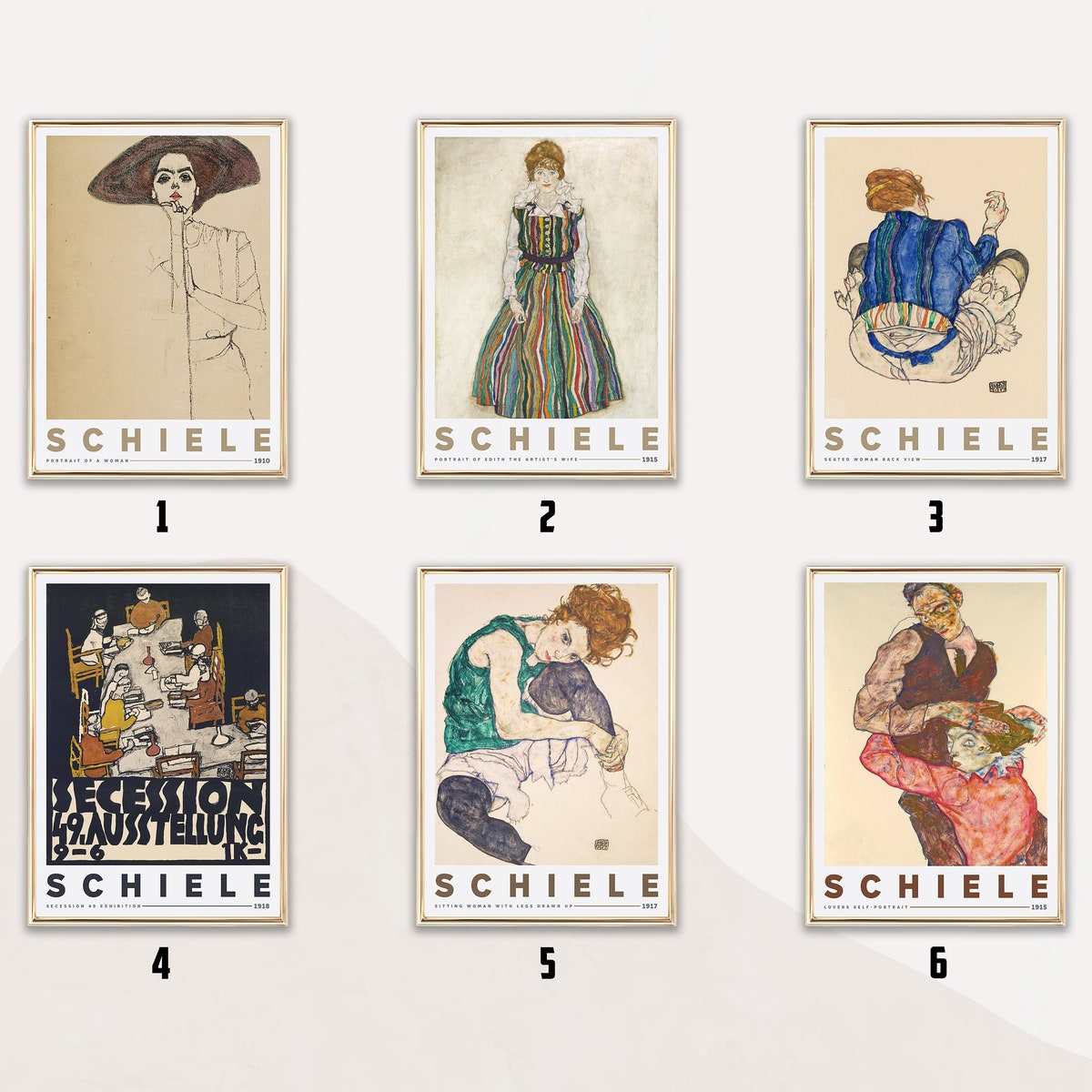
Historical and Stylistic Origins
Egon Schiele emerges from the canvas of history as one of early twentieth-century Europe’s most provocative and individual Expressionists. Born in 1890 in Tulln near Vienna, he absorbed the currents of the Austrian Secession under the shadow of Gustav Klimt, yet almost immediately diverged along a sharper, more unguarded path. His entry into the Viennese avant-garde coincided with a fervent reevaluation of how art might portray the human body, sexuality, and the hidden chambers of the mind. This period of ferment offered Schiele a platform on which to redefine modern figurative practice, pushing it toward a heightened subjectivity that would come to define Expressionism. This foundational period foreshadowed a radical shift in how the body and psyche might be depicted on the eve of global conflict.
At the fin-de-siècle crossroads of Vienna, artists sought to break from ornate decoration toward something more visceral and authentic. Schiele’s work reflects this larger quest, channeling the spirit of psychological interiority that marked so much of the turn-of-the-century avant-garde. Where decorative line had once served Klimt’s opulent surfaces, Schiele’s hand became almost surgically precise, exposing vulnerability rather than concealing it. His figures lean into tensions of desire and anxiety, revealing a restless grappling with the rapidly changing contours of modern life. His work anticipated the brutal reality of an approaching war, distilling personal and collective anxieties onto the page.
Positioned alongside German-speaking peers who wished to shatter the veneer of polite society, Schiele’s art leans unapologetically into transgression. His bold thematic choices—nudes that verge on the confrontational and portraits that capture the sitter’s inner turmoil—signaled a shift toward art as a forum for unspoken truths. Through this lens, Expressionism became not merely a style but a mission to illuminate the invisible forces of emotion. Schiele’s career, though brief, established a decisive template for those who would explore the raw interface between form and feeling. His influence echoes throughout surveys of Expressionism and beyond, cementing his role in the modernist narrative.
Line, Form, and the Visual Language of Intensity
Central to Schiele’s vision is an unmistakable formal language defined by stark, unrelenting lines that carve across paper and canvas with almost violent intent. His angular figures often twist and contort, their limbs framing negative space in ways that heighten psychological tension. Each stroke seems charged with urgency, as though the artist were racing to capture a fleeting moment of raw experience. This fevered approach to drawing gave his images an immediacy that still jolts the viewer today. These qualities still define his signature style, making his figures instantly recognizable across decades.
Schiele’s use of compressed compositions deepens the sense of pressure and intimacy in his work. By bringing figures close to the picture plane and sometimes cutting them abruptly at the edges, he left no room for complacency or polite detachment. The resulting tension forces viewers into a direct encounter with bodily expression and emotional gravity. In this austere visual world, every angle and every blank space speaks to the core of Expressionist purpose: to serve a psychological truth rather than charm an eye for beauty. This austere interplay of form and emptiness became a hallmark of modern drawing, influencing artists eager to bridge the gap between sight and psyche.
Whether working in portrait, self-portrait, or nude, Schiele’s hand remains decisive and unflinching. His mastery of line carries both technical precision and emotional depth, inspiring countless artists who would come to see the human figure as a vessel for inner turbulence. Even in landscape work where figures recede, the same economy of means prevails: a single, purposeful mark can evoke an entire emotional climate. Such formal innovations solidified his legacy as a pioneer of modern drawing. Through these formal breakthroughs Schiele established a visual vocabulary that would endure well beyond his short career.
Unveiling Psychological and Cultural Layers
Beyond technique, Schiele’s art stands as a cultural critique, probing the fragility of identity and the social frameworks that govern desire. In each exposed pose, one senses a larger commentary on vulnerability under rapidly shifting modern conditions. His images of nakedness and tension compel viewers to recognize their own internal contradictions and fears. It is this alignment with Expressionism’s core ambition—to make the invisible visible—that grants his work enduring resonance. His ability to fuse personal confession with universal longing remains a testament to art’s power to confront inner fears and desires.
By confronting subjects deemed taboo in his day, Schiele expanded the conversation around morality and the artist’s role in society. His vigorous handling of form was matched by a willingness to provoke societal norms, an approach that elevated the public dialogue on art, sexuality, and personal freedom. Though he passed away at 28, Schiele’s biographical arc became almost mythic, reinforcing the view of the artist as both outsider and visionary in service of emotional authenticity. His tragic end at the height of his creativity only amplified the mythic quality of his work and its uncompromising spirit.
Today, contemporary scholarship continues to engage Schiele’s oeuvre through evolving lenses of gender, sexuality, and the politics of representation. Museums and collections around the globe attest to the universal power of his precise yet raw line to convey psychological layers of longing, anxiety, and existential urgency. His work remains a touchstone for artists and audiences alike who seek to harness art’s capacity to dissect human experience in all its complexity. In confronting our shared vulnerabilities, Schiele’s drawings continue to challenge viewers to look inward and acknowledge the forces that shape our lives.