WE ARE READY TO BRING YOU TOGETHER WITH ART %60 Discount
When Wine Meets the Canvas: The Artful Language of the Grape
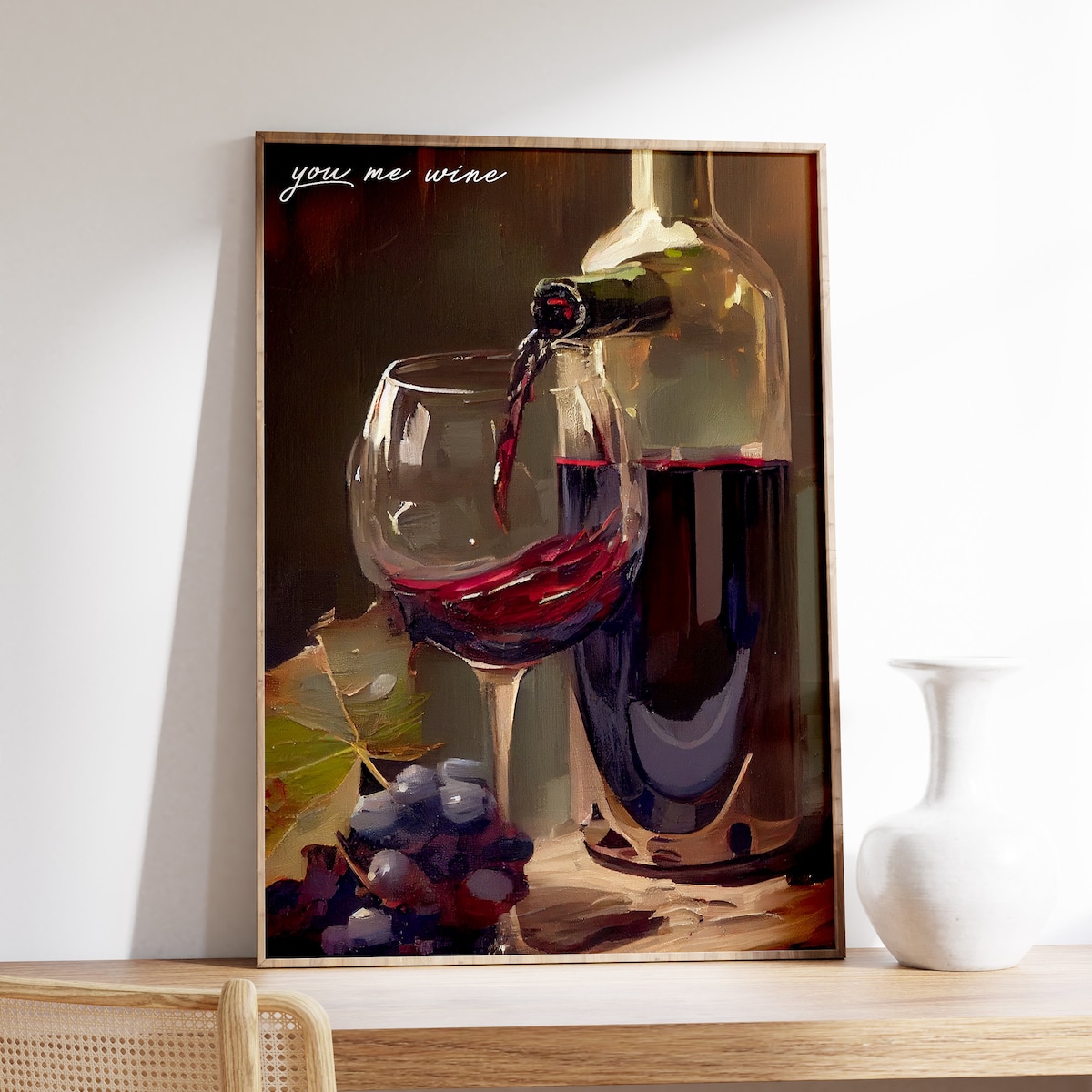
A Tradition of Abundance and Reflection
In the flourishing landscape of 16th and 17th century still-life painting, wine first emerged as an emblem of prosperity and ceremony. Painters in the Dutch and Flemish traditions meticulously arranged carafes, grapes, and bread alongside ornate silverware and porcelain to construct scenes of grand feasting. Yet beneath the gleam of crystal and the plumpness of fruit lay a subtle invitation to ponder the ephemerality of worldly pleasures. These compositions introduced a layered narrative in which abundance coexisted with the quiet whisper of vanitas. Through wine’s presence, artists beckoned viewers to reflect on the fleeting nature of fortune and the passage of time.
Caravaggio’s rendition of Bacchus offers a powerful evolution of this still-life tradition, bridging mythic subject with visceral realism. The youthful god is portrayed with ripe grapes draped over his arm and a half-filled carafe poised on the table in front of him. With his dramatic treatment of light and shadow, Caravaggio transforms wine into a symbol of both temptation and vitality. The naturalism of the fruit, the textured surface of the ceramic bowl, and the reflective gleam of the vessel coalesce in a moment charged with sensory allure. Through this intimate portrayal, wine becomes an anchor for broader allegorical themes, weaving together ritual, desire, and tangible reality.
As artistic sensibilities shifted in the 19th century, painters like Léon Bonvin turned their gaze toward the intimate sphere of domestic life. Bonvin’s delicate still lifes of wine and fruit convey a quiet drama within everyday settings—a modest tablecloth, a simple glass, and clusters of grapes catching soft daylight. His muted palette and refined touch emphasize subtle tonal variations, inviting a slow, contemplative gaze. In the wake of Realism and emerging Impressionist thought, wine assumed a role not only as a subject of luxury but as an element of shared human ritual. These humble scenes demonstrate how the beverage remained a constant—even as aesthetic frameworks evolved—in the exploration of nourishment and repose.
The Material Poetry of Wine Imagery
The physical properties of wine and its vessels have long offered painters a rich arena for formal exploration. Artists have focused on the sensuous interplay of light upon translucent glass, the depth of color refracted through wine, and the crisp edges of ceramic jugs. Mastering reflections and refractions, they choreograph contrasting textures—smooth glass, rough linen, polished metal—to heighten visual tension within the frame. In early still lifes, the engraved labels on bottles and the decorative patterns of tableware became key details that revealed social status and craftsmanship. This attentiveness to materiality transforms ordinary objects into protagonists of a silent drama, where the viewer’s eye becomes attuned to surface, sheen, and form.
In the intimate compositions of Léon Bonvin, texture assumes a narrative weight alongside subject matter. Each brushstroke captures the gentle swell of a grape cluster or the subtle ripple of wine in a shallow goblet, rendering the scene with soft precision. Through delicate tonal shifts and a restrained color palette, Bonvin evokes atmosphere over theatricality, prompting viewers to engage with the meditative quality of domestic ritual. His still lifes serve as quiet odes to everyday sustenance, demonstrating how the simplest objects can anchor an entire emotional landscape. The glass of wine in these works becomes a reflective surface, mirroring the calm contemplation of the moment.
The dawn of Modernism prompted artists like Juan Gris to reconceptualize wine within a new visual order. In Still Life with Checked Tablecloth, the bottle, glass, and tablecloth morph into fractured planes and intersecting lines. Gris deconstructs traditional perspective, inviting viewers to assemble multiple viewpoints within a single image. The bottle’s label, once a signifier of origin and quality, becomes a geometric swatch of color, and the wine within emerges as an abstract field of red ochre. This radical formalism underscores wine’s capacity to operate both as subject matter and as an ingredient in a painterly lexicon concerned with shape, rhythm, and chromatic harmony.
Ritual, Memory, and Modern Reinvention
Across centuries, the depiction of communal drinking scenes underscores wine’s powerful role in human ritual and social exchange. From sacred ceremonies to convivial gatherings, the act of pouring and sharing wine has been depicted as an emblem of hospitality, fellowship, and, at times, cautionary excess. Painters use composition and gesture to capture the nuanced interplay of emotion—from the warmth of a shared toast to the somber moral undertones of overindulgence. In genre scenes, wine can signal abundance and celebration or serve as a moral foil, reminding viewers of boundaries between pleasure and folly. Its symbolic flexibility allows artists to embed layers of storytelling that resonate with cultural values and social norms.
Beyond the Western canon, grape-derived imagery surfaces in diverse cultural productions as a visual shorthand for festivity and communal bond. Whether appearing in decorative murals or ceremonial vessels, clusters of grapes and vine motifs evoke agricultural cycles and shared harvests. In regions where canonical art histories have overlooked non-Western practices, these visual echoes hint at wine’s broader significance in meal rituals and hospitality traditions. The recurrence of vine imagery testifies to the beverage’s universal capacity to bring people together, forming an aesthetic common ground that transcends linguistic and geographical boundaries. Such cross-cultural instances remind us that the celebration of life’s abundance is a global artistic impulse.
In contemporary art and design, wine imagery continues to thrive in both faithful representation and playful critique. Some artists adhere to the time-honored still-life format, emphasizing the tactile pleasure of paint and the luminous quality of liquid. Others employ satire or conceptual strategies, positioning wine as a lens through which to examine consumerism, memory, or personal narrative. The enduring popularity of wine-themed posters and decorative prints speaks to the motif’s commercial allure and its capacity to inhabit varied aesthetic contexts. Ultimately, wine painting persists as a vibrant dialogue between image, object, and observer, capturing the ever-evolving interplay of culture, memory, and material presence.