WE ARE READY TO BRING YOU TOGETHER WITH ART %60 Discount
Pierre-Auguste Cot's The Storm: Romantic Drama in the Home
Romantic Vision and Artistic Legacy
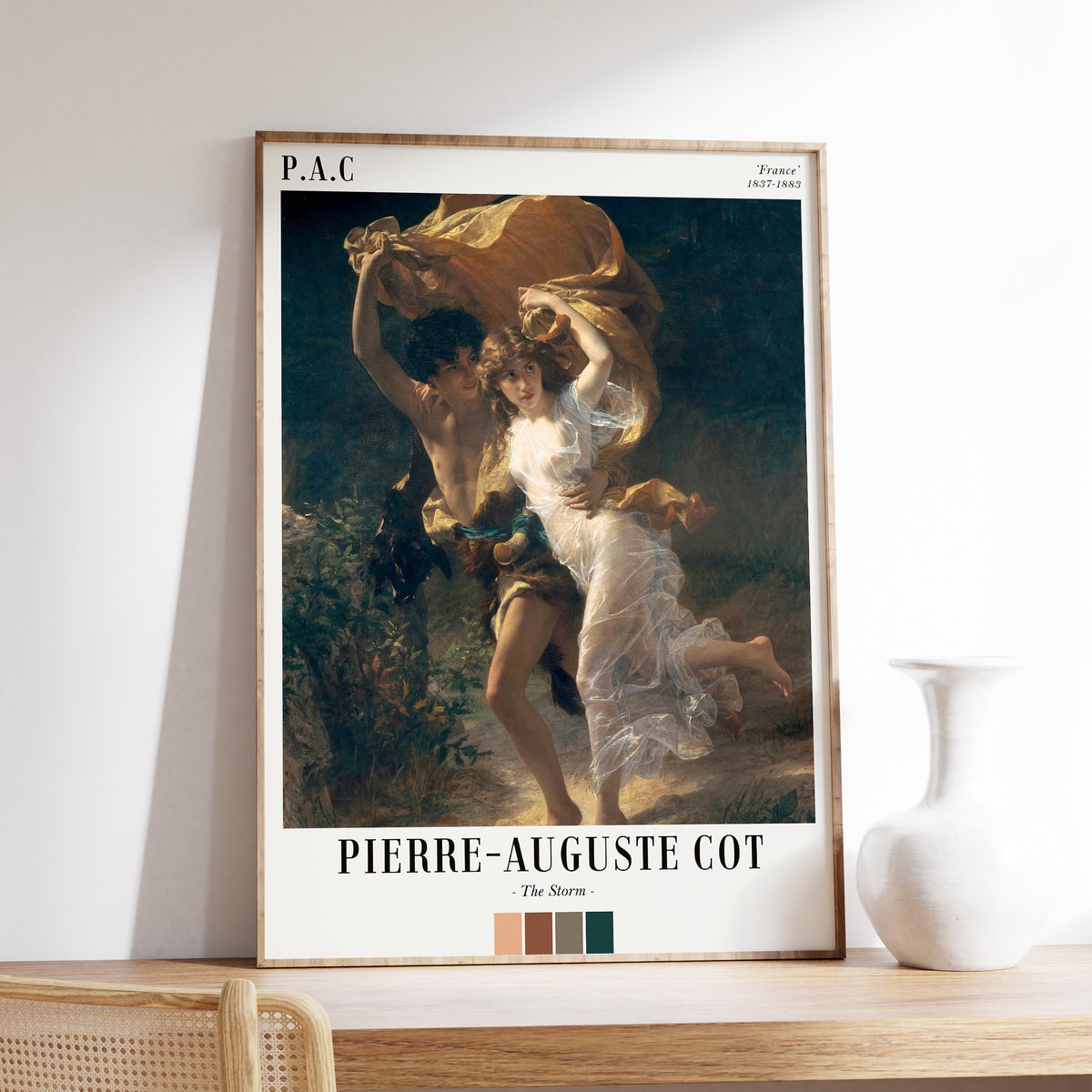
In mid-19th century France, an artistic current persisted that embraced both passionate feeling and measured scholarship. Pierre-Auguste Cot emerged within this milieu as a craftsman who fused Romantic fervor with academic discipline. His work often unfolds like a nocturnal reverie, guided by the tension between light and shadow. The composition known as The Storm epitomizes this tension, capturing the sublime power of a tempestuous sky. Every element converges to evoke a sense of apprehension blended with poetic grace.
Cot’s training in the academic ateliers sharpened his skill in rendering the human form with elegant precision. Yet he never abandoned the Romantic fascination with intense emotion, opting instead to let figures carry a narrative weight. His draughtsmanship reveals itself in fluid contours and nuanced gestures that speak to both idealization and psychological realism. In scenes of emotional urgency, the artist’s command of anatomy serves not mere display but deeper empathy with his subjects. This balance between technique and feeling defines late Romantic painting in Cot’s hands.
The late Romantic tradition counted on a heightened portrayal of nature as both setting and character. In The Storm, the sky becomes an actor in relentless motion, its turbulence reflected in the fraught poses of the figures below. Dramatic lighting heightens contrast, lending a theatrical quality to what might otherwise read as a quiet nocturne. By weaving wind-swept clouds and trembling bodies into a unified drama, Cot underscores the fragility of human existence against elemental forces. Such narrative immediacy invites viewers to inhabit the moment of crisis as participants rather than bystanders.
For modern audiences, recognition of this era rests in part on reproductive prints that travel beyond museum walls. Exhibition prints and vintage posters offered accessible conduits to masterful works once confined to salons and galleries. A printed iteration of The Storm translates the painter’s tonal harmonies into affordable decor for the domestic sphere. The transition from original canvas to paper reproduction does not diminish the emotional weight embedded in its imagery. Instead, it opens an expanded dialogue between historical prestige and contemporary taste.
Visual and Material Splendor
Cot’s luminous figures emerge from his compositions with a soft, radiant quality that defines his approach to color. He employed a limited palette to draw attention to where light meets flesh and fabric, forging an intimate connection with the viewer’s gaze. The turbulence of the sky in The Storm is articulated through layered brushwork that suggests movement rather than static representation. Shadows fall and dance across the forms, creating an interplay of opacity and transparency that animates the scene. This attention to materiality ensures that every printed reproduction retains the essence of his painterly signature.
Graceful draughtsmanship underpins the artist’s formal choices, giving even momentary gestures a sense of purpose and narrative weight. Limbs are elongated just enough to convey yearning or fear without sacrificing anatomical credibility. Draped robes and loose garments ripple in the wind, their folds orchestrated to guide the eye across the composition. In prints, these subtle directional cues remain intact, guiding attention and preserving the rhythmic flow originally conceived at the easel. Such fidelity in reproduction solidifies the printed image’s role as both artwork and decorative object.
When presented as living room decor, a vintage poster of The Storm transforms from an image into an atmospheric statement. Walls become stages for the interplay of color and emotion, where muted hues impose a mood of introspection or passion. The soft glow of a printed poster can echo candlelit salons of the past, even as it complements modern furnishings. The tactile contrast between smooth paper and textured interiors invites a subtle tension, mirroring the painting’s underlying drama. Through thoughtful placement, the image asserts itself as a timeless bridge between bygone sensibility and contemporary design.
Material considerations extend beyond inks and papers to the conceptual framing of exhibition prints in the 19th-century marketplace. Such items were marketed not only as faithful echoes of the original canvas but as refined accompaniments to cultured interiors. They speak to an audience eager to display sophisticated taste without the prohibitive cost of an original painting. The Storm, rendered in this format, retains its emotional gravity while offering increased accessibility. This format underscores a democratizing impulse in art distribution, where the sublime could be summoned into a domestic parlour.
Cultural Resonance and Interpretive Depth
Within the Romantic paradigm, nature transcends its role as mere backdrop to become an active force capable of eliciting awe and introspection. The juxtaposition of vulnerable figures with a storm-wrenched sky embodies this dynamic relationship. Viewers are invited to consider the fragility of human life set against the vast, often indifferent power of elemental forces. In a printed form, these questions gain new resonance as they enter the daily lives of homeowners. The image thus operates on dual levels: historically rooted spectacle and contemporary catalyst for reflection.
The archetype of the idealized figure in Cot’s hands remains deeply relatable, even when detached from its original milieu. Psychological plausibility infuses what might otherwise appear as allegorical or mythic. Fear and awe trace delicate lines across youthful faces and poised limbs, creating a narrative that resists simple categorization. When framed in a modern living room, these emotive cues invite personal interpretations grounded in present-day sensibilities. The printed poster thereby serves as an open-ended story, one that changes with each new observer and setting.
By converging fine art and popular decor, exhibition prints like The Storm echo larger cultural currents of mass consumption and refinement. They exemplify how a scene-driven image can retain its core impact while gaining new functions as fashionable ornament. In domestic spaces, they speak to a homeowner’s desire for meaning as much as for aesthetic pleasure. The capacity to mix historical gravitas with modern comfort elevates these prints beyond mere decoration. They become focal points for dialogue, memory, and personal storytelling within the domestic sphere.
Ultimately, the journey of The Storm from atelier to printed poster underscores the enduring power of Romantic intensity in shaping visual culture. It demonstrates how visionary compositions of the 19th century continue to resonate in contemporary interiors. By inviting nature’s sublime drama into everyday life, these prints bridge centuries of aesthetic aspiration. They remind us that art’s true currency lies not in provenance alone but in the emotional stories it kindles. Such pieces remain timeless, offering both a window into the past and a mirror for present reflections.