WE ARE READY TO BRING YOU TOGETHER WITH ART %60 Discount
Winslow Homer’s Farmyard Scene: The Quiet Poetry of Rural Life
Framing the Rural Vision
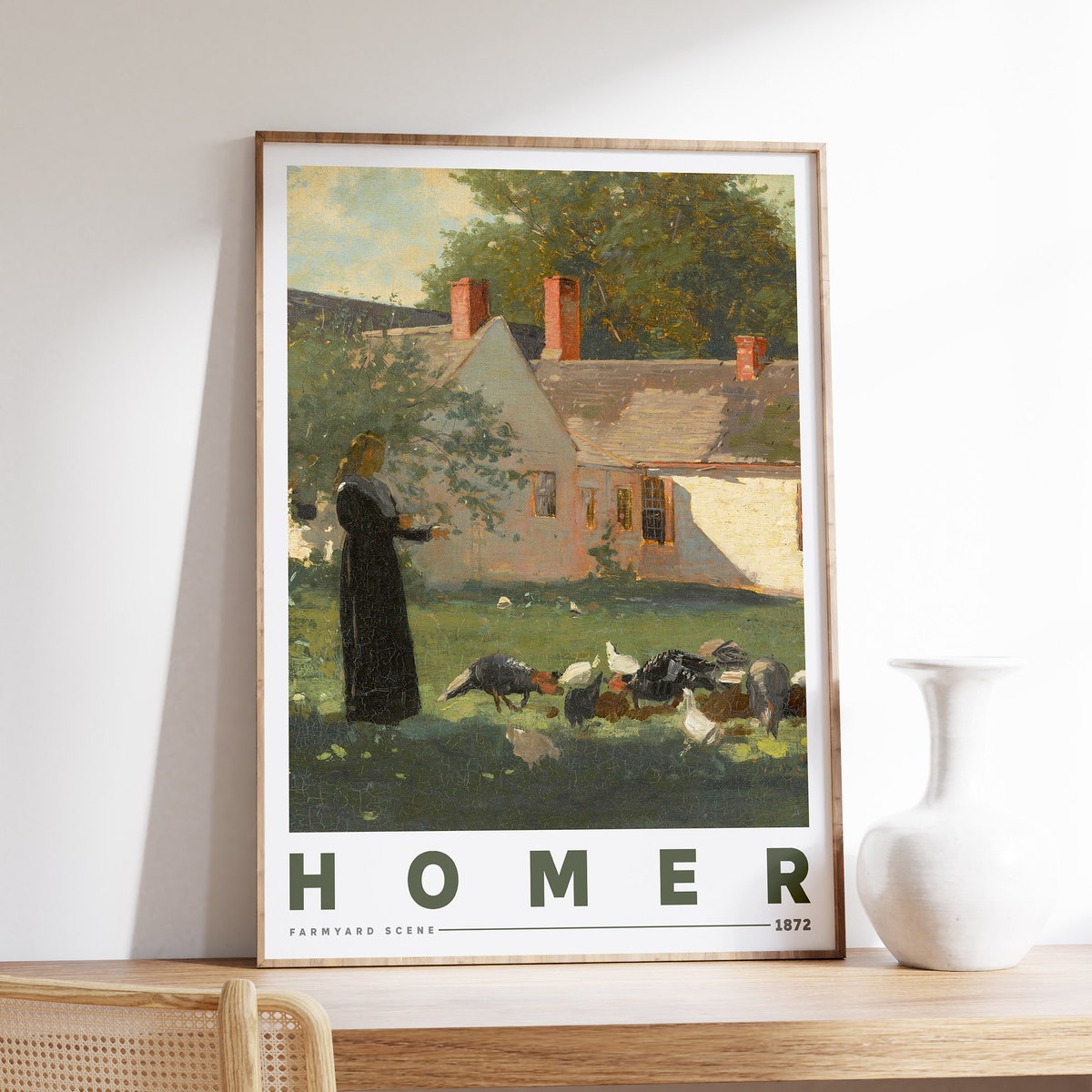
Standing at a turning point in his career, Winslow Homer moved from the grand narratives of Civil War illustration toward the intimate study of rural life in the years around 1872–1874. Farmyard Scene embodies this stylistic redirection, offering a quietly observant snapshot of agrarian existence. By focusing on everyday gestures rather than heroic drama, Homer channels his late-1840s to 1870s output into a sequence of genre pictures that reveal broader shifts in American art. This work signals his conviction that the simple cadence of farm labor could carry emotional weight and aesthetic resonance.
Homer’s lifelong fascination with ordinary people and tasks finds a lyrical voice in this scene. He applies a painterly economy of means, using measured brushstrokes and restrained detail to capture the bare essentials of daily work. A figure inclines toward a coop, mid-motion, while fowl gather beneath the soft haze of sunlight. There is no embellishment or melodrama here, only an unvarnished depiction that carries a quietly moral undertone. This approach aligns with his postwar preference for observational realism over grand allegory.
The provenance of Farmyard Scene is meticulously traced through the archives of the Clark Art Institute, where the painting carries accession number 1955.772. Archival records, exhibition histories, and its public domain classification affirm the work’s stable identity across institutional and digital collections. Simultaneously, reproductions on Wikimedia Commons echo the museum’s title and dating conventions. This cross-institutional consensus secures Farmyard Scene’s place within Homer’s mature rural oeuvre, and it joins a larger cultural dialogue about community, memory, and moral reflection in post-war America.
Composing Light and Labor
Farmyard Scene unfolds with a compositional clarity that suggests a choreographed tableau rather than a haphazard snapshot. The barn’s façade creates a horizontal anchor, while fences and pathways carve subtle diagonals through the sunlit yard. Figures, animals, and outbuildings occupy distinct zones yet harmonize in a gentle visual rhythm. Homer’s arrangement allows the viewer’s gaze to flow effortlessly across the scene, highlighting the interdependence of each element. This measured ordering of forms demonstrates his skill in organizing pictorial space, transforming simple farm typologies into a balanced, coherent whole.
Light pervades Farmyard Scene with a soft insistence, painting every surface with a delicate glow. Sunbeams caress weathered boards, illuminating textures that range from rough-hewn timber to the feathery plumage of hens. Shadows stretch languidly across stone and soil, delineating shapes with subtle gradations rather than harsh contrasts. Homer’s mastery lies in the nuanced interplay between brightness and shade, a strategy that heightens the scene’s atmosphere without resorting to dramatic chiaroscuro. Here, luminosity serves both as a unifying force and as a tool for articulating the painting’s spatial depth.
Despite its modest scale compared to Homer’s storied seascapes or wartime compositions, Farmyard Scene achieves an intimate presence through a disciplined painterly economy. Each brushstroke appears deliberate, contributing to a cohesive depiction of rural labor and environment. The restrained palette emphasizes ochres, muted greens, and warm browns, reinforcing the sense of a sunlit afternoon. Texture emerges through deft application of paint, suggesting rough bark and soft grasses with equal fidelity. In this self-contained scene, Homer underscores the profound potential of small-scale works to convey universal themes of toil and harmony across time and place.
Community, Continuity, and Cultural Reflection
Community and continuity resonate at the heart of Farmyard Scene, where individual tasks coalesce into a larger narrative of shared purpose. A helper gathering feed, a figure pausing mid-stride to survey the yard, and the silent dialogue between human and animal presence all point toward collective resilience. Homer’s rural tableau becomes an allegory for the bonds that sustain small communities, reflecting a 19th-century ethos that prized cooperation as much as individual resolve. His depiction suggests that routine labor possesses its own understated beauty and narrative power.
The ordinary tasks depicted here resonate as poetic narratives of endurance. Whether hauling water or tending livestock, the figures embody the labor that underpinned a nation’s growth. Homer treats these moments with equal seriousness, revealing an underlying dignity woven into the smallest of routines. By bestowing equal importance on each gesture, the artist invites viewers to recognize the dignity embedded in ordinary work. This sense of continuity invites reflection on generational legacies and rhythms of life that endure beyond any single moment.
The painting’s sustained presence in public collections and digital archives secures its role as a reference point for scholars and art enthusiasts alike. Metadata from the Clark Art Institute and cross-listed entries on Wikimedia Commons ensure ongoing accessibility, while exhibition records chart its journey through institutional and private displays. This visibility underscores the painting’s value as both a historical document and an object of aesthetic admiration. Farmyard Scene continues to inspire discussions about technical craft, subject matter, and the social contours of late-19th-century American life, affirming its place within an evolving cultural conversation.