Matisse Made Colour Do the Work of Drawing
Updated: Oct 10
Autumn 1905, in a Paris exhibition hall. Henri Matisse hangs a portrait of his wife and walks away. Within hours, a critic has named him a wild beast.
He keeps painting. For fifty more years he refuses to stop. He turns colour from servant into structure — builds whole rooms out of red, lets three colours carry an entire dance, and ends his life cutting straight into paint with scissors. The wild-beast joke becomes the foundation of the twentieth century.
1905 — the wild-beast moment
Until 1905, colour had a job. It modelled volumes, suggested light, imitated reality. Drawing carried the structure; colour fell in afterward.
Matisse, André Derain, and Maurice de Vlaminck arrived at the Salon d'Automne that autumn with canvases that refused this hierarchy. Pure red. Pure orange. Pure green. Applied without transition, without shadow, without apology. They were hung in the same gallery as a Renaissance bronze.
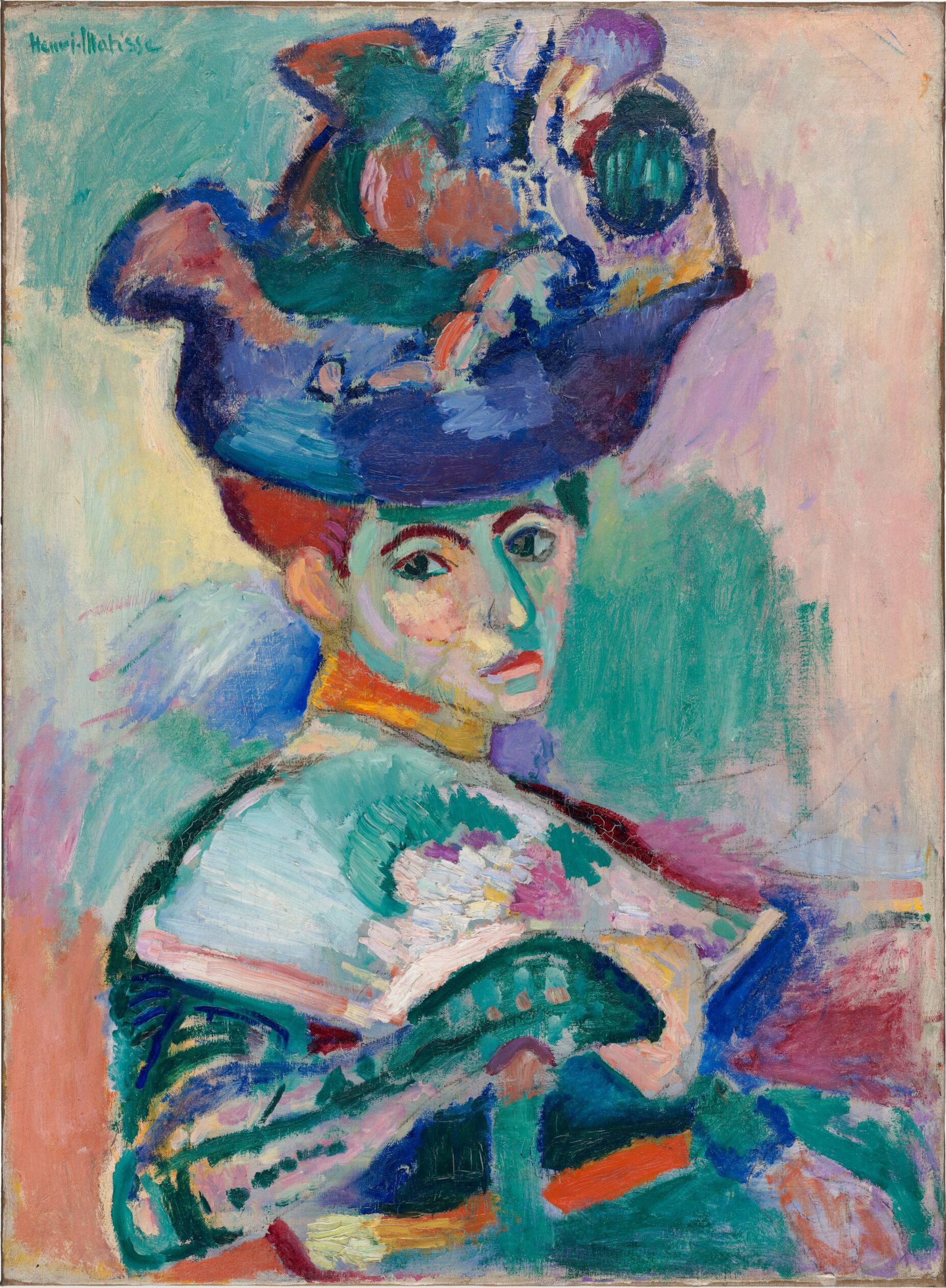
The standout was Woman with a Hat — his wife Amélie, half-portrait, half-explosion, painted in green stripes and orange edges. The critic Louis Vauxcelles took one look at the room, saw the Renaissance sculpture in the centre, and announced: "Donatello among the wild beasts."
The phrase was meant as ridicule. It became the name of the movement — Fauvism, the wild beasts. The painters kept it.
Releasing colour — a meadow in pink, orange and green
The next year, Matisse painted what the wild beasts had earned. Le Bonheur de Vivre — the Joy of Life — is a pastoral landscape in colour that no pastoral landscape has any right to be: pink sky, acid green grass, orange-outlined nudes lying in the open. There is no shadow. There is no perspective. The painting holds itself together not by the rules of representation but by colour alone.
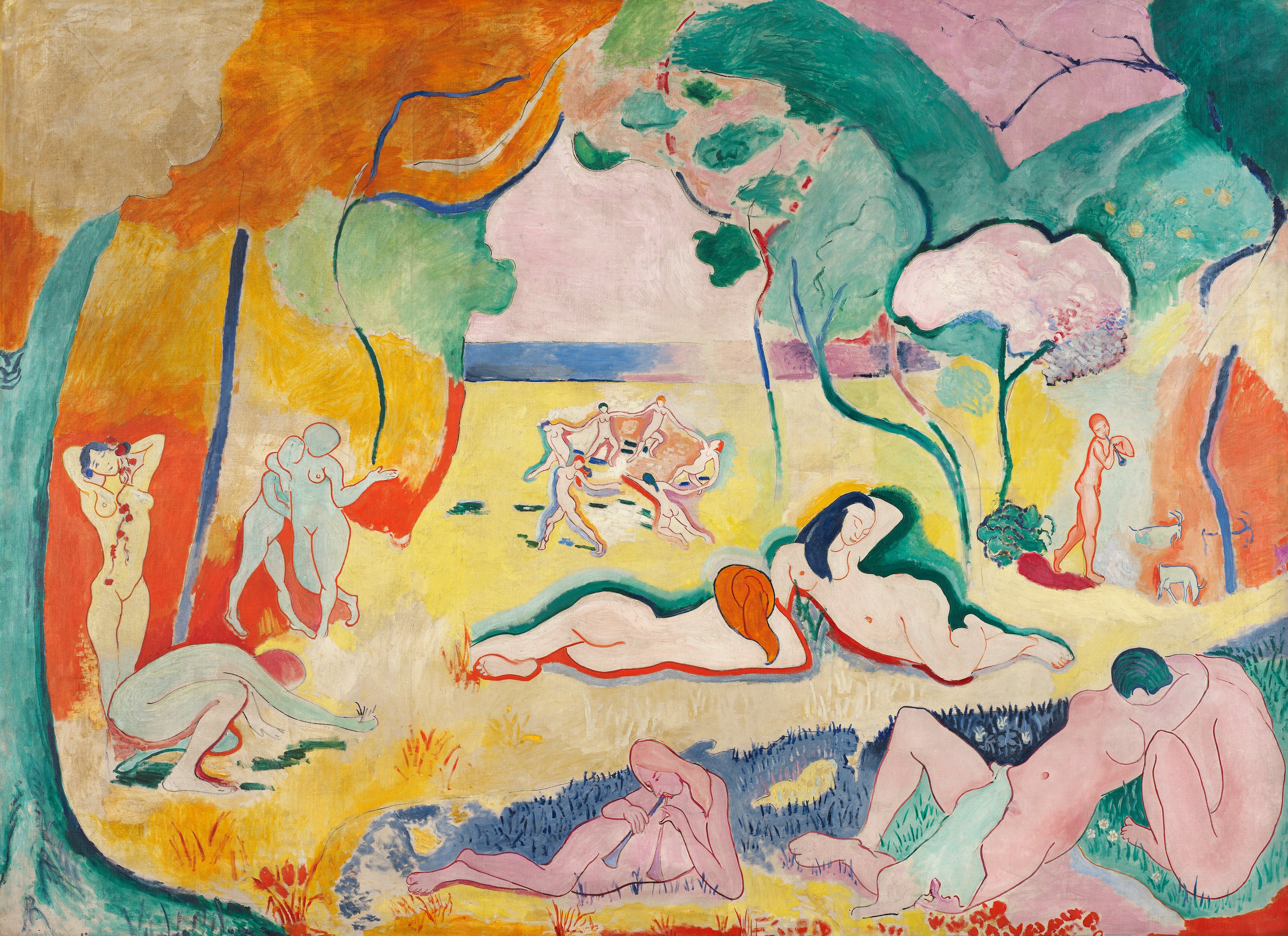
Picasso saw the painting at a Paris collector's apartment and was so disturbed by it he began work on Les Demoiselles d'Avignon the next year, partly in answer. Matisse had given European painting a new permission: the canvas does not have to look like the world. It can be a system of pure forces in its own right.
Building with colour — La Danse and three colours
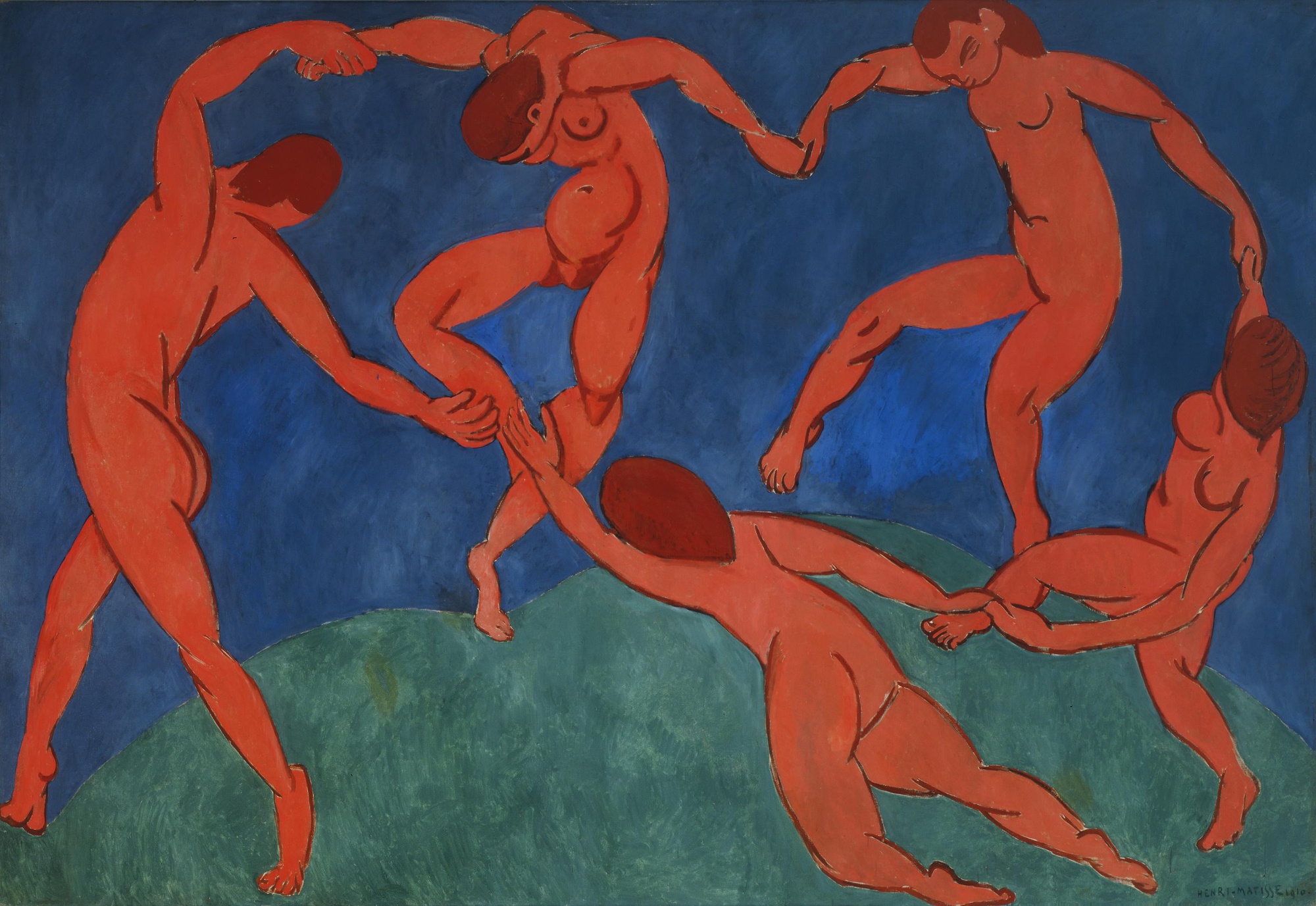
By 1910, Matisse had distilled the Fauvist explosion into something almost severe. La Danse uses three colours, total: blood-red for the figures, deep blue for the sky, green for the ground. No shadows. No detail. No anatomy. Five nude dancers in a circle, hands locked, knees bent, dragged into motion by their own rhythm.
What carries the composition is colour alone. The red is hot enough to push forward; the blue cold enough to push back; the green stable enough to hold both. The painting moves because the colours move against each other. It is the most economical painting of the twentieth century.
Red is not decoration. Red is structure.
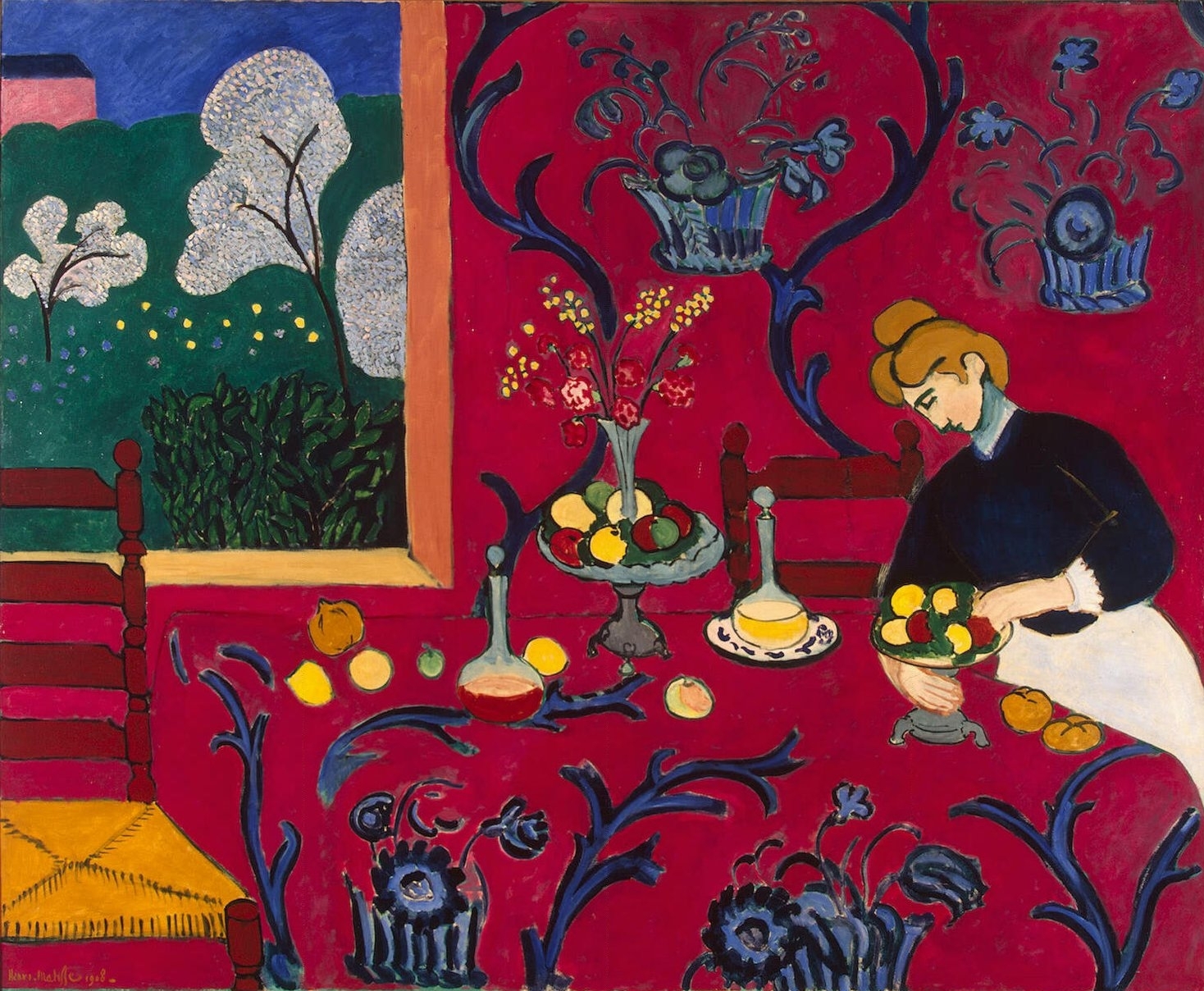
Two years before La Danse, Matisse painted a dining room in which the wall, the tablecloth, the curtains and the table itself are all the same single colour: a high, ringing cadmium red. There is no perspective drop. The wall and the cloth meet on a single flat plane. Only a window onto a green garden breaks the room, and even that window reads more like a panel than a view.
Harmony in Red is the painting that taught a generation of decorators how colour could hold a room together. The blue arabesque pattern crawls across both wall and table indifferently; the colour is the structure, the drawing is the ornament. Matisse had inverted everything.
1941 — the scissors
In 1941 Matisse was seventy-two and dying. A duodenal cancer was removed by surgery in Lyon; the operation left him unable to stand at an easel. He should have stopped painting. He invented a new way to paint instead.
He had his assistants paint large sheets of paper in pure gouache. Then he sat in his bed with a pair of fabric scissors and cut the shapes — dancers, swimmers, leaves, blue nudes — directly out of the painted paper. The shapes were pinned to a wall and rearranged for weeks until the composition was right.
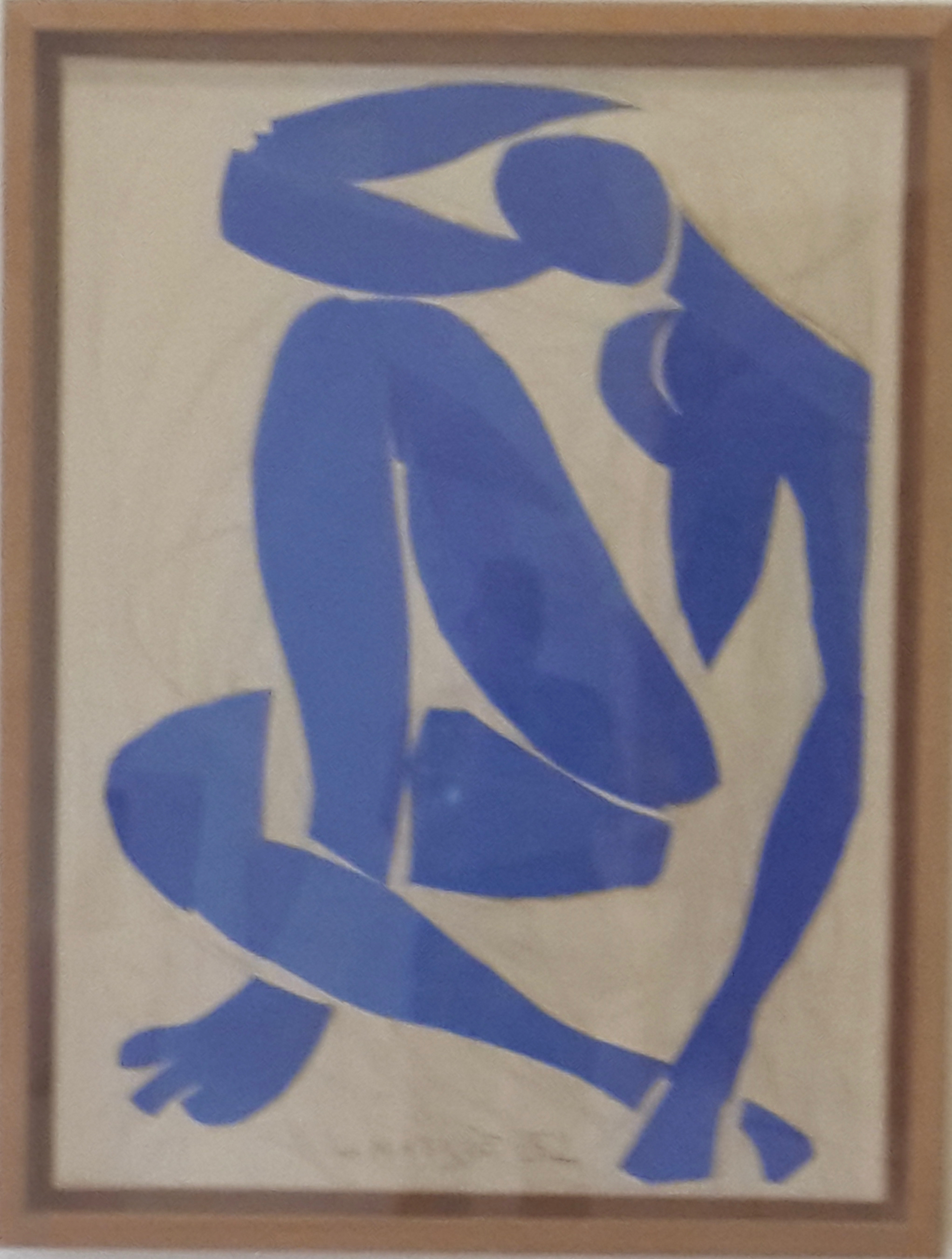
He called it cutting straight into colour. The Blue Nudes from 1952 are the most distilled of the late cut-outs — a kneeling figure assembled from a dozen pieces of cobalt-blue paper, every contour decided not by the pencil but by the blade.
Colour as the space itself — the chapel at Vence
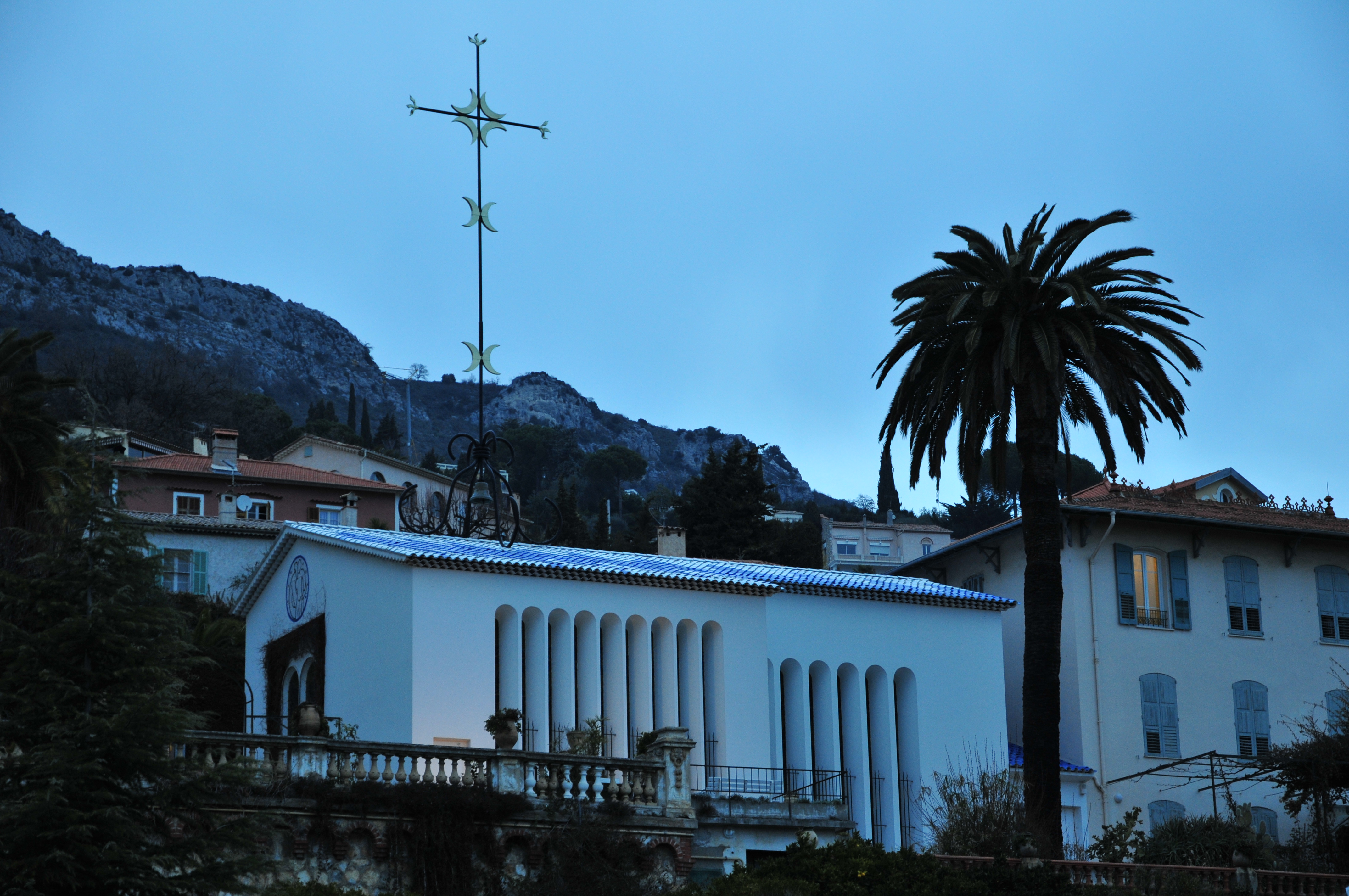
Matisse spent his last working years building a chapel. The Chapelle du Rosaire de Vence, on a hillside in Provence, opened in 1951. Matisse considered it the masterpiece of his life. The exterior is plain whitewash and a single iron crucifix on the roof. The interior is yellow, green and blue stained glass falling on white walls — colour treated, finally, as a material that fills space rather than describes a surface.
He died three years after it opened. The wild beast of 1905 had become the colourist of the century.
What Matisse left us
Every contemporary painter who has trusted colour to hold a canvas — every interior designer who has built a room around a single hue — every illustrator who has chosen to abandon shading in favour of flat colour fields — owes Matisse a small inheritance. He was the painter who made colour carry weight in modern art.
Fifty years of refusing to stop. Wild beast, then architect of colour, then man with a pair of scissors. The line he drew through the century was made entirely of paint.
Browse the archive of classical-art prints at zocineartdesign.etsy.com.
Related Reading
New in the Journal: The Fauves: Wild Beasts of Early Modern Painting


Comments