The Women Who Commanded the Baroque: Five Masters of Drama and Light
Between roughly 1550 and 1700, a small number of women built full professional careers as painters at a time when the studios, academies, and guilds of Europe were closed to them by custom and often by law. Five of them stand out for the sheer force of their work: Artemisia Gentileschi, Lavinia Fontana, Judith Leyster, Giovanna Garzoni, and Mary Beale. They ran workshops, signed contracts, trained apprentices, and painted with a command of drama and light that answers any name in the Baroque canon.
This is a survey of those five careers. Each woman worked in a different city and a different specialty, from the theatrical violence of Roman history painting to the quiet precision of Dutch portraiture and Florentine still life. What unites them is that they were paid professionals who competed on equal technical ground, and whose surviving pictures still teach a viewer how to look.
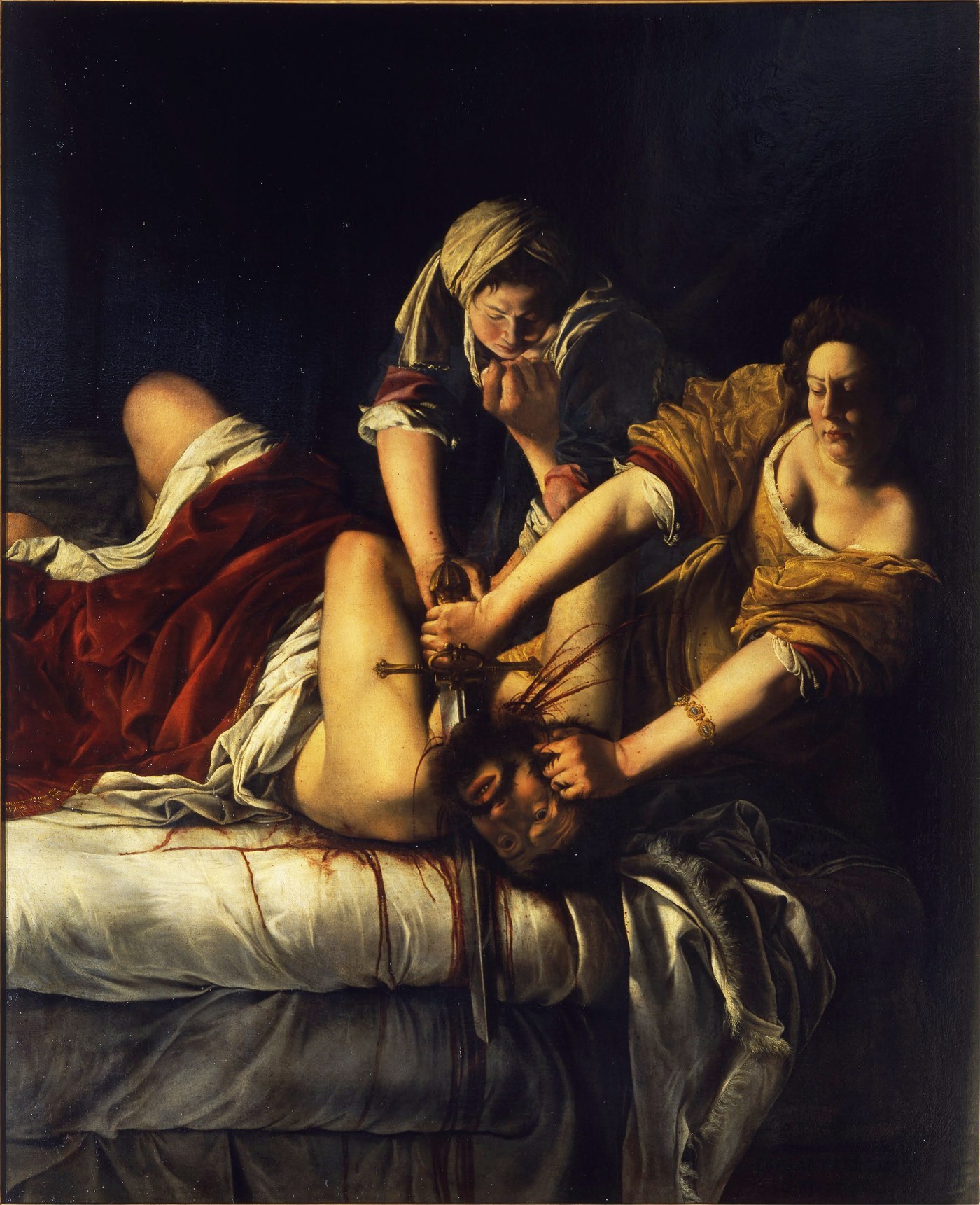
Artemisia Gentileschi and the Weight of the Blade
Artemisia Gentileschi was born in Rome in 1593 and died in Naples in 1656, and she remains the most celebrated woman of the entire Baroque century. She trained in the workshop of her father, the painter Orazio Gentileschi, and absorbed the naturalism and hard directional lighting of Caravaggio at first hand. By her early twenties she was producing large history paintings, the most prestigious and most male category of the age, on a scale of about 199 by 162.5 centimetres, roughly 78.4 by 64 inches.
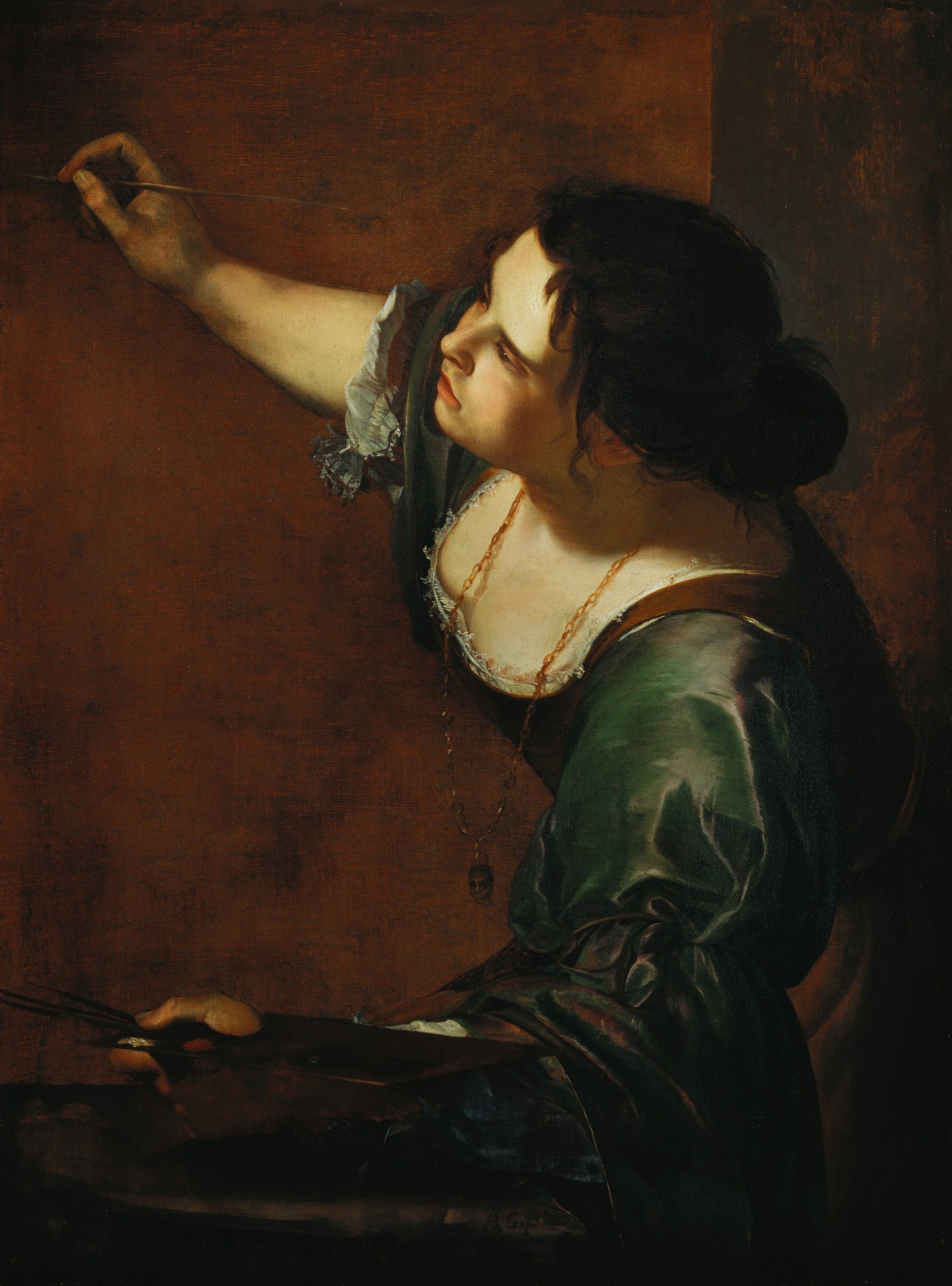
Her signature subject was Judith, the biblical widow who saves her people by beheading the general Holofernes. Where earlier male painters staged the act as a tidy symbol, Artemisia rendered it as physical labour. Two strong women brace, grip, and cut, their sleeves pushed back, blood running along the folds of the sheet. The candlelight does the rest, carving the figures out of a near black ground so that the eye is forced onto the struggle at the centre.
She also fought for her standing in words. In a letter of 1649 to her patron Don Antonio Ruffo, Artemisia answered a client who doubted her by writing, "you will find the spirit of Caesar in the soul of a woman." It is one of the earliest surviving statements by a professional female artist defending her own worth, and it reads today as plainly as it must have then.
Available as a fine print: Artemisia Gentileschi, Judith Beheading Holofernes (1614).
Lavinia Fontana, the First Woman to Run a Workshop
A generation before Artemisia, Lavinia Fontana was already running a paying studio. Born in Bologna in 1552 and trained by her father, the painter Prospero Fontana, she became what many historians count as the first woman to maintain a professional workshop on the open market, taking commissions rather than working only for a single court. She married a fellow painter, Gian Paolo Zappi, who set aside his own brush to manage her business and household, an arrangement that reversed the usual roles of the period.
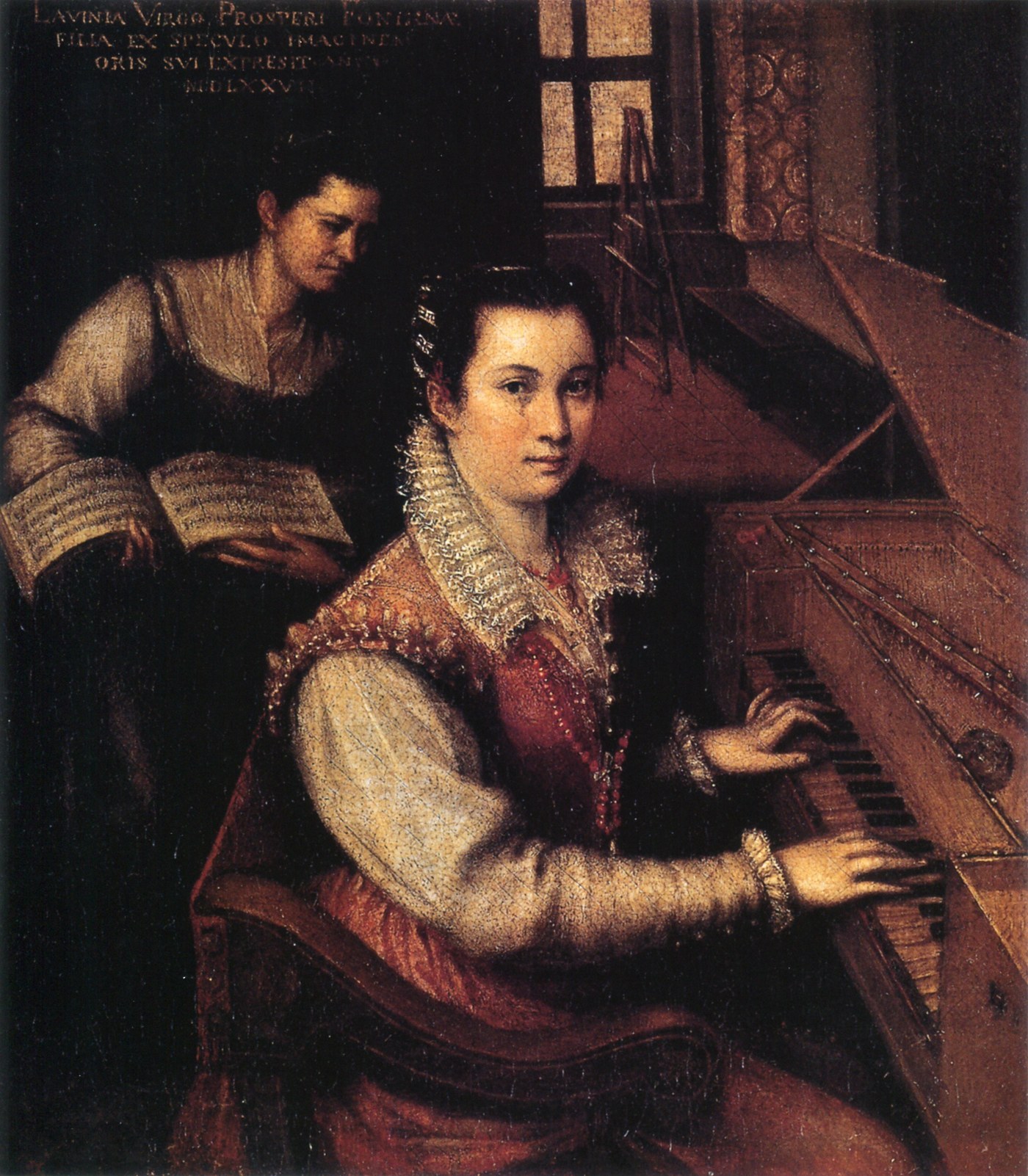
Fontana painted portraits of the Bolognese nobility, large religious altarpieces, and mythological scenes, and she was among the first women recorded painting the female nude for public commissions. Around 135 works are documented to her hand, of which roughly 30 signed and dated pictures survive, a substantial catalogue for any painter of the sixteenth century. She raised eleven children while keeping the studio in production, and near the end of her life she moved to Rome, where she was associated with the Academy of Saint Luke. She died there in 1614.
Judith Leyster, Master of the Haarlem Guild
In the northern Netherlands, Judith Leyster broke a different barrier. Born in Haarlem in 1609 to a family with no painters in it, she trained outside the usual father-to-child line and by 1633 had been admitted as a master to the Guild of Saint Luke at Haarlem, the professional body that licensed painters to sell their work and take pupils. She was among the very first women to earn that rank, and by 1635 she was teaching at least three apprentices of her own.
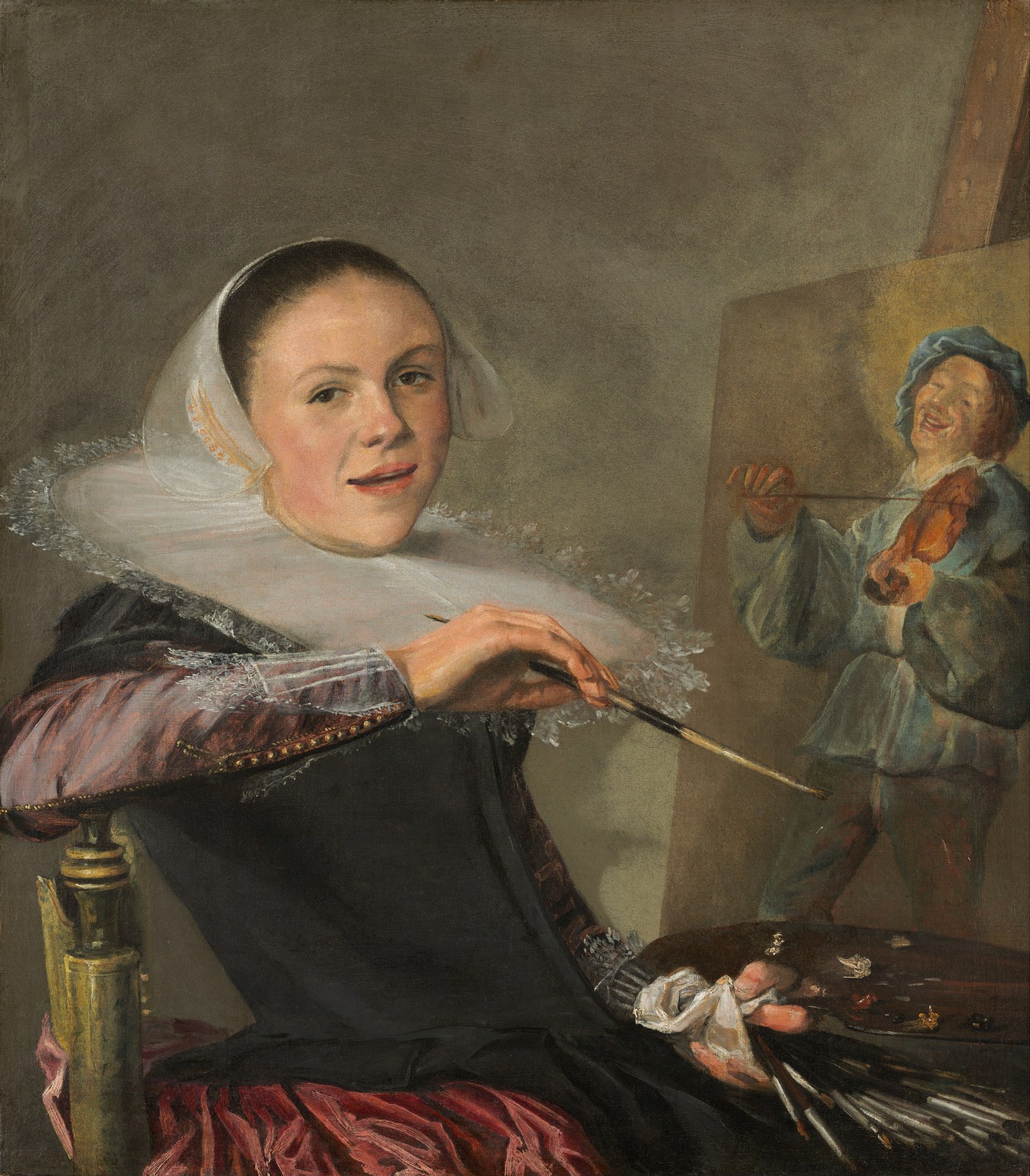
Her Self-Portrait, painted about 1630 and measuring roughly 74.6 by 65.3 centimetres, is one of the most engaging pictures of the Dutch Golden Age. She shows herself relaxed and mid-sentence, an easel picture within the picture, radiating the ease of a painter certain of her craft. For centuries after her death in 1660 many of her canvases were mistakenly credited to her male contemporary Frans Hals, and only the rediscovery of her monogram, a J and an L threaded through a shooting star, restored her name to her own work.
Giovanna Garzoni, the Scientist of Still Life
Giovanna Garzoni, born on the Adriatic coast of Italy in 1600, turned the smallest genre into something entirely her own. She worked chiefly in tempera and watercolour on vellum, a demanding technique built up from countless tiny stippled dots, and she studied the methods of scientific illustration until her fruit, shells, insects, and animals carried the accuracy of a naturalist alongside the poise of a court picture.
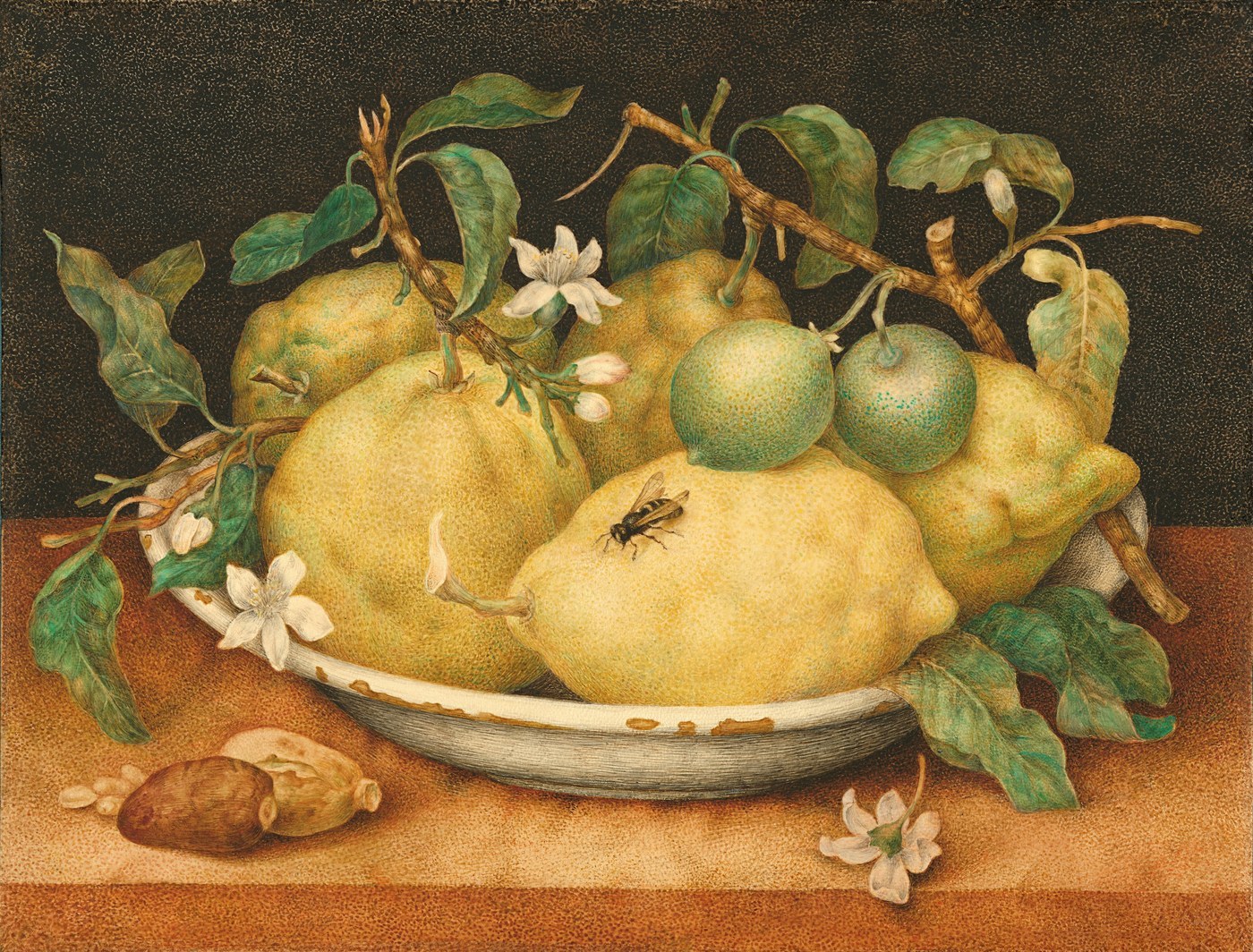
Garzoni was famous in her own lifetime and travelled widely across Europe, working for the Medici family in Florence, where she became a favourite. She refused the usual formula of the flower piece, combining unexpected objects such as a small dog, a Chinese porcelain cup, or a cracked bean pod into compositions that feel observed rather than arranged. She died in Rome in 1670, having willed her estate to the painters guild that had honoured her.
Available as a fine print: Giovanna Garzoni, botanical illustration.
Mary Beale, England First Professional Portraitist
Across the Channel, Mary Beale built the first sustained professional practice by an English woman painter. Born in Suffolk in 1633, she had no formal training and taught herself, yet she wrote about her methods with the confidence of a working master. Her manuscript known as Observations, dated 1663, discusses the handling of oil colours and is regarded as the earliest surviving text on painting technique written by a woman.
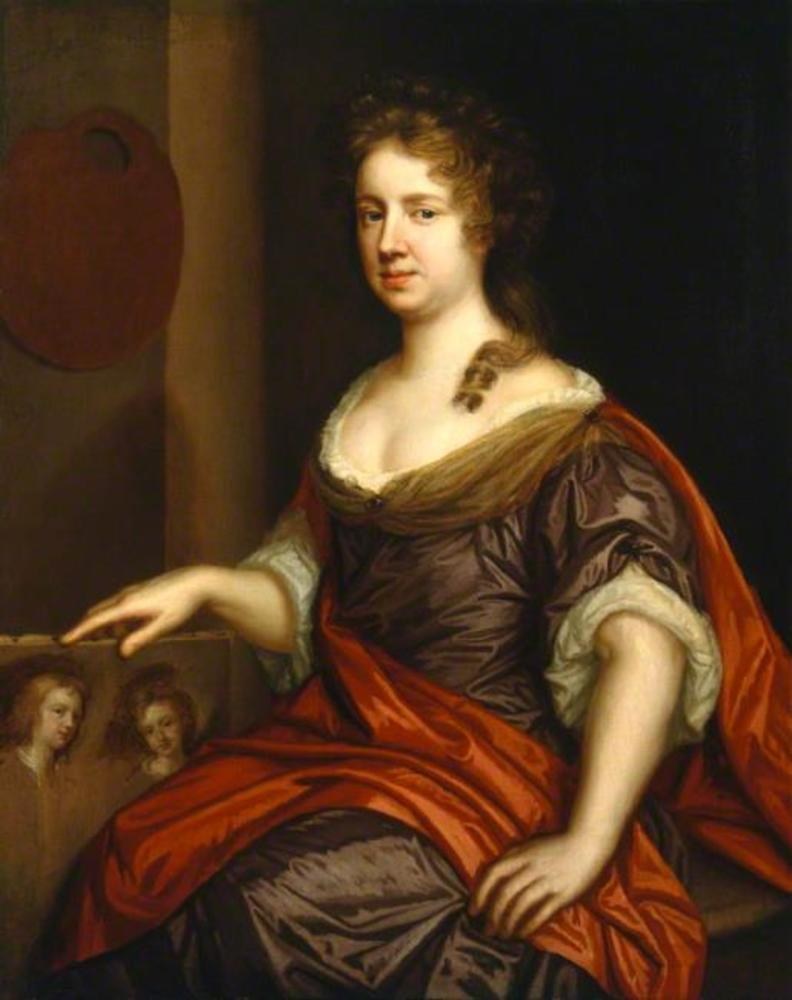
Beale ran her studio as a family business from her London home, with her husband Charles keeping the accounts and grinding her pigments and her sons assisting at the easel. His notebooks record the scale of the enterprise: in the single year of 1677 she took on 83 portrait commissions. She studied the work of the leading court painter of the day, copying his portraits to sharpen her own hand, and she taught female pupils. She died in 1699, having supported her household by her brush for more than three decades.
What the Five Careers Have in Common
These painters never formed a movement and most never met, yet their careers rhyme. Four of the five learned their trade inside a family workshop, the one route that let a girl handle expensive pigments and life models at all. Every one of them treated painting as a paid trade with contracts, apprentices, and account books, not as a genteel hobby. And each mastered the central technical problem of the age, the control of light, whether as the knife-edge chiaroscuro of Artemisia and the tenebrism she took from Caravaggio, or as the cool even daylight of a Dutch interior and the jeweller precision of tempera on vellum.
Their later fortunes also rhyme. Because the record-keeping of the art trade assumed a male hand, works by all five were at times reassigned to fathers, husbands, or better-known men, and the slow work of restoring the correct names has occupied historians for over a century. The pictures themselves never lost their power. They simply waited for the signatures to be read again.
Frequently Asked Questions
Who was the most famous female Baroque painter?
Artemisia Gentileschi is by a wide margin the best known. Born in 1593 and active across Rome, Florence, and Naples until her death in 1656, she was the first woman to build a major reputation as a painter of large history subjects, and her versions of Judith beheading Holofernes are among the defining images of Baroque drama.
Did women really paint in oils during the Baroque period?
Yes. Artemisia Gentileschi, Lavinia Fontana, Judith Leyster, and Mary Beale all worked in oil on canvas or panel and took paying commissions in it. Giovanna Garzoni specialised instead in tempera and watercolour on vellum, a technique prized for its fine detail. Oil painting was never closed to women by any rule of materials, only by the social barriers that kept most of them out of training.
Why were so few women allowed to become painters?
The obstacle was access to training. Formal instruction ran through guilds and academies that rarely admitted women, and a key part of a history painter education, the study of the nude from life, was considered improper for them. The women who succeeded almost all came from painting families, where a father could teach a daughter privately. Lavinia Fontana learned from Prospero Fontana and Artemisia Gentileschi from Orazio Gentileschi, which is why so many of the great names share their surnames with a working father.
How can I recognise a Baroque painting by a woman?
There is no single visual tell, and that is part of the point, since these painters met the same standard as their male peers. The surest guide is the signature and the documented history of a work. Judith Leyster, for example, marked her canvases with a distinctive monogram of a J and an L set inside a shooting star, and it was the rediscovery of that mark that returned many paintings from a male contemporary back to her name.


Comments