Bronzino's Eleonora of Toledo and Her Son Giovanni (c.1545): The Dress That Told a Duchy's Story
Agnolo Bronzino painted Eleonora of Toledo and Her Son Giovanni around 1545, in oil on panel, as a portrait of the Medici dynasty at its height. The duchess sits in a gold-brocaded gown, her hand on the shoulder of the boy, against a cold blue ground. Her calm face is the statement: power that does not need to move.

The facts at a glance
Artist: Agnolo Bronzino (1503-1572), court painter to Duke Cosimo I de' Medici
Date: about 1545
Technique: oil on panel, about 115 x 96 cm
Sitters: Eleonora of Toledo (1522-1562) and her son Giovanni, born 1543
Today: a Florence collection
Who was Eleonora of Toledo?
Eleonora was born in Naples, the daughter of the Spanish viceroy Pedro Alvarez de Toledo, and married Cosimo I de' Medici in 1539. Cosimo had become Duke of Florence only two years earlier and needed a bride who linked him to the Habsburg world of Emperor Charles V. She gave him many children, and portraits like this one showed Florence that the line would continue. A ruler who had risen quickly wanted proof of permanence, and a calm, richly dressed mother with a healthy heir was exactly that proof.
A dress that is the real subject
Your eye goes first to the gown. Its velvet is woven with gold thread in a repeating pattern of pomegranates, a motif tied to fertility and abundance. The sleeves are slashed and pearl-trimmed, and a net of pearls and gold holds her hair. Bronzino painted every thread without a trace of effort, and the fabric looks almost as if it could stand without her.
This was deliberate. In sixteenth-century Florence the cloth of the Medici court was a political tool. Silk and gold came from local workshops that the duke wanted to promote. The dress shows rank, wealth and the city's industry in one image.
Why the face feels so still
Bronzino was a Mannerist, and his portraits favour elegance and control over warmth. Eleonora looks past the viewer with a smooth, marble-like face, and the painter does not show her thinking. Giovanni is a child but is posed like a small adult, his hand resting calmly on her lap.
The background is a flat, cool blue, with no room, window or landscape to place them. The effect is of two people lifted out of time. Compare the plain realism of Holbein's Anne of Cleves, painted in the northern tradition a few years earlier, with this courtly idealisation.
What happened to them
Giovanni de' Medici grew up to be made a cardinal at seventeen. He and his mother both died in 1562, within weeks of each other. The cool calm of the portrait stands in sharp contrast to the sudden end of that family branch.
Where it fits
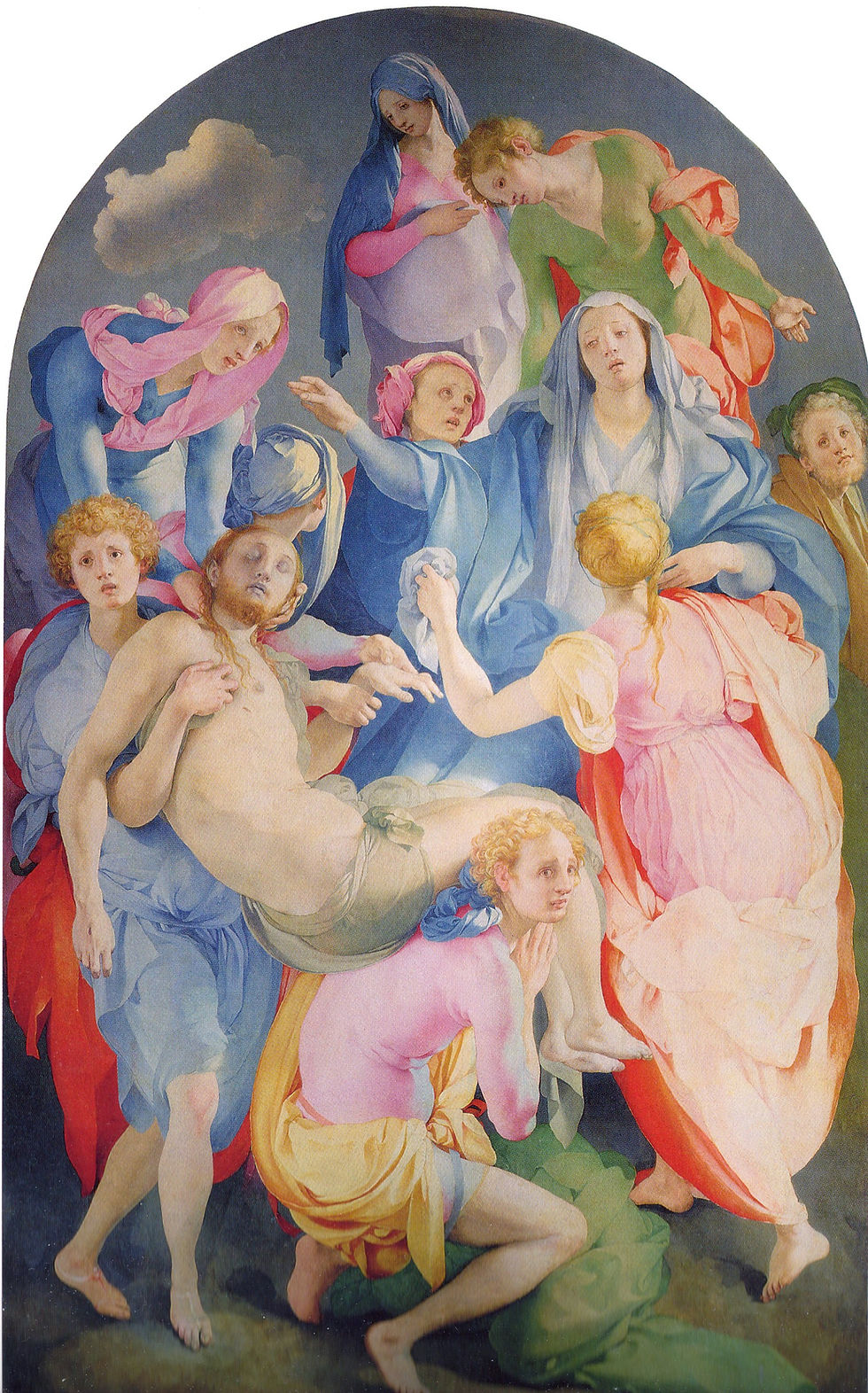
Bronzino's portraits are the courtly end of the same Florentine taste that produced Pontormo's Deposition. For the larger story, see The Italian Renaissance in Ten Artists.
Zocine Art Design is an independent studio that prints classic paintings as wall art.
Frequently asked questions
Who painted Eleonora of Toledo and Her Son Giovanni?
Agnolo Bronzino, court painter to the Medici in Florence, painted it around 1545.
Who was Eleonora of Toledo?
She was the Spanish-born wife of Cosimo I de' Medici, Duke of Florence, and the mother of several of his children.
What does the pomegranate pattern on her dress mean?
The pomegranate was a traditional symbol of fertility and abundance, suited to a duchess whose duty was to secure the dynasty.
Is Bronzino a Renaissance or Mannerist painter?
He is considered a leading Mannerist, a late-Renaissance style known for cool colour, polished surfaces and elegant control.
Browse Bronzino and other classic art prints in the archive at Zocine on Etsy.
New in the Journal: Holbein's Anne of Cleves: The Portrait That Made a Marriage

Comments