Carl Larsson and the Swedish Christmas Home He Painted
Updated: 4 days ago
Carl Larsson (1853-1919) was the Swedish painter who made the family home a subject. His watercolours of Christmas at Sundborn, including Julaftonen (Christmas Eve, 1904), show a warm, crowded, light-filled Swedish winter interior, and they still set the picture most Swedes have of an old-fashioned jul.

Who was Carl Larsson?
Larsson was born in Stockholm on 28 May 1853 and died in Falun on 22 January 1919. He grew up poor, trained at the art academy in Stockholm, and in the 1880s worked among the Scandinavian painters at Grez-sur-Loing in France. There he met the painter Karin Bergöö, and they married in 1883.
Artist: Carl Larsson (1853-1919)
Home: Lilla Hyttnäs, Sundborn, Dalarna
Wife and partner: Karin Bergöö Larsson
Children: eight, born between 1884 and 1900
Best-known book: Ett hem (A Home), 1899
What was Lilla Hyttnäs?
Karin's father, Adolf Bergöö, gave the couple a cottage at Sundborn in 1888. They filled it with pale furniture, painted walls, woven textiles and bold colour, and Karin designed much of the interior herself. Larsson then painted the house room by room, with children, pets and daily chores as the subjects.
Those pictures made the house famous. Twenty-six of the watercolours appeared in Ett hem (1899), a book that sold Swedes on the idea of a bright, handmade, family-centred home. Larsson was not painting a palace but an ideal of ordinary life.
How did he paint Christmas?
Larsson painted the season more than once. Christmas Morning is dated 1894, and Julaftonen (Christmas Eve) belongs to 1904, a decade later. In both he does what he does everywhere: he gives you a crowded, affectionate room, with clear outlines, flat bright colour and the soft pale light of a Swedish winter day.
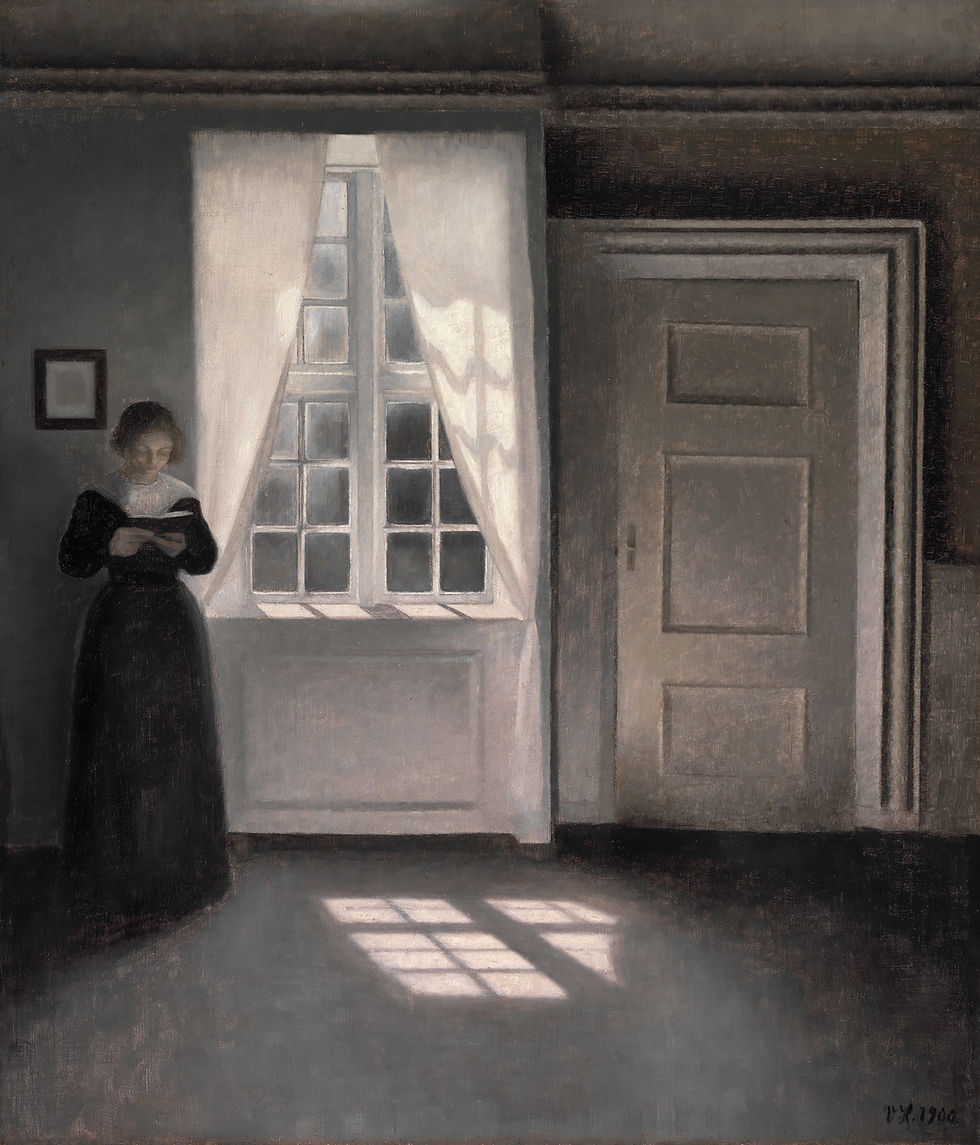
The comparison with Hammershøi's Interior with Sun is useful. Hammershøi's Danish rooms are empty and hushed; Larsson's Swedish rooms are full of people. Both are about home and light, but they sit at opposite ends of the Nordic mood. The wider reason both glow is explained in Why Scandinavian Paintings Glow.
Why is Larsson so loved in Sweden?
He is a national painter in a modest way. His drawings of children, window light and table scenes defined how many Swedes picture a good home, and the farmhouse at Sundborn is still preserved as a place to visit. The colour scheme he and Karin used, pale walls with strong accents of red, blue and green, influenced Swedish design for generations.
How do you hang Carl Larsson at home?
Larsson works best in rooms that already feel lived in. A small watercolour print suits a hallway, a kitchen wall or a child's room, and the thin white margins of his compositions read well in a pale wood frame. In a bedroom, his gentle domestic scenes pair nicely with the layered, restful approach in 10 Cozy Bedroom Wall Decor Ideas.
Zocine Art Design is an independent studio that prints classic paintings as wall art.
Frequently asked questions
Who was Carl Larsson?
Carl Larsson (1853-1919) was a Swedish painter and illustrator best known for watercolours of his family home at Sundborn, collected in the book Ett hem (1899).
What is Carl Larsson's Julaftonen?
Julaftonen (Christmas Eve) is a watercolour dated 1904, showing a Swedish Christmas Eve at home in Larsson's characteristic bright, detailed style.
Who was Karin Larsson?
Karin Bergöö Larsson was Carl's wife, a painter and textile designer who shaped the colourful interiors of their home at Lilla Hyttnäs.
Where did Carl Larsson live?
He lived at Lilla Hyttnäs in Sundborn, Dalarna, a house given to the couple by Karin's father in 1888.
Browse Carl Larsson and other classic art prints in the archive at Zocine.
New in the Journal: Why Scandinavian Paintings Glow: Nordic Light Explained in Six Masterpieces
New in the Journal: Hammershøi's Interior with Sun: Denmark's Quietest Master
New in the Journal: 10 Cozy Bedroom Wall Decor Ideas (Calm, Layered, and Sleep-Friendly)


Comments