Goya Painted the Devil to Mock Those Who Believed
Updated: Oct 10
In 1798 a court painter to the Spanish king sat down in his studio and painted a goat surrounded by witches. He was fifty-two, comfortable, decorated, and quietly furious.
The painting was small — barely seventeen inches tall, easy to hold. It was also a weapon. For Francisco Goya the witch on canvas was never the enemy. The enemy was the institution that still hunted her.
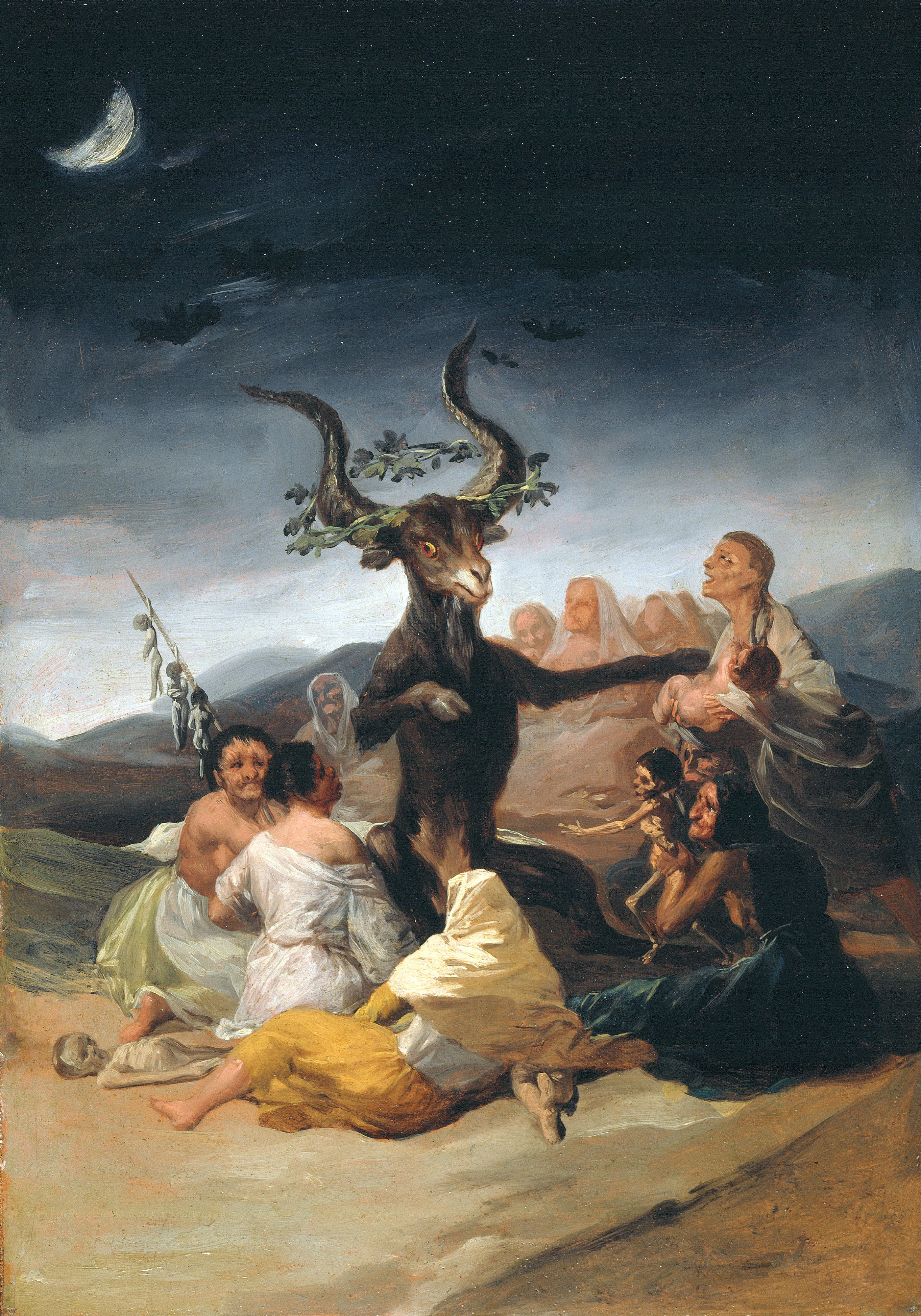
Two paintings, twenty-five years apart
Twice in his life Goya painted the same scene — a horned goat presiding over a coven of women in a moonlit clearing. The first version arrived in 1798. The second came twenty-five years later, in the depths of his deafness and the second Bourbon Inquisition.
The compositions are unmistakably linked. The same horned silhouette. The same crouched figures. The same nocturnal sky. Yet the worlds that produced them could not have been further apart.
The 1798 painting — a witches' altar
The first Witches' Sabbath was painted as part of a six-canvas series commissioned by the Duchess of Osuna, one of the great Enlightenment patrons of Madrid. The paintings were intended for the boudoir at her summer estate outside the city — sophisticated cabinet pictures meant to display Goya's technical virtuosity, and the Duchess's modern sensibility.
Goya gave her a goat-devil crowned in oak leaves, hooves planted in soft earth, a crescent moon turned the wrong way round in the sky behind him. Around him, women old and young hold infants up in offering. The superstition of the time held that the devil fed on children. Goya painted the superstition. He never painted the devil.
The 1789 letter to Martín Zapater
Nine years before the painting, Goya wrote to his oldest friend Martín Zapater. He was already deeply disillusioned with the church's hold on Spanish life:
"I confess that I was dazed at first, but now? Now, I don't even fear witches, goblins, ghosts — miscreants — not any kind of bodies but humans."
The line is brutal in its plainness. The supernatural is fiction; the dangers are entirely human. Goya was a court painter who believed the Inquisition was a fraud and the witch a victim — not because witches existed but because the courts had needed an enemy. He never said so aloud. He just kept painting.
Los Caprichos — the answer in print
A year after the Duchess of Osuna's paintings hung above her boudoir, Goya published Los Caprichos — eighty etchings attacking the same superstitions, but on cheap paper, available to anyone who could afford a few reales.
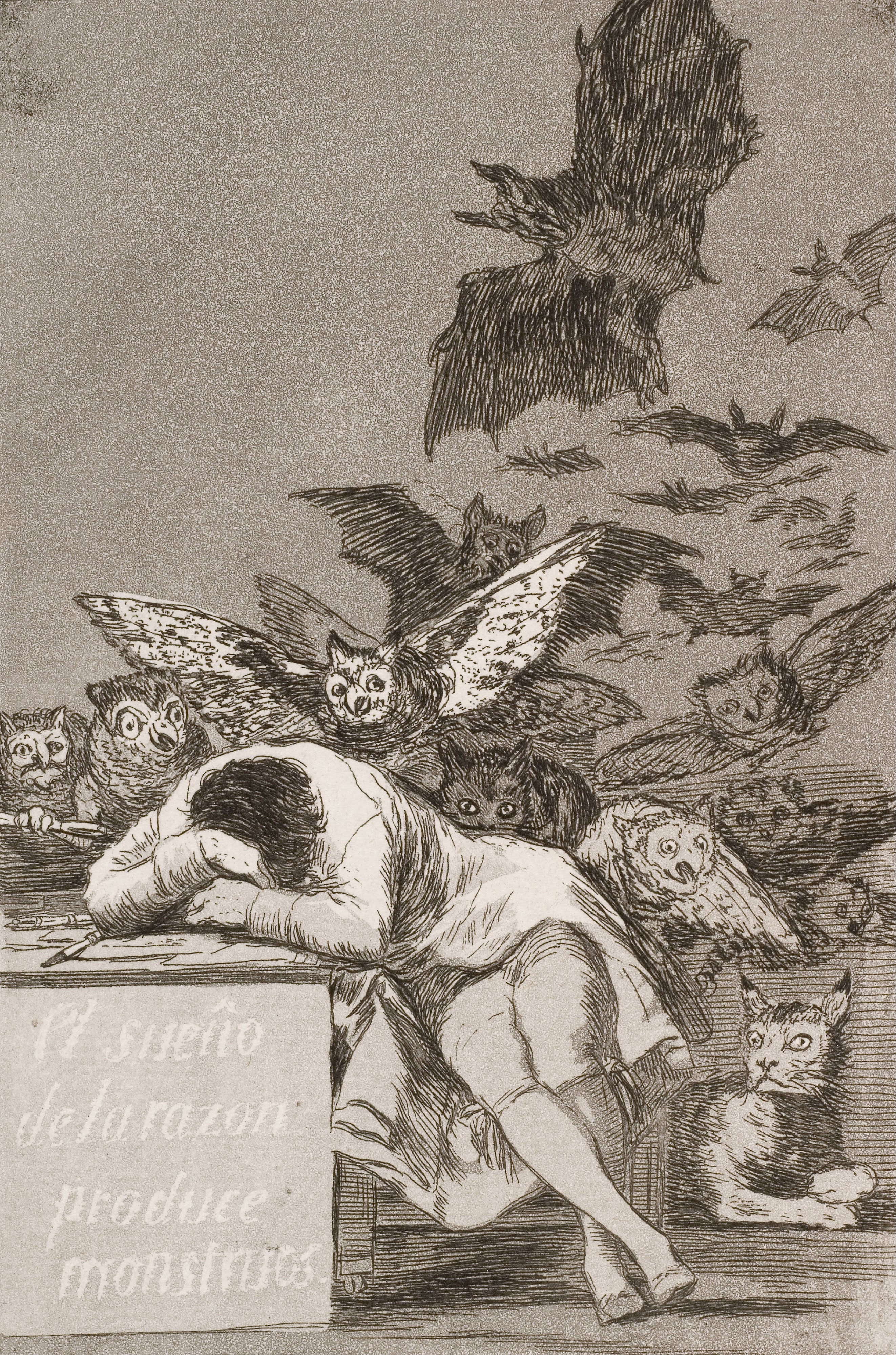
The most famous plate carries his motto: "The sleep of reason produces monsters." A draughtsman lies face-down on his desk while owls and bats wheel out of the dark behind him. Reason asleep — the world overrun. Caprichos was withdrawn from sale within months. The court let him publish it. The court also let him take it back.
Twenty-five years later — the Black Paintings
By 1819 Goya was deaf, ill, and living in a country house on the outskirts of Madrid known as the Quinta del Sordo — the House of the Deaf Man. The Bourbons had been restored to the throne; the Constitution had been revoked; the Inquisition was back in operation. In the dining room of his own house, with no commission, no patron, and no audience, Goya began painting directly onto the walls.
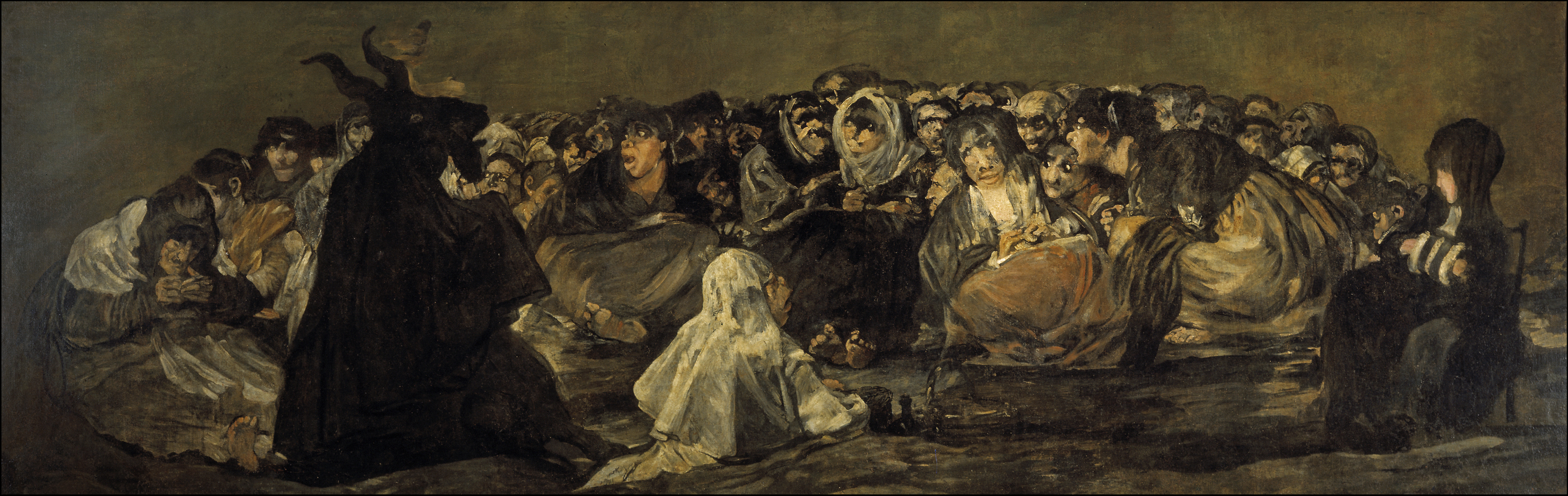
The second Witches' Sabbath is the largest of the series. The goat is monstrous now, a black silhouette ten feet wide. The coven has multiplied into a teeming crowd of distorted faces, hooded and crouching like a mob. The pigments are darker. The brushwork is wilder. The Enlightenment optimism of the 1798 painting has given way to something close to despair.
Saturn devouring his son
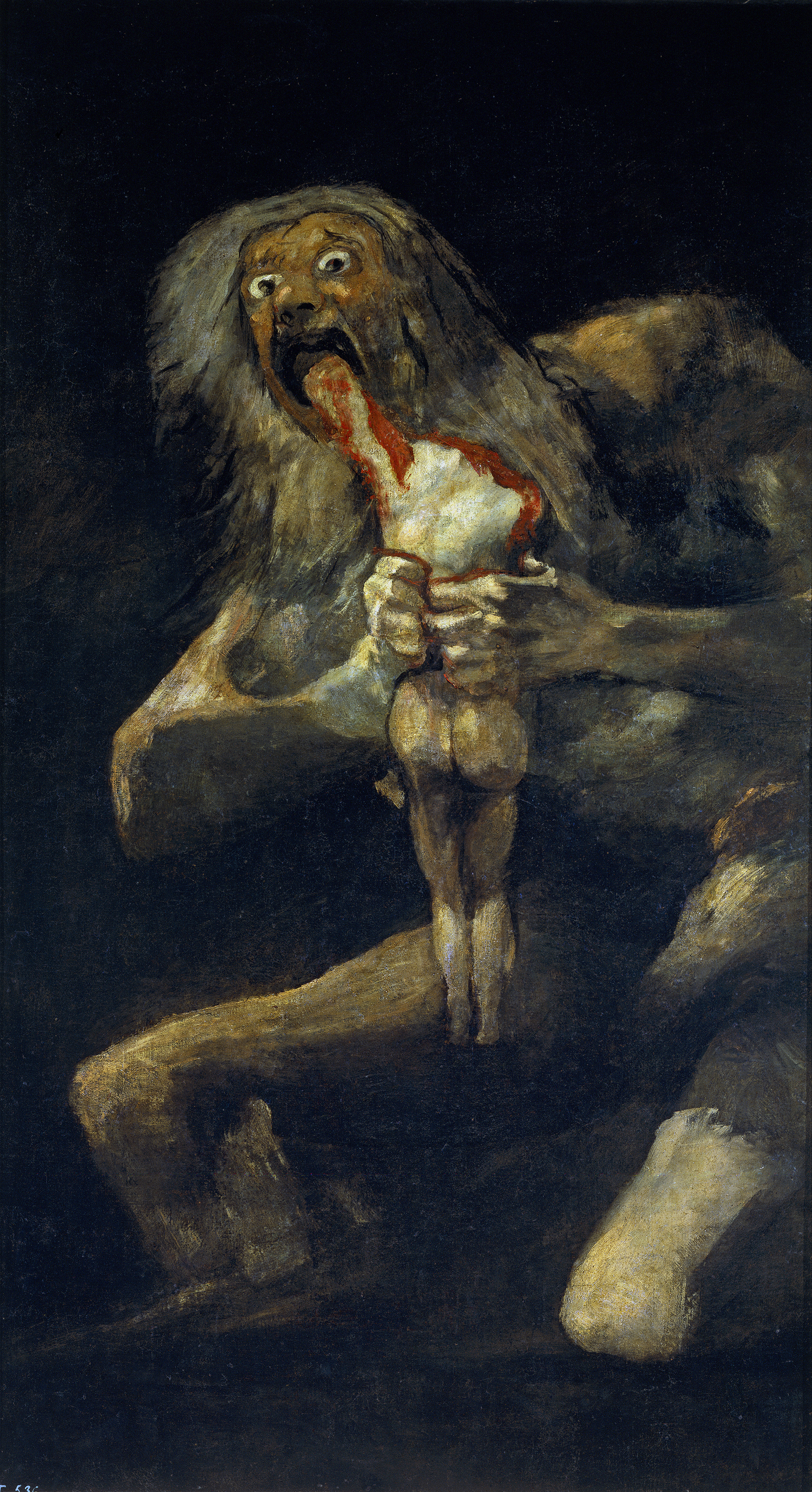
On the same dining-room wall, Goya painted a figure of Saturn devouring one of his children — wild-eyed, blood-streaked, the most violent canvas in the European canon, executed at home with no one to see it but himself. The painting was never titled by Goya. It was never shown publicly during his lifetime. The owners of the house only had the murals transferred to canvas fifty years after his death.
The firing squad — what humans do without devils
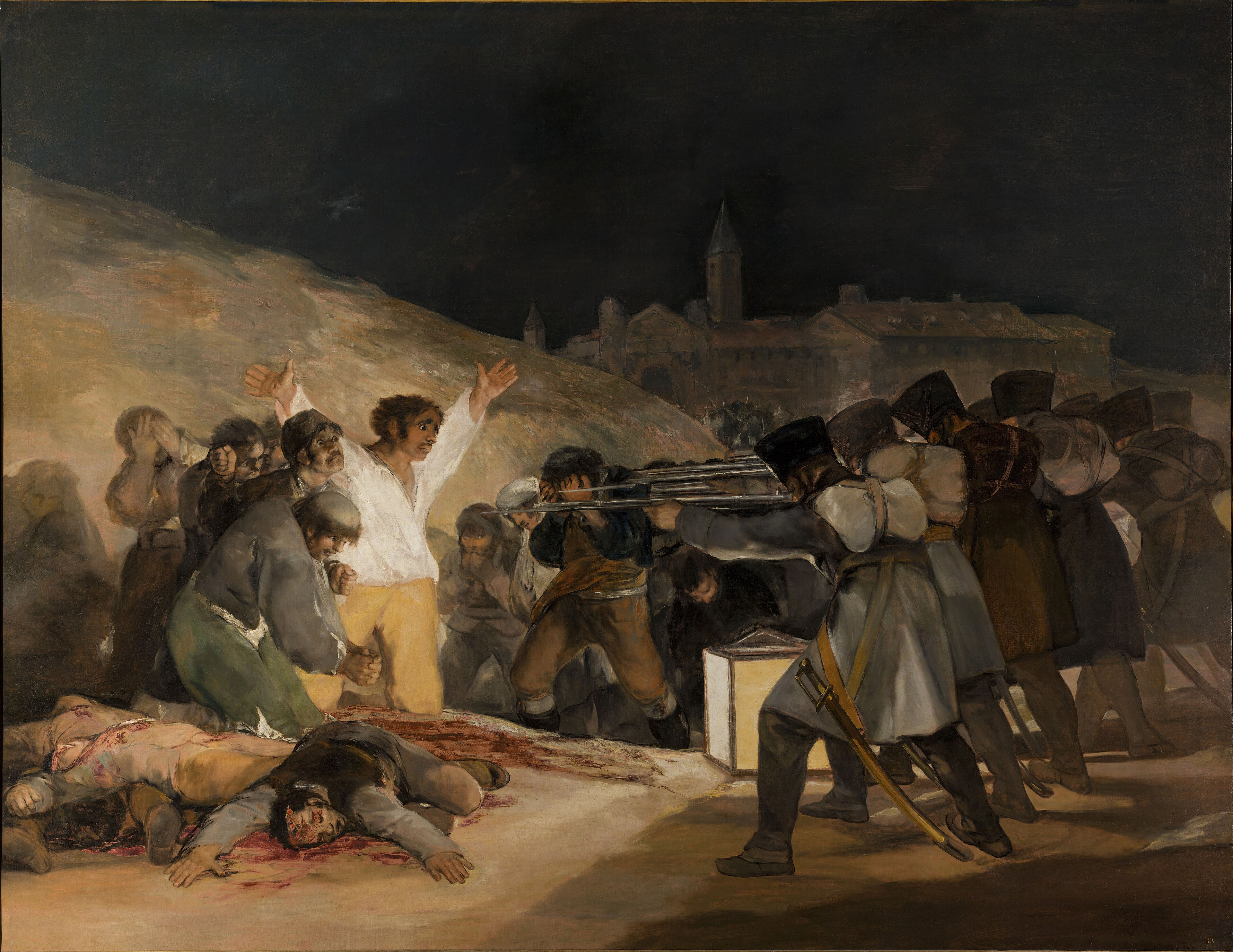
Five years before the Black Paintings, Goya had already given Spain the canonical image of organised cruelty — The Third of May 1808, in which a white-shirted man with his arms raised meets a row of faceless rifles. The lantern at the firing squad's feet is the only light source. There are no witches in this painting. Goya understood by then exactly what humans did when they were not afraid of devils.
What Goya gave the modern world
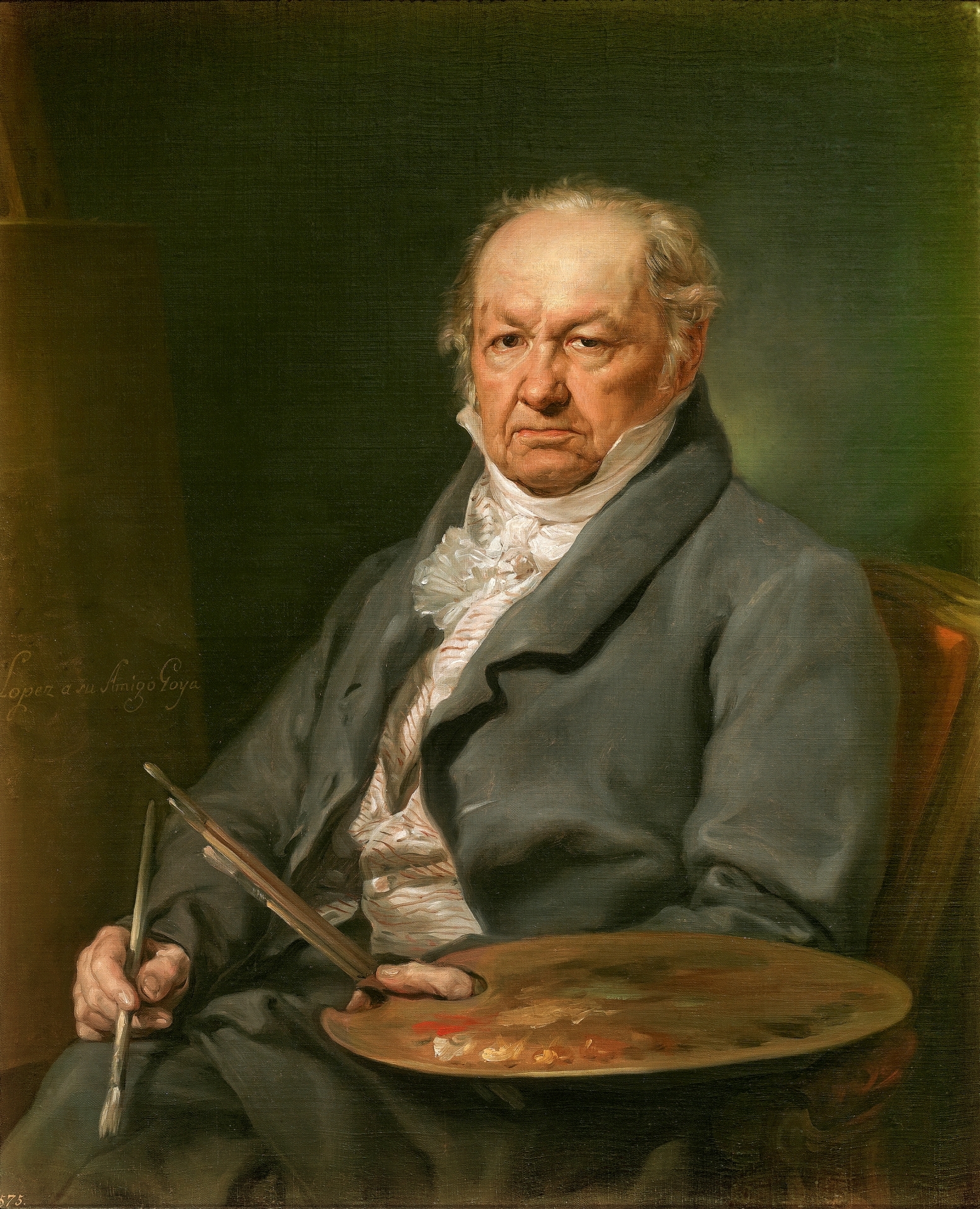
When Goya died in 1828 he was eighty-two, fully deaf, in voluntary exile in Bordeaux, painting until the last week of his life. He had served four Spanish monarchs, two French regimes, and one civil war. He had painted royal portraits, religious frescoes, satirical etchings, war reportage, and the contents of his own dining room.
What he gave the modern world is a particular permission. The permission to use the symbols of fear against the people who profit from them. The permission to refuse, on canvas, what the institution insists is true. Manet would borrow Goya's compositions and his courage; so would Picasso — the screaming horse in Guernica is direct Goya descent. Every artist who has painted a head of state badly, every cartoonist who has turned a dictator into a goat, owes a small inheritance to a deaf old Aragonese in his house outside Madrid in 1820.
Two paintings, twenty-five years apart. Same goat. Same sky. The first was sold to the Duchess of Osuna for a country house. The second has never left the dining-room wall it was painted on — copied, transferred, displayed, but never sold.
In both Goya painted what he was forbidden to say.
Browse the archive of classical-art prints at zocineartdesign.etsy.com.


Comments