How to Recognise Art Styles With Dogs: Six Movements, Six Painted Dogs
The easiest way to recognise an art style is to keep the subject the same and watch the brushwork change. Dogs are perfect for this. From Van Eyck in 1434 to Seurat in 1884, six painters show six movements through one animal: how they paint fur, light and mood tells you the style before you read the label.

Why use dogs to learn art styles?
Dogs appear in almost every period of European painting, from merchant portraits to royal courts to Sunday afternoons in the park. Because the animal stays the same, the only thing that changes is how the artist sees it. A dog's coat is a small test of technique: some painters build it hair by hair, others suggest it with a few quick strokes, and one builds it from dots. If you want the wider story of painted dogs, our guide to eight classical canines in paintings and the piece on dogs by role in classical painting go further.
How does a Northern Renaissance painter paint a dog?
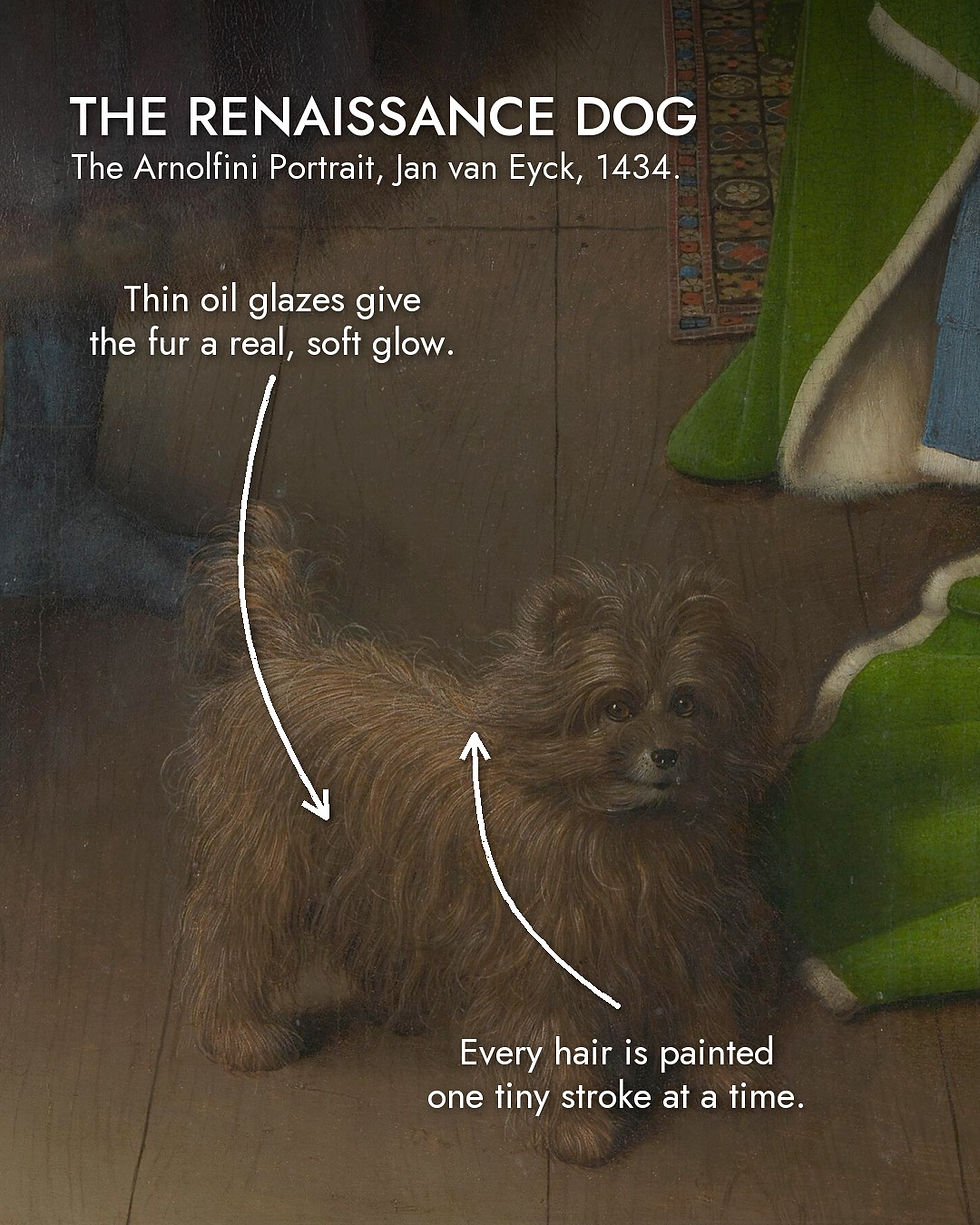
Look at the small terrier at the feet of the couple in The Arnolfini Portrait. Jan van Eyck painted every hair one tiny stroke at a time, and thin oil glazes laid on top give the fur a real, soft glow. The Northern Renaissance loved this kind of close, patient detail: nothing is left vague, and even a lap dog becomes a study of texture. The dog is often read as a sign of loyalty in the marriage. You can read more in our Northern Renaissance painting guide and in the mirror riddles of the Arnolfini Portrait.
What makes a Baroque dog different?
In Las Meninas, Diego Velázquez puts a large mastiff in the front of the scene, half asleep while a child rests a foot on its back. Strong light against deep shadow sets the drama, which is the Baroque signature. Step close and the fur turns into loose, quick strokes that only look sharp from a distance. Where Van Eyck describes, Velázquez suggests. The full story of the painting is in what Las Meninas means.

How can you spot a Rococo dog?
Thomas Gainsborough's white spitz looks almost weightless. Feathery brushwork makes the coat soft and light, and the dog is painted with the same charm and elegance he gave his noble sitters. Rococo painting prefers lightness, pale colour and grace over heavy drama, so the dog feels less like an animal in a room and more like a portrait subject in its own right. Our Rococo paintings explained piece shows the same lightness in people.

What does a Romantic painter do with a dog?
Edwin Landseer's Lion: A Newfoundland Dog (1824) shows one dog alone against a wild sky and open land. That setting gives him a heroic mood: he is painted like a noble hero, not just a family pet. Romanticism is about feeling, nature and grandeur, and Landseer turns an ordinary breed into a symbol of courage and calm strength. For the movement as a whole, see Romanticism in painting.

How does Impressionism paint fur?
In Madame Charpentier and Her Children (1878), Pierre-Auguste Renoir seats a little girl on a big black and white Newfoundland. Soft, loose brushstrokes make the fur look fluffy, and light dances across the coat. Impressionists cared less about each hair and more about how light falls in a passing moment, so the dog is warm, blurred at the edges and alive. Start with what Impressionism is if the movement is new to you.

What is a Pointillist dog made of?
Georges Seurat's A Sunday on La Grande Jatte puts a small dog in the foreground of a crowded park. It is built from thousands of tiny dots of pure, unmixed colour. Your eye blends the dots, not the painter's palette. Pointillism, a branch of Post-Impressionism, turned colour into almost a science, and the dog is the easiest place to see the method up close.

Which style would your dog be?
The last word goes to Francisco Goya. His Dog (c.1820), painted on the wall of his own house, shows only a head peering over a slope into empty space. It fits no neat label, which is a good reminder that styles are a way of looking, not a set of boxes. Now picture your own dog: patient Van Eyck detail, Baroque shadow, Rococo softness, Romantic grandeur, Impressionist light or Seurat dots?

Quick guide: six styles at a glance
Northern Renaissance: hair by hair, glowing oil glazes, total detail
Baroque: strong light, deep shadow, loose strokes up close
Rococo: feathery, light, elegant, portrait-like charm
Romanticism: heroic mood, wild sky, nature and feeling
Impressionism: loose strokes, fluffy fur, moving light
Pointillism: dots of pure colour that mix in your eye
Frequently asked questions
What is the easiest way to recognise an art style?
Compare the same subject across periods and look at the brushwork, light and mood. A dog's fur makes the differences easy to see, from Van Eyck's single hairs to Seurat's dots.
Which famous paintings have dogs in them?
The Arnolfini Portrait by Van Eyck, Las Meninas by Velázquez, Madame Charpentier and Her Children by Renoir and A Sunday on La Grande Jatte by Seurat all include dogs, as do Landseer's dog portraits and Goya's The Dog.
What is the difference between Impressionism and Pointillism?
Impressionists use loose, blended brushstrokes to catch passing light. Pointillists like Seurat place small dots of pure colour side by side and let the viewer's eye mix them.
Why did painters include dogs in portraits?
Dogs often stood for loyalty, wealth or family life, and they added warmth and scale to a scene. In some paintings they are symbols; in others they are simply loved companions.
Zocine Art Design is an independent studio that prints classic paintings as wall art. If one of these painted dogs suits your walls, browse our framed prints of classic paintings on Etsy.


Comments