Judith Leyster: The Lodestar of the Dutch Golden Age
Updated: Aug 17
Judith Leyster was one of the very few women to run her own painting workshop in the golden age of Dutch art, and for most of the last four centuries almost nobody knew her name. She was born in Haarlem in 1609 and died in 1660, and in that short span she signed her canvases with a small five pointed star, painted musicians lit by single candles, and gave her sitters a directness that still holds a viewer at arm's length. This is the story of how a brewer's daughter built a signature style, and how that signature was buried for more than two hundred years.
Most surveys of seventeenth century Dutch painting move quickly from Rembrandt to Vermeer to Frans Hals. Leyster sits just outside that frame, although in her own decade she was admired enough to be named in print. Fewer than two dozen securely attributed paintings survive, and almost all of the dated ones fall in a short burst of roughly six years between 1629 and 1635. Those pictures are enough to show an artist who understood light, gesture, and the quiet drama of an ordinary room.
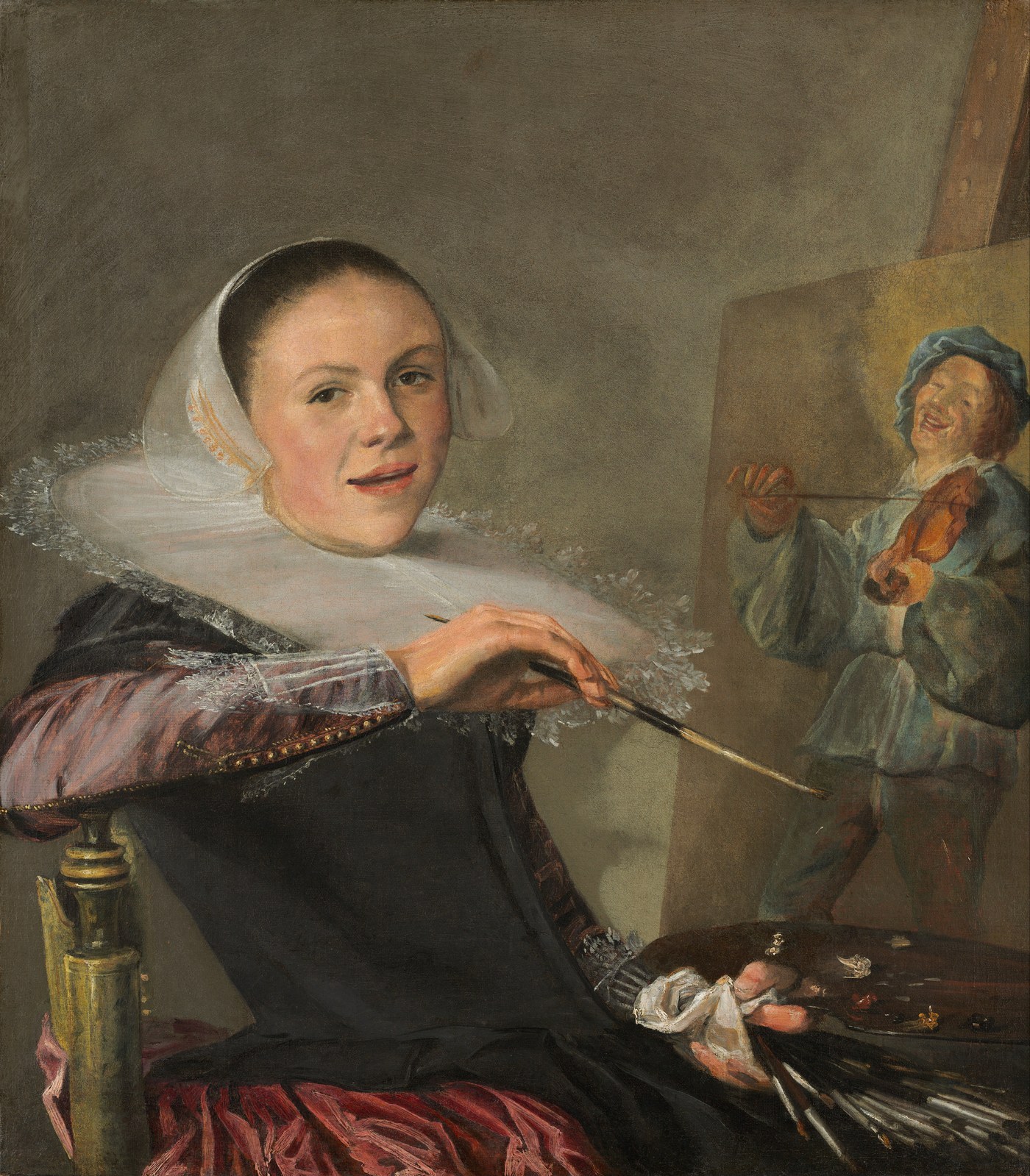
The self-portrait she made around 1630 is the best place to start. On a canvas of about 74 by 65 centimetres she turns from her easel to meet the viewer, brush loaded, a fiddler already sketched on the picture within the picture. She wears good clothes rather than a working smock, and she looks entirely at ease, a young master presenting herself as exactly that. She was barely into her twenties when she painted it.
A Brewer's Daughter Who Took a Star for a Name
Leyster was the eighth child of Jan Willemsz, a Haarlem brewer and cloth maker whose brewery carried the name Leyster, the old Dutch word for a lodestar or leading star. When the business failed in 1624 the family kept the name, and Judith made it her own. By 1628, while she was still a teenager, the local chronicler Samuel Ampzing praised her in his printed survey of the city. He recorded that here painted Judith Leyster "with good and keen understanding," singling out a young woman among a guild of men. She had trained in the circle of the Haarlem portraitist Frans Pietersz de Grebber, and by 1629 she was dating finished pictures of her own, among them a serenading lute player and a cheerful drinker raising a glass.
The Signature Hidden in Plain Sight
The star was not decoration. Leyster turned her surname into a monogram, a joined J and L crossed by a single star, and she placed it where a careful eye would find it, on the edge of a table, the rung of a chair, the frame of an instrument. It reads as a pun and a claim at once, the leading star of Haarlem marking her own work. In 1633 she registered as a master in the local guild of painters, one of the first women recorded in its books, and by the mid 1630s she was running a workshop with three apprentices. When one of those pupils left in 1635 to join the busy studio of Frans Hals, Leyster took the matter to the guild, a small dispute that survives in the records and tells us she guarded her position like any other master.
Candlelight and the Loose, Quick Brush
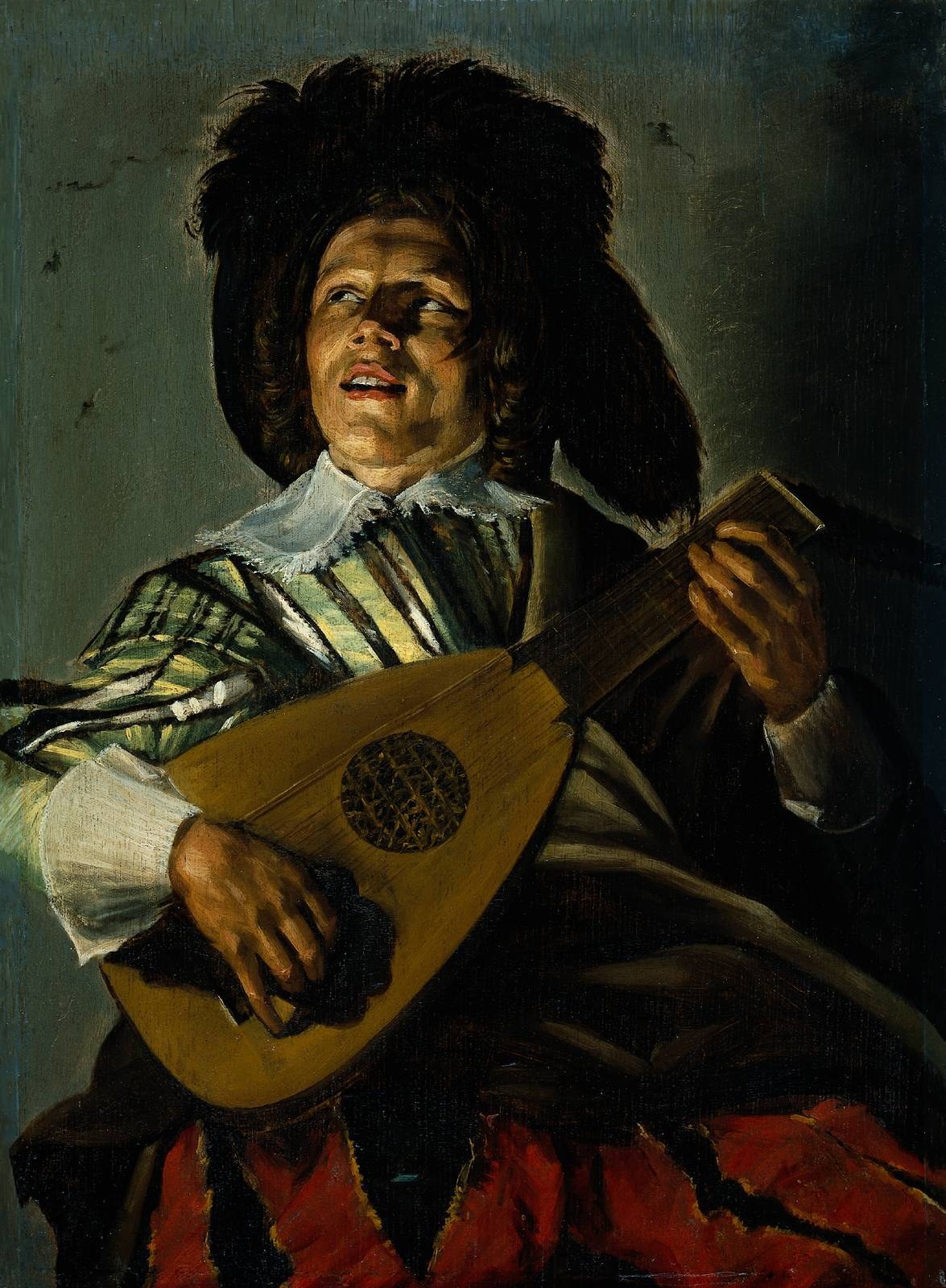
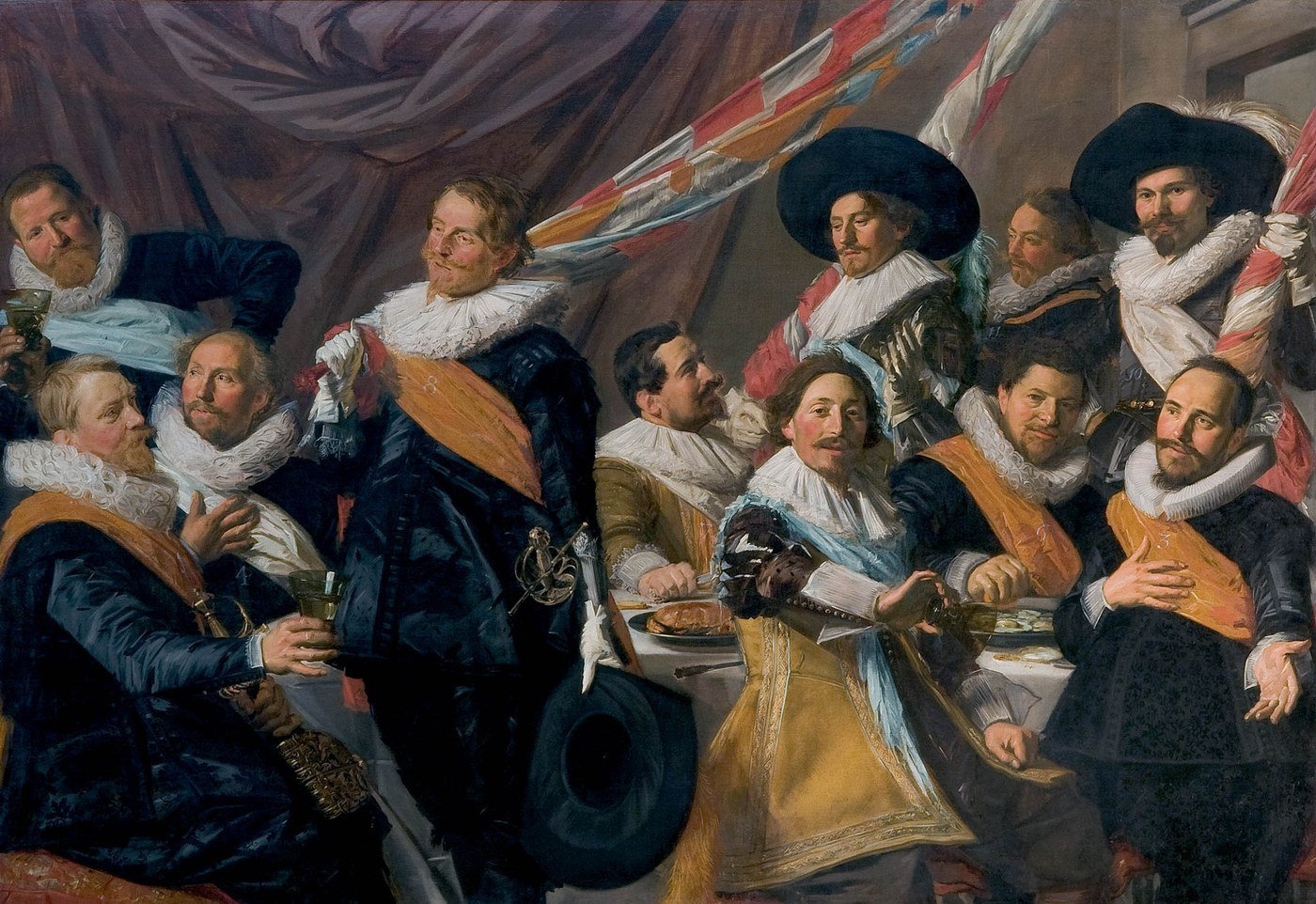
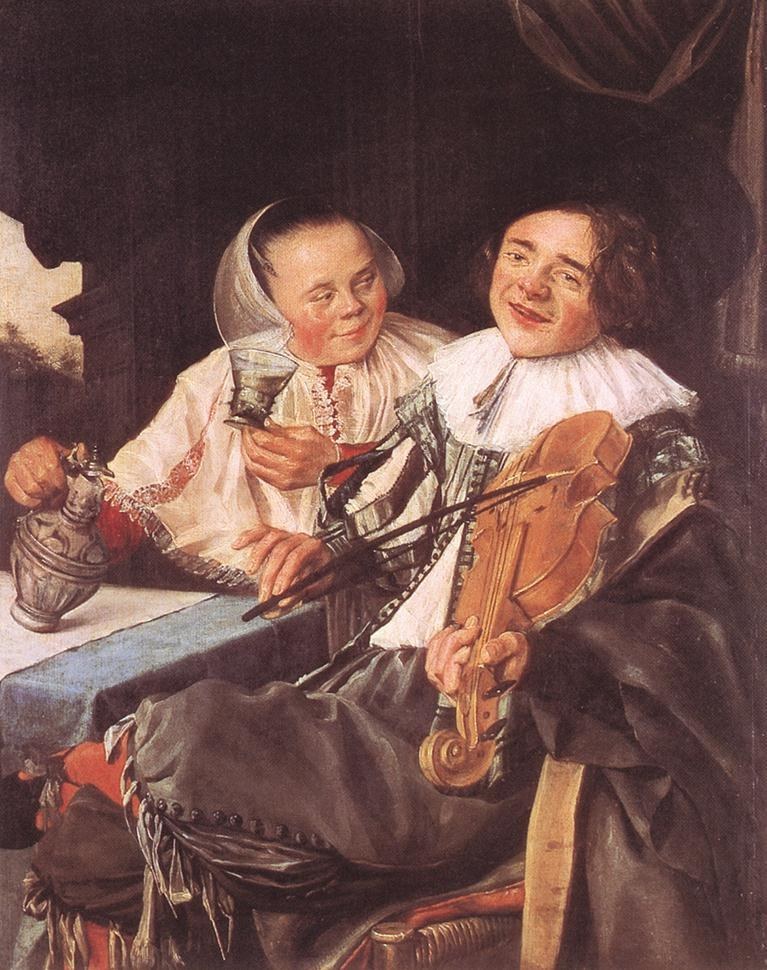
Leyster built many of her scenes around a single source of light. A candle, a small lamp, or a fire just out of view, and the faces around it emerge from the dark in warm ochres and reds. This taste for concentrated light came out of the group of northern painters who had absorbed the drama of the Italian followers of Caravaggio, and Leyster used it to make everyday music making feel like theatre. Look closely and the brushwork is fast and open, the highlights laid down in a few confident strokes rather than blended to a polish. That speed is part of why her pictures were later mistaken for the work of Frans Hals, whose loose handling hers resembles. Set one of Hals's own laughing drinkers beside a Leyster and the family resemblance in the brush is immediate, which is exactly how the confusion began.
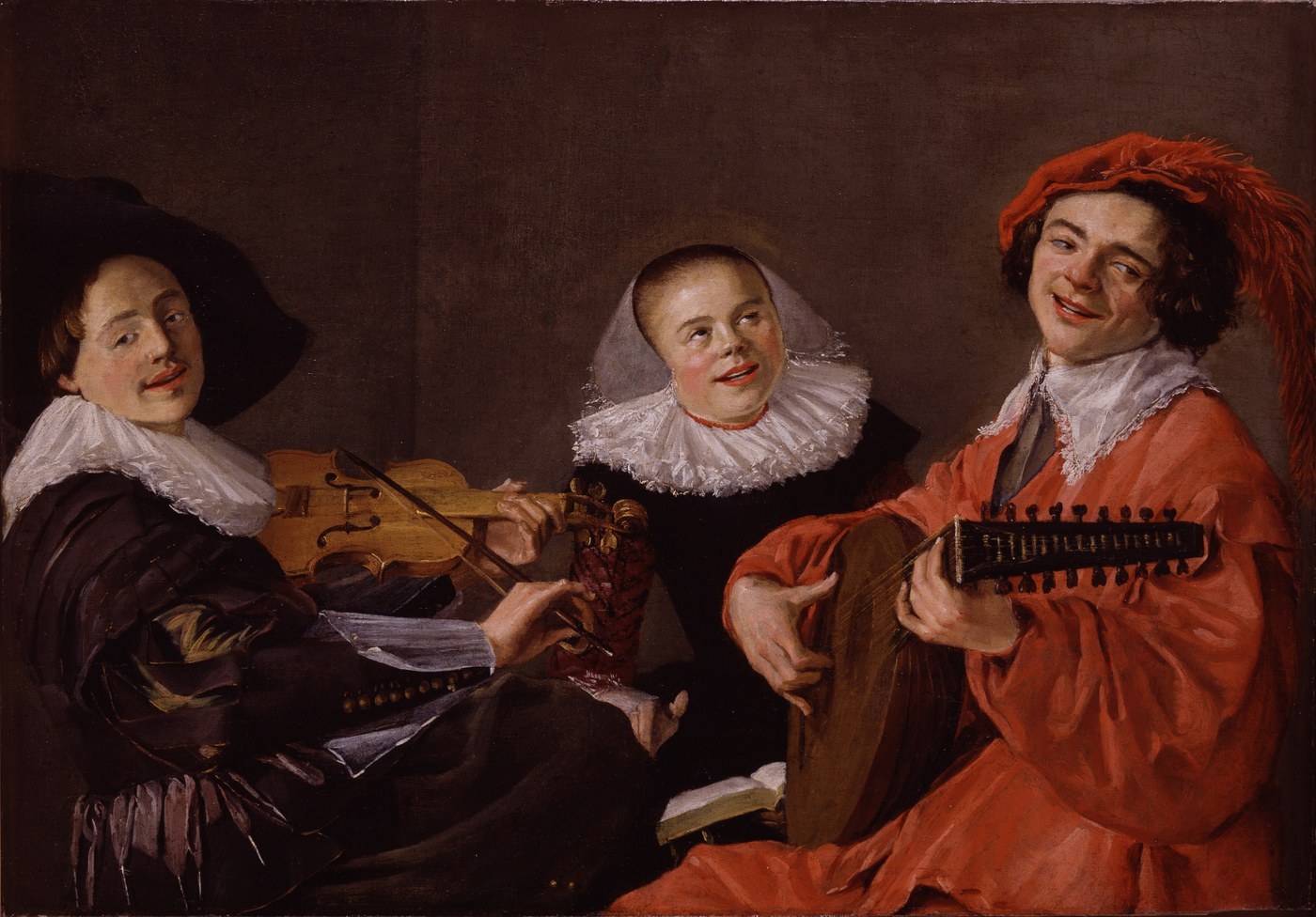
Her range was wider than the taverns and music parties suggest. In 1643 she contributed a careful watercolour of a red and white striped tulip to a collector's flower book, a botanical study made at the height of the Dutch craze for rare bulbs. It is a reminder that the same hand that snapped off a highlight in three strokes could also sit for hours over a single petal, and that a working painter of the period took whatever commissions came.
The Proposition and the Self-Possessed Sitter
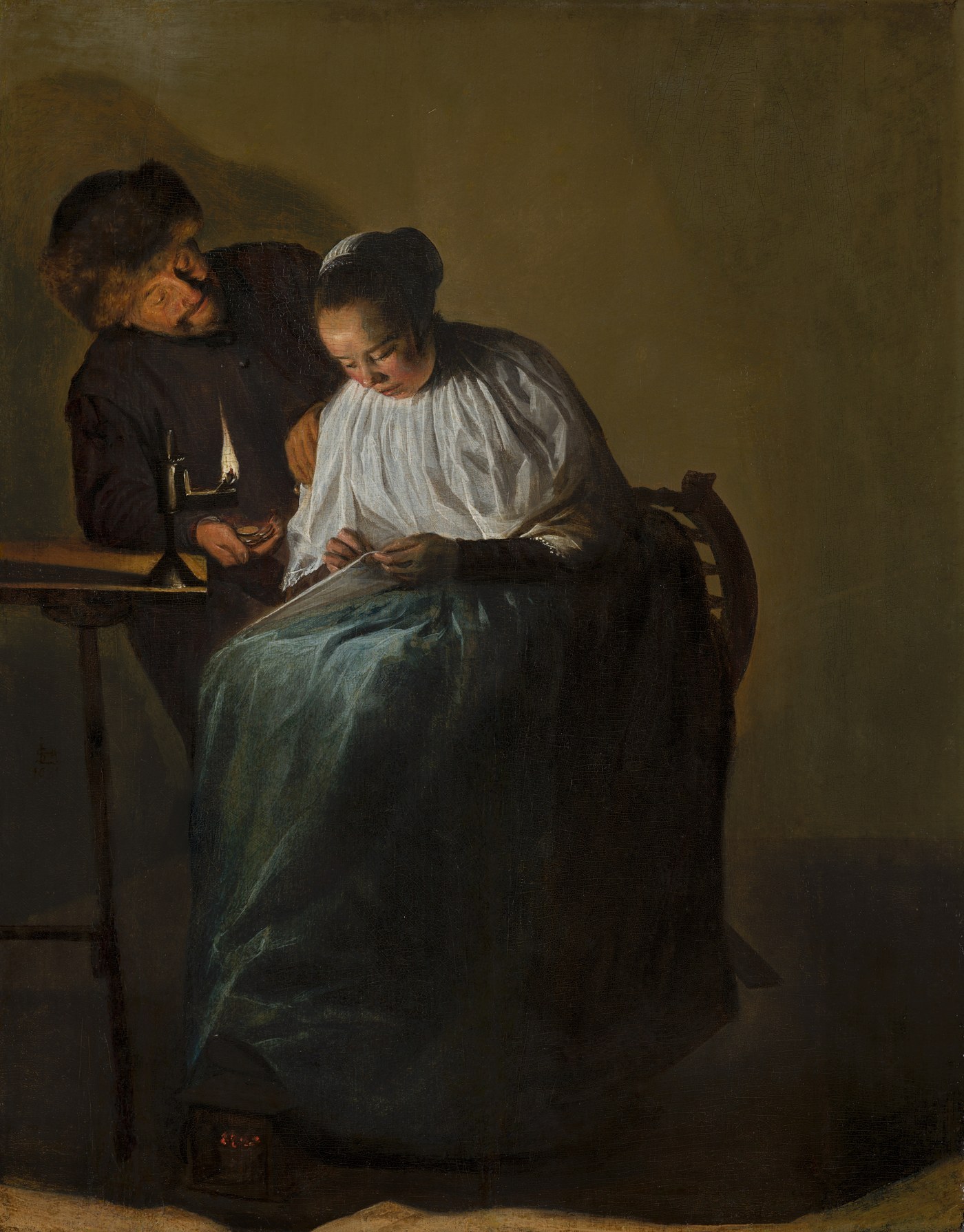
In 1631 Leyster painted a small panel, roughly 31 by 24 centimetres, of a man leaning over a young woman at night and offering a handful of coins. Where many painters of the period treated such a scene as a joke at the woman's expense, Leyster keeps her at her sewing, eyes down, refusing the offer and the man both. It is a quiet act of resistance built into a genre picture, and it is typical of the way she gave her women their own attention rather than staging them for ours. A single candle throws the whole exchange into a tight pool of light barely a hand wide, and everything outside it falls away into brown shadow.
Two Centuries Under Another Man's Name
Leyster married the painter Jan Miense Molenaer in 1636 and moved with him to Amsterdam, later settling on a property at Heemstede that the couple bought in 1648. Of their five children only two lived to adulthood, and Judith's output slowed as she managed a household and a shared studio. After her death in 1660 her name faded. Dealers and collectors, looking at her loose brush and her small monogram, read the star as a stray mark and the paintings as lost works by Frans Hals or by her own husband. For more than two hundred years that is how they hung. Only in 1893 did the art historian Cornelis Hofstede de Groot look hard at a signed picture, recognise the joined letters and the star, and begin to gather her scattered work back together. A canvas that had been sold as a Hals turned out to be a Leyster, a lawsuit followed, and a painter the record had misplaced was slowly reassembled.
Why Judith Leyster Still Matters
Leyster is often introduced first as a woman painter, and she was a rare one, admitted to a professional guild in a trade that almost never recorded women as masters. The better reason to look is the work itself. Her lit rooms, her musicians caught mid note, and her sitters who decline to perform belong to the first rank of Dutch genre painting. The star she hid in her canvases was a small joke about her name and a large statement about her ambition, and after 1893 both have finally been read the way she intended. Today her handful of surviving pictures hang in major collections across Europe and the United States, and each new attribution, of which there have been several since 1900, adds a little more to a body of work that once amounted, on paper, to nothing at all.
Questions Collectors Ask
Why was Judith Leyster forgotten for so long?
Her paintings were loose, warmly lit, and close in handling to Frans Hals, so once her small star monogram was overlooked the works were simply catalogued under better known men. With few documents naming her and a career shortened by family life, there was little to correct the error until her signature was studied again in 1893.
How can you tell a Leyster from a Frans Hals?
Look for the joined J and L crossed by a star, often tucked along an edge, and for her preference for candlelit interiors and self-possessed women. Hals rarely built a scene around a single flame the way Leyster did, and her sitters tend to hold their own gaze rather than laugh outward.
Which Judith Leyster painting should you know first?
The self-portrait of about 1630 is the clearest introduction. She turns from her easel with a half smile, a loaded brush in hand and a fiddler taking shape on the canvas behind her, presenting herself as a working master at ease with her craft.
Four centuries after she signed her first dated canvas in 1629, Judith Leyster reads less as a footnote to the golden age and more as one of its sharpest observers. The star is easy to miss. Once you have seen it, it is hard to unsee.
Further Reading from the Zocine Journal
New in the Journal: Seven National Schools of Painting and How to Tell Them Apart
New in the Journal: Why the Old Masters Painted Animals Like Portraits
New in the Journal: Why Dutch Flower Paintings Never Wilt: Seven Masters of the Golden Age Bouquet
New in the Journal: The Hierarchy of Genres: How Academies Ranked What Painters Could Paint


Comments