Rembrandt's Most Famous Paintings Explained
Rembrandt van Rijn (1606-1669) is best known for The Night Watch (1642), The Anatomy Lesson of Dr Nicolaes Tulp (1632), The Jewish Bride (about 1665-69) and The Return of the Prodigal Son (about 1668-69). Together they show the Dutch Golden Age master of light and shadow, from a rising young portraitist to a painter of quiet, late tenderness.

What is Rembrandt's most famous painting?
The Night Watch. Rembrandt finished it in 1642 for a civic militia company led by Captain Frans Banninck Cocq, and it is one of the largest canvases of the Dutch Golden Age. Instead of a row of men sitting for a group portrait, he showed the company moving out, drums beating and muskets being loaded. The title came later, when darkened varnish made the scene look like night; it is really a daytime scene. The canvas was trimmed in 1715 when it was moved to Amsterdam Town Hall. For every figure and shadow, read Rembrandt's Night Watch: Every Figure, Every Shadow, Decoded.
What is The Anatomy Lesson of Dr Tulp?
It is the picture that made Rembrandt's name in Amsterdam. He painted it in 1632, aged 26, for the city's surgeons' guild. Dr Nicolaes Tulp lifts the muscles of a forearm on the body of Aris Kindt, a man executed that January, while seven colleagues lean in to watch. The canvas is 169.5 x 216.5 cm and is held in a collection in The Hague. The faces look at the arm, at each other and at us, and that mix of attention and drama was new for a guild portrait.
What is The Jewish Bride?
The Jewish Bride is a double portrait of a man and a woman in rich red and gold, painted in Rembrandt's last years. The man rests a hand on the woman's chest and she touches his hand. The title was added in the nineteenth century and the sitters are not known for certain, which is part of the pull. The canvas is 121.5 x 166.5 cm and is held in an Amsterdam collection. The paint is thick and rough, built up so that the sleeves seem to glow from inside.
What is The Return of the Prodigal Son about?
It retells the parable from the Gospel of Luke: a young man comes home in rags and his father holds him. Rembrandt painted it about 1668 to 1669, in the last years of his life, after his bankruptcy in 1656 and the deaths of his wife Saskia in 1642 and his son Titus in 1668. The canvas is large, about 262 x 205 cm, and is held in a collection in Saint Petersburg. The father's hands, one broad and one slender, are the centre of the painting.
Why did Rembrandt paint so many self-portraits?
He made around 80 self-portraits in paint, etching and drawing across about forty years, and no earlier painter left such a record of one face aging. They were part experiment, part advertisement and part private reflection. Follow the whole run in Rembrandt's Self-Portraits: Forty Years of a Painter Watching Himself Grow Old, and the last ones in Rembrandt at the End: The Late Self-Portraits.
What is Storm on the Sea of Galilee?
Painted in 1633, it is Rembrandt's only seascape. It shows the disciples fighting a storm in a small boat, in the Gospel story where Christ is woken to calm the waves. The canvas was stolen from a Boston museum in 1990 and has never been recovered, so today it is known only from photographs and prints.
Where should I start with Rembrandt?
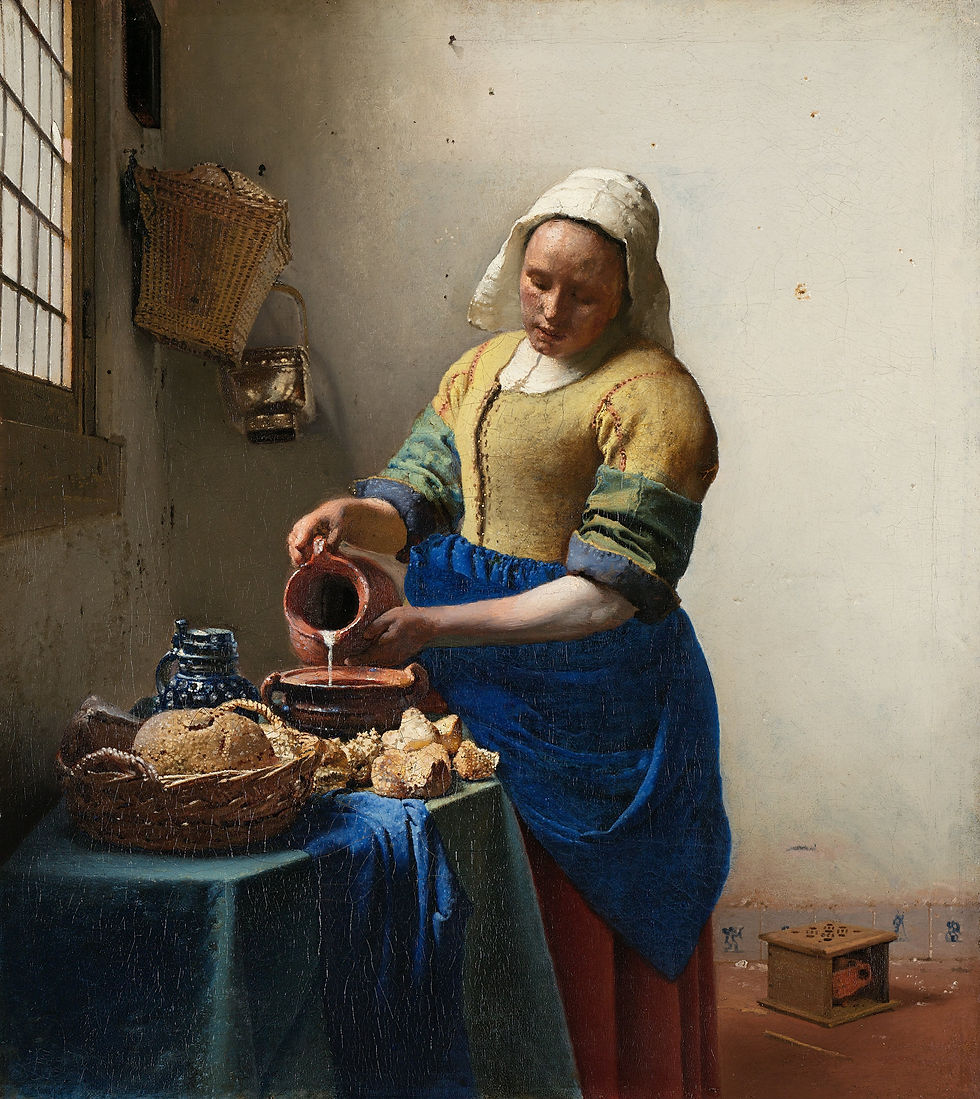
Start with The Night Watch to see his scale, then the Anatomy Lesson to see where his career took off, then the Jewish Bride and the Prodigal Son to see where it ended. For the painters around him, read Dutch Golden Age: Vermeer, Rembrandt, and the Painters of Light.
Zocine Art Design is an independent studio that prints classic paintings as wall art.
Frequently asked questions
What are Rembrandt's most famous paintings?
The Night Watch (1642), The Anatomy Lesson of Dr Nicolaes Tulp (1632), The Jewish Bride (about 1665-69), The Return of the Prodigal Son (about 1668-69) and his many self-portraits.
Why is The Night Watch called that?
The name came after Rembrandt's time. Dark varnish made the scene look like night, but the painting shows a militia company in daylight.
How many self-portraits did Rembrandt paint?
He made around 80 self-portraits in paint, etching and drawing over about forty years, a record of one face growing older.
When did Rembrandt die?
Rembrandt died in Amsterdam on 4 October 1669.
Browse Rembrandt and other classic art prints in the archive at Zocine.
New in the Journal: Rembrandt's Night Watch: Every Figure, Every Shadow, Decoded
New in the Journal: Rembrandt at the End: The Late Self-Portraits
New in the Journal: Dutch Golden Age: Vermeer, Rembrandt, and the Painters of Light


Comments