Living Room Classical Art: 7 Prints That Hold a Long Wall
Updated: Jun 17
The living room is the only room in the house where the art has to do two jobs at once. It has to hold the room visually — set tone, anchor the seating arrangement, give the eye somewhere to rest — and it has to survive being looked at by every guest, every evening, every season, for a long time.
Trend art doesn't survive that test. A 12×16 print of an abstract gradient will read as cheap by year two. The paintings that survive are the ones that have already done a century of looking at — the canonical Western painters.
Here are seven that hold the room without trying.
What a living room wall actually has to do
Three jobs:
Hold the focal seating axis. The painting sits on the wall behind the sofa or facing the seating. It must read from across the room, not just up close.
Set tone for guests on arrival. The first painting a guest sees is the painting they will remember. It should signal seriousness, not theme.
Be a daily picture. You will look at it every evening. Pick one that rewards a second look six months in.
1. Caravaggio — Saint Jerome Writing (1605)
The scholar at his desk in single-source light. Caravaggio's chiaroscuro does most of the work of any room you hang it in. Living room above a leather sofa, ideally in walnut frame.
2. Sargent — Madame X (1884)
The canonical portrait of the modern period. Black ground, single sitter, restraint. Hangs above a neutral sofa in a room with dark wood and matte black accents.
3. Vermeer — The Milkmaid (c. 1657)
Domestic interior at scale. Vermeer reads as quiet craft on a long wall. Works in warm-tone rooms with linen, oak, brass. The painting brings in north-window light even with warm bulbs.
4. Manet — A Bar at the Folies-Bergère (1882)
The single great painting of the modern bar. Manet's wide composition reads particularly well above a long sofa or banquette — the painting has the same horizontal rhythm as the seating.
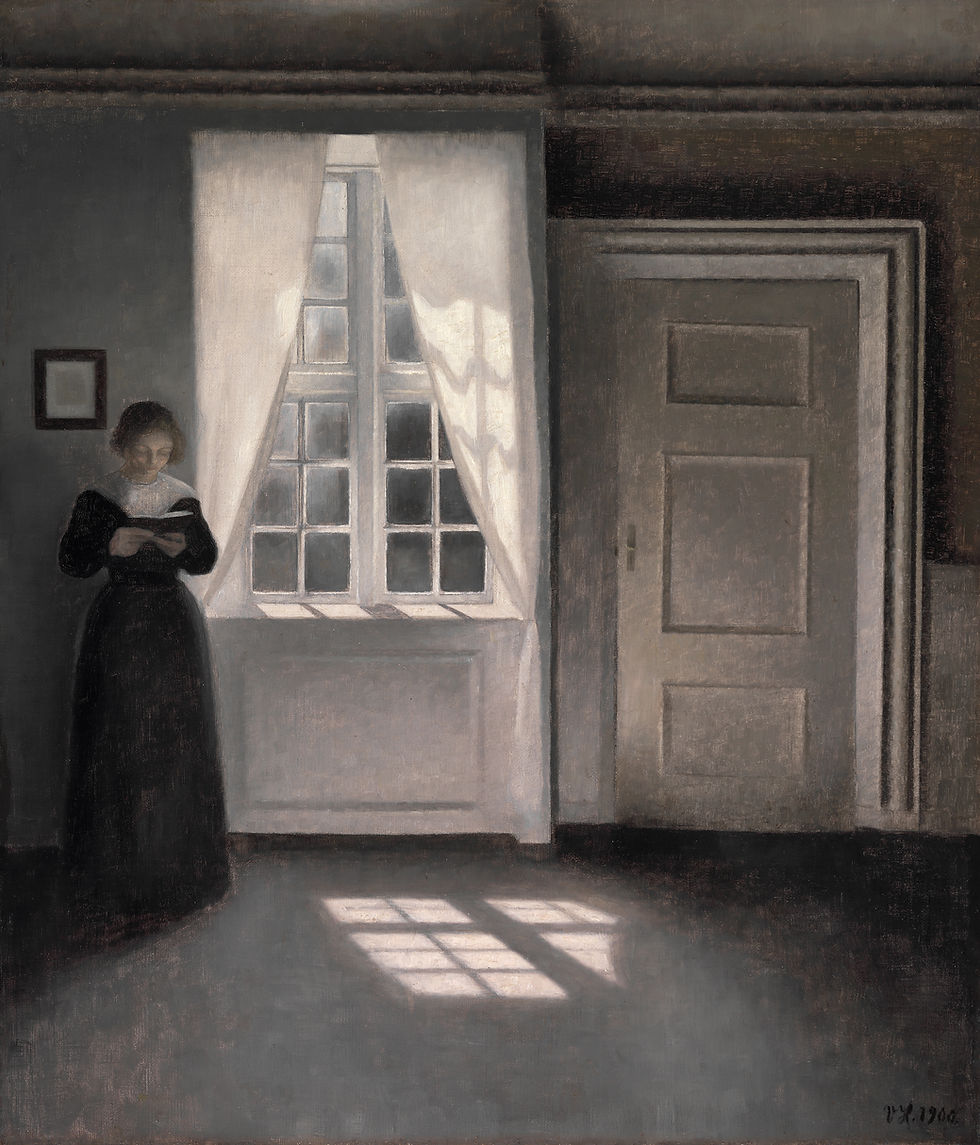
5. Hammershøi — Interior, Strandgade 30 (1900)
The Nordic answer to the Baroque interior. Hammershøi works in living rooms that lean cool — concrete floors, white plaster, oak. The painting is silent and brings the room down a register.
6. Whistler — Nocturne in Black and Gold (1875)
The atmospheric painting of the canon. Reads best in living rooms that get evening use — the gold accent picks up lamp light, and the near-black field disappears into a dark wall.
7. Hokusai — The Great Wave off Kanagawa (1831)
If you want a single iconic image that does not look like a portrait, Hokusai's wave is the most recognisable image in Japanese art. Frames in pale oak or unfinished ash, hangs in living rooms that lean modern and pattern-friendly.
How to pick one for your room
Three filters:
Dominant tone. Warm wood + brass → Caravaggio, Sargent, Vermeer, Manet. Cool concrete + matte black → Hammershøi, Whistler. Pattern-modern → Hokusai.
Scale. Above a long sofa or banquette, go horizontal — Manet, Hammershøi. Behind a single seating axis, go vertical and contained — Sargent, Caravaggio.
Daily picture test. Imagine looking at it every evening for six months. The painting that still rewards a long look is the one to hang.
Key takeaways
Living room walls hold the focal seating axis, set tone for guests, and survive daily looking.
Trend art fails the daily test. Canonical Western painters survive it.
Match tone to room's wood and metal, not to the room's theme.
One anchor beats a gallery wall in a living room with strong seating.
Where the prints live
A short list of the anchors that live as fine prints in the archive:
The full archive lives at zocineartdesign.etsy.com.

Comments