Pre-Raphaelite Paintings: 5 Key Works and the Brotherhood Behind Them
Updated: 4 days ago
The Pre-Raphaelites were a group of young London painters who formed a brotherhood in September 1848 to paint with the bright colour and hard detail of Italian and Flemish art before Raphael. Their best-known works are Millais's Ophelia, Waterhouse's The Lady of Shalott and Holman Hunt's The Scapegoat. This guide explains five of them and links to a full article on each.
Who were the Pre-Raphaelites?
Seven young men, led by Dante Gabriel Rossetti, John Everett Millais and William Holman Hunt, signed their pictures with the initials PRB and set out to paint real grass, real skin and real light instead of the brown, textbook manner taught at the Academy. For the full story of how they began, read The Pre-Raphaelite Brotherhood Explained Through Seven Paintings, the shorter Painting Brotherhood That Changed How We See Beauty and How Millais, Rossetti, and Burne-Jones Changed Victorian Painting.
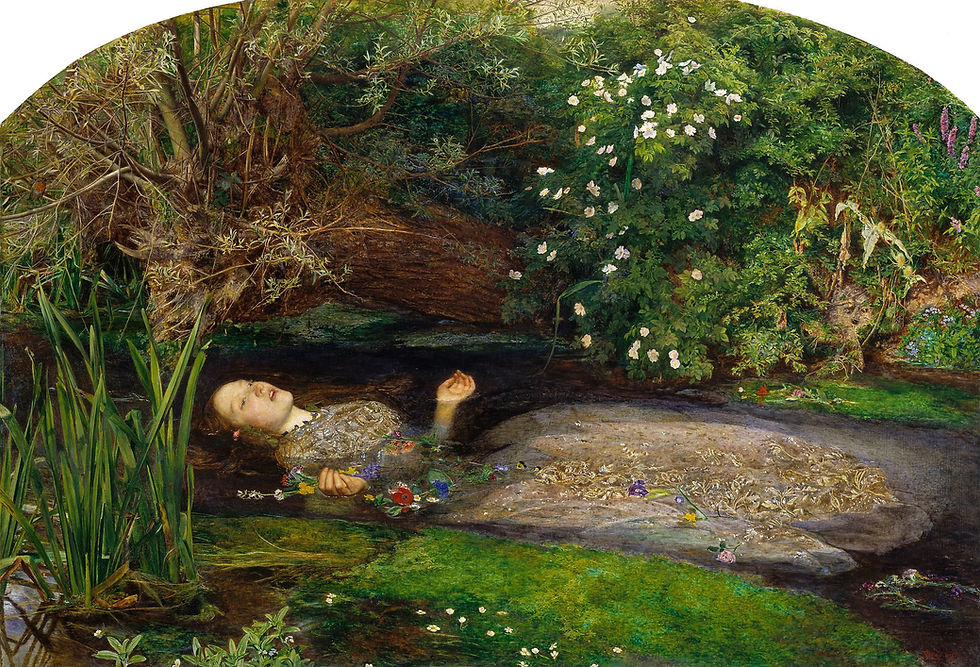
Ophelia (1851-52): why is it so often copied?
Millais painted the riverbank beside a tributary of the Hogsmill in Surrey from life, one plant at a time, over four months. He added the figure later in his London studio, where Elizabeth Siddal posed in a bath of water warmed by lamps. The result shows Ophelia from Shakespeare's Hamlet drifting among exact, botanically accurate flowers.
Read the full guide: Millais's Ophelia (1852): The Painting That Drowned Its Model
The Lady of Shalott (1888): what is happening in the boat?
John William Waterhouse illustrated Tennyson's 1832 poem at the moment the cursed Lady unties her boat and floats toward Camelot. Three candles stand on the prow and two have already gone out. Many readers see the painting as the last great image of the Pre-Raphaelite tradition.
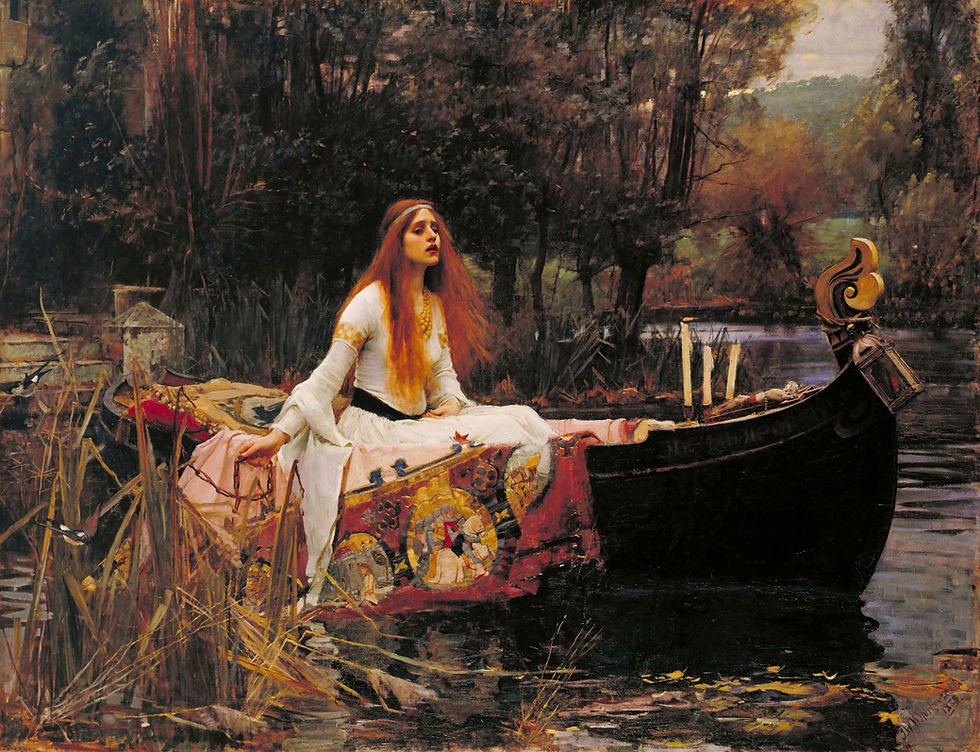
Read the full guide: Waterhouse's Lady of Shalott: Tennyson, Tragedy, and Pre-Raphaelite Light
The Blind Girl (1856): what does the rainbow mean?
Millais's The Blind Girl shows two sisters resting by a roadside after rain, with a double rainbow behind them. The younger girl looks at the sky while the older, blind girl feels the warmth of the sun on her face. It is a picture about seeing and not seeing, painted with the same fine detail as his earlier landscapes.

Read the full guide: The Painting Brotherhood That Changed How We See Beauty
The Scapegoat (1854-55): why did Hunt paint it at the Dead Sea?
William Holman Hunt travelled to the Middle East in 1854 and painted the goat outdoors on the shore of the Dead Sea. The animal wears a red band on its horns and stands among bleached bones, a literal picture of the Day of Atonement ritual in Leviticus 16. Hunt wanted the scene to look as it might have in the place where it happened.

Read the full guide: William Holman Hunt's The Scapegoat (1854)
Street Scene in Cairo: how long did Hunt work on it?
Hunt began the picture in Cairo in 1854 and finished it in 1861. It is also called The Lantern-Maker's Courtship, and it shows an ordinary lane painted with the same sharp focus the Pre-Raphaelites gave to every part of a picture. The painting is now in the Birmingham Museum and Art Gallery.

Read the full guide: William Holman Hunt's Street Scene in Cairo
How do these paintings fit with Victorian novels?
The Pre-Raphaelites and the great English novelists worked in the same cities at the same time, and their subjects often overlap. If you read Austen, the Brontës, Eliot or Hardy, see Six Pre-Raphaelite Paintings for the 19th-Century Romance Library Wall.
Frequently asked questions
What does Pre-Raphaelite mean?
It means before Raphael. The painters wanted to return to the bright colour and fine detail of Italian and Flemish art made before the Renaissance master Raphael.
Who were the main Pre-Raphaelite painters?
The three core founders were Dante Gabriel Rossetti, John Everett Millais and William Holman Hunt. Edward Burne-Jones and John William Waterhouse followed later in the same tradition.
What is the most famous Pre-Raphaelite painting?
Millais's Ophelia (1851-52) is usually named first, followed by Waterhouse's The Lady of Shalott (1888).
When was the Pre-Raphaelite Brotherhood founded?
In September 1848, in London.
Zocine Art Design is an independent studio that prints classic paintings as wall art.
See Victorian and Pre-Raphaelite art prints in the archive at Zocine.
Comments